

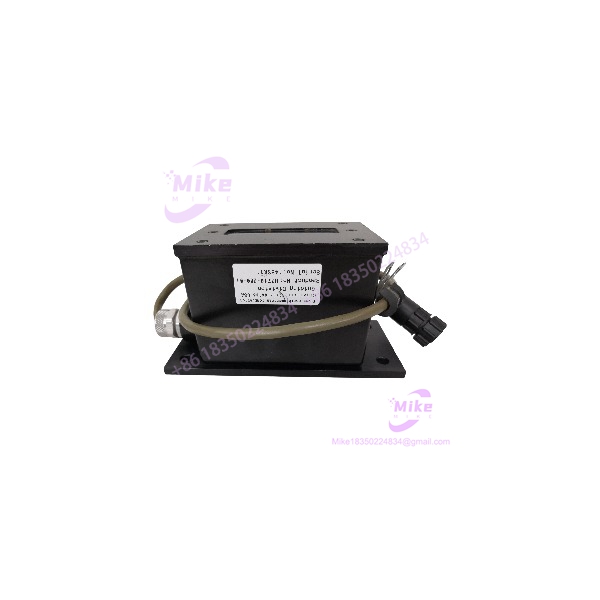
Description
North American H3710-200-01 | DSS Digital Receiver
Dynamic Product Introduction
A web-guiding or material-positioning system can be mechanically perfect and still produce unstable control if the sensing receiver is wrong, poorly aligned, or mismatched to the emitter. The H3710-200-01 is the receiver element of the Fife/Maxcess DSS Digital Sensing System, rather than a conventional PLC input module. Its job is to receive the sensing signal from the H3701-series emitter and pass the resulting measurement information toward the controller or measurement unit.
The significant engineering distinction is that H3710-200-01 supersedes H3710-100-01. The manufacturer documentation specifies two changes: automatic gain compensation and a larger sensing area. It also states that the H3710-200-01 can directly replace the H3710-100-01 for an upgrade; when a dual-receiver system is being upgraded, both receivers should be upgraded.
That makes the H3710-200-01 particularly relevant to maintenance teams keeping older Fife web-guiding installations operational. It should still be treated as a matched sensing-system component, not as a universal photoelectric receiver.
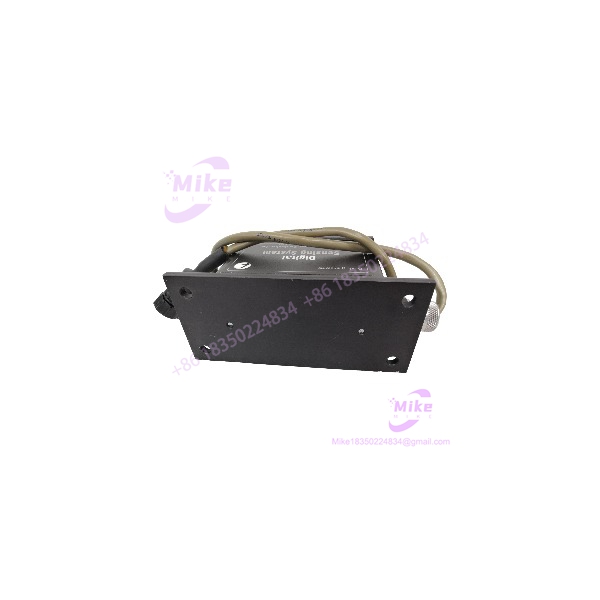
H3710-200-01
Key Technical Specifications
- Model: H3710-200-01
- System: DSS Digital Sensing System
- Component type: Digital receiver
- Manufacturer: North American Manufacturing / Fife
- Receiver predecessor: H3710-100-01
- Upgrade function: Automatic gain compensation
- Sensing-area improvement: Larger sensing area than H3710-100-01
- Receiver-to-emitter connection: H3710-3700-15 extension cable specified in manufacturer documentation
- Mechanical mounting: Four 5/16 in. (8 mm) mounting holes
- Receiver dimensions shown in DSS documentation: approximately 5 5/8 in. (143 mm) by 6 5/8 in. (168 mm), with additional housing dimensions shown on the mechanical drawing
- Cable arrangement: 2 in. (50 mm) cable shown at the receiver, connecting to the extension cable
- Reported weight: approximately 0.88 kg / 1.95 lb
- Lifecycle: Listed as discontinued by current industrial inventory sources
Sensing Gap Matters
The DSS documentation makes an important point that is easy to miss when replacing this component: the emitter-to-receiver gap is application-specific. The emitter is factory calibrated for the specified gap, and the recommended gap depends on the particular emitter model. Larger gaps can improve resistance to passline changes such as edge flutter, while smaller gaps may be necessary under intense ambient-light conditions.
Strobe lights within approximately 200 ft. of a DSS installation are specifically identified as requiring additional consideration.
Global Sourcing & Live-Test SOP
1. Inbound verification
- Confirm the nameplate reads .
- Check for physical damage around the sensing face and mounting points.
- Inspect the cable and connector for cuts, crushed sections, corrosion, or previous repairs.
- Confirm that the supplied cable arrangement matches the expected DSS configuration.
- Photograph the receiver before removing protective packaging.
- Record serial/lot information when present.
2. Emitter compatibility check
- Identify the installed H3701-series emitter.
- Confirm the emitter model and specified sensing gap.
- Do not substitute an arbitrary emitter simply because its mechanical dimensions appear similar.
- If the system uses two receivers, verify whether both sides require upgrading to .
3. Bench inspection
- Inspect the optical/sensing area under magnification for contamination or impact damage.
- Check cable continuity with appropriate test equipment before energizing the system.
- Verify connector integrity.
- Do not inject arbitrary voltage into unidentified receiver conductors.
4. Live-system simulation
- Install the receiver using the documented mechanical arrangement.
- Establish the specified emitter-to-receiver geometry.
- Confirm the receiver responds consistently as the web/material moves through the sensing field.
- Observe the controller’s resulting measurement signal rather than judging operation only from receiver status.
5. Alignment and environmental test
- Check operation at the actual production gap.
- Test with the normal material/passline condition.
- Check for instability caused by edge flutter.
- If nearby strobe or high-intensity lighting exists, repeat the test under actual lighting conditions.
6. Final preparation
- Record receiver model, emitter model, cable type, physical gap, and controller configuration.
- Protect the sensing face against scratches and contamination.
- Package the unit against impact and moisture.
- Label the replacement clearly as .
Field Engineer’s Pitfall Guide
❗ Do not treat as a generic proximity sensor.
It is a dedicated DSS digital receiver. Its performance depends on the associated emitter, cable, controller/measurement unit, and mechanical gap. The manufacturer documentation specifically shows the receiver connected through the H3710-3700-15 extension cable.
❗ Do not ignore the emitter-to-receiver gap.
DSS emitters are factory calibrated for the specified gap. Changing that geometry can change system behavior even when the receiver itself is functioning normally. This is particularly relevant when replacing components after a machine rebuild or bracket modification.
❗ Dual-receiver systems need special attention during an upgrade.
The manufacturer states that directly replaces H3710-100-01, but recommends upgrading both receivers when a dual-receiver system is being converted. Mixing old and new receivers without checking the system arrangement is therefore a poor maintenance shortcut.
Intent-Driven FAQ
What is the ?
The is a digital receiver for the Fife/Maxcess DSS Digital Sensing System. It works with the H3701-series emitter rather than operating as an independent PLC sensor.
Is a replacement for H3710-100-01?
Yes. The manufacturer documentation states that es and can be directly interchanged as an upgrade. The newer receiver incorporates automatic gain compensation and a larger sensing area.
Does include the cable?
Current industrial listings describe the product as a digital receiver with cable, while the DSS documentation separately specifies the H3710-3700-15 extension cable. Confirm exactly which cable is included with the particular unit being purchased rather than assuming every surplus listing contains the complete cable assembly.
Can I use with any H3701 emitter?
Do not assume that. The DSS documentation provides different emitter models and specifies application-dependent emitter-to-receiver gaps. Confirm the existing H3701 model and the original installation geometry before replacement.
Why would a working receiver still produce poor web-guiding performance?
Check the mechanical gap and alignment before condemning the electronics. Edge flutter, passline changes, contamination, and intense ambient lighting can affect the sensing arrangement. The manufacturer specifically calls out gap selection and nearby strobe lighting as application considerations.
Is still manufactured?
Current industrial inventory records identify the as discontinued by the manufacturer, although unused original-packaging and refurbished units remain available through secondary industrial channels.
What should I verify before buying a used ?
Request clear photographs of the receiver, sensing face, connector/cable, model label, and mounting hardware. Also confirm whether the unit is unused, refurbished, or previously installed. For a replacement, verify the associated emitter model and the original emitter-to-receiver gap before accepting the part.
Buyer Verification Checklist
Before purchasing a North American Mfg , verify:
- Exact part number:
- DSS Digital Sensing System compatibility
- Receiver condition
- Sensing-face condition
- Cable and connector condition
- H3710-3700-15 cable requirement
- Existing H3701 emitter model
- Original emitter-to-receiver gap
- Single- or dual-receiver architecture
- Whether the unit is new, unused surplus, or refurbished
- Actual warranty offered by the seller
- Functional test evidence, if available
For an older DSS installation, the correct procurement question is not simply “Does the receiver power up?” It is whether the , emitter, cable, gap, and controller form the same sensing chain that the machine was designed around.





