Description
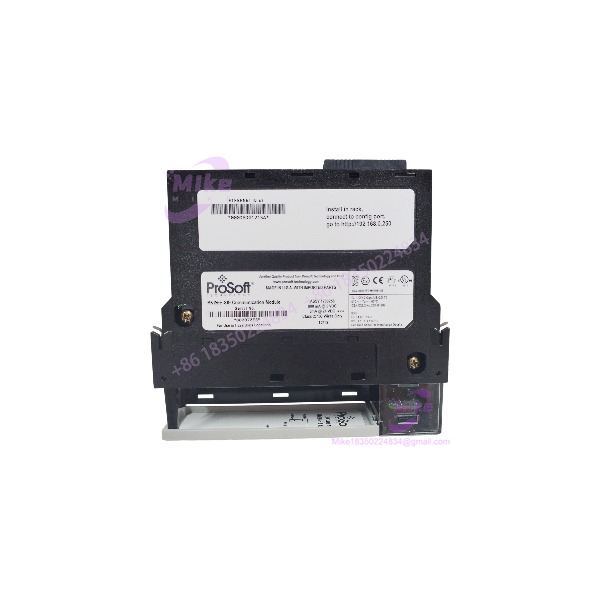
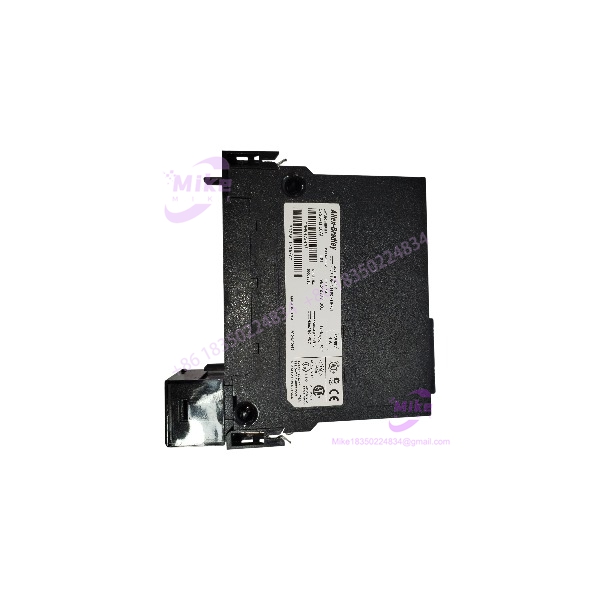
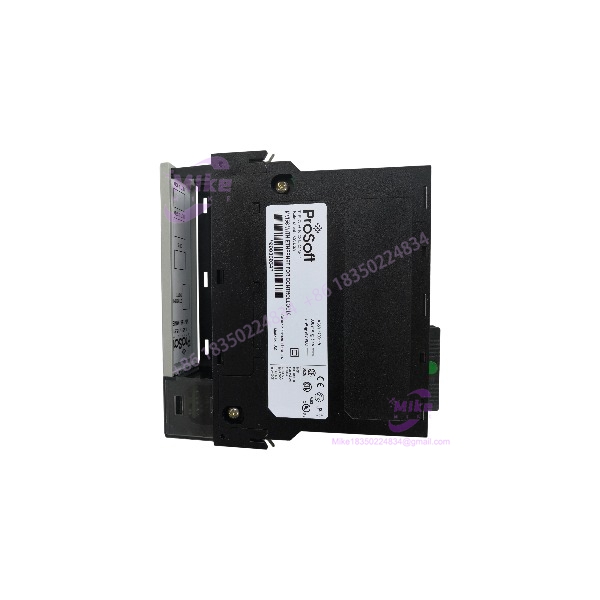
MVI56-MNET | Modbus TCP/IP Interface, 5000 Registers, In Stock
Architect’s Product Breakdown
The MVI56-MNET is the Ethernet sibling of the MCM serial module, and in practice it’s the bridge between the Rockwell world and the Modicon world. You’ll find these in substations talking to Schneider PLCs, in water plants serving data to third-party SCADA, in pipeline compressor stations pulling from Modbus TCP flow computers. One 1756 slot, one module, and the ControlLogix processor can act as a Modbus TCP/IP client polling servers, be a server answering remote masters, or do both at once — the client engine and server engine run independently on the module’s 10/100 Mbps Ethernet port.
As a client, the module maintains a single client connection executing a user-defined command list — up to 100 commands against up to 100 server devices — each command with its own poll rate, target IP, function code, and register offset. The processor controls activity two ways: actively selecting commands from the list (Command Control) or issuing them directly from ladder logic (Event Commands), which gives you a genuinely useful mechanism for on-demand reads rather than endless cyclic polling. As a server, the module accepts client connections on Service Port 502 (standard Modbus TCP) or Port 2000, exposing its database to whatever master shows up — HMI packages, data historians, other PLCs. The function-code coverage spans 1, 2, 3, 4, 5, 6, 7, 15, and 16, with floating-point support and a configurable minimum response delay (0–65535 ms) to keep fast clients from stepping on slow ones.
Data architecture is the module’s backbone: a 5000-word register space exchanges data between the processor and the Modbus TCP/IP network, and memory usage is user-definable within that space. Backplane transfers are asynchronous from network activity, moved by the sample ladder logic via block transfer or side-connect interface. All data mapping starts at Modbus register 40001 — a detail that sounds trivial until you’re aligning a third-party master’s addressing and discover its vendor chose 0-based addressing. Configuration is through ProSoft Configuration Builder over the module’s Ethernet port. The upgrade path to the MVI56E-MNET is explicit — PCB has a documented “Upgrading from MVI56-MNET” procedure, and the E-series keeps your command list while adding the config port, CIPconnect remote diagnostics, and redundant-processor-friendly operation. If you’re building new, buy the E. If you’re maintaining an installed fleet, like-for-like MNET spares keep your spares pool honest.
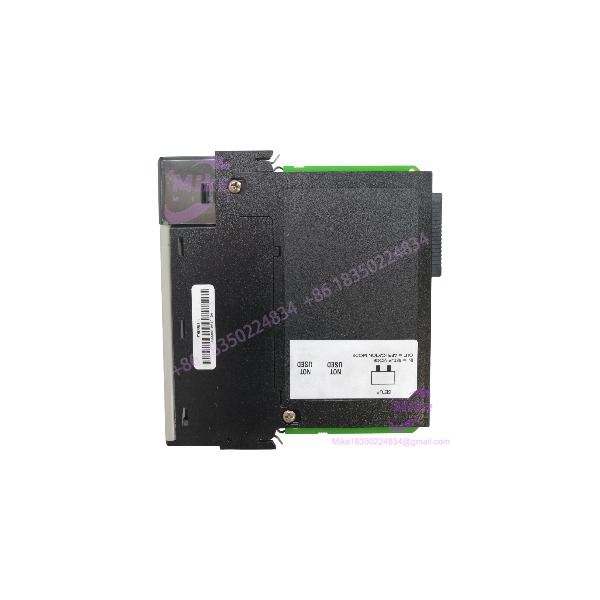
MVI56-MNET
Key Technical Specifications
| Parameter | Specification |
|---|---|
| Part Number | MVI56-MNET |
| Manufacturer | ProSoft Technology |
| Compatible Platform | Allen-Bradley ControlLogix (1756 chassis, 1 slot, local or remote rack) |
| Protocol | Modbus TCP/IP — Client (master) and Server (slave) simultaneously |
| Ethernet Port | 1× RJ45, 10/100 Mbps |
| Server Service Ports | Port 502 (standard Modbus TCP) or Port 2000 |
| Client Capacity | 1 client connection — up to 100 servers, 100 commands |
| Function Codes Supported | 1, 2, 3, 4, 5, 6, 7, 15, 16 |
| Register Space | 5000 words, user-definable memory usage |
| Data Mapping | All mapping begins at Modbus register 40001 |
| Client Tuning | Minimum response delay 0–65535 ms; floating-point support |
| Command Control | Command Control (ladder-select from list) or Event Commands (issued directly from logic) |
| Configuration | ProSoft Configuration Builder (PCB) over Ethernet; RSLogix 5000 sample ladder |
| Backplane Current Load | 800 mA @ 5 VDC |
| Operating Temperature | 0°C to 60°C (32°F to 140°F) |
Field Engineer’s Pitfall Guide
⚠️ The single client connection is the ceiling — plan your poll list around it. Unlike the later MNETC (multi-client) products, the MVI56-MNET runs one client connection total. All 100 commands share that pipe, so a poll cycle through 50 slow servers can take far longer than the naive math suggests. I’ve seen a team add a bank of 30 new meters to an existing 70-command list at 100 ms poll intervals and then wonder why the “instant” data in the HMI was 40 seconds stale. Budget poll rate per command realistically, and move anything latency-sensitive to Event Commands issued from ladder logic instead of cyclic polling.
⚠️ Port 502 vs. Port 2000 — confirm what your master actually speaks. The module can serve on standard Modbus TCP port 502 or ProSoft’s port 2000. Some legacy SCADA masters and OPC drivers default to 2000 against ProSoft hardware and silently fail on 502, and vice versa. Nail this down during FAT, not during the 2 AM commissioning call. Also check the master’s connection count: many HMI/OPC servers open multiple sockets, and a module this age has a limited simultaneous-connection budget.
⚠️ Register alignment: 40001 vs. 0-based addressing. All module data mapping starts at Modbus register 40001. Third-party masters that address the same data at 400001, offset-zero, or 4x conventions will read plausible-looking garbage — the worst kind of failure because everything “works.” Verify one known register end-to-end (write a known value, read it from the master) before you trust a single tag mapping. And if you later migrate to the MVI56E-MNET, run the PCB upgrade procedure on a bench copy of the config first — the data block layout is larger on the E-series and lazy migrations can shift offsets.
QA & Testing SOP (Transparency)
Every MVI56-MNET unit passes a documented four-stage process before shipping:
- Visual & Origin Check: OEM label and serial verified against ProSoft production records; enclosure and RJ45 port inspected for wear, stress marks, or field-repair evidence. New surplus stock confirmed factory-sealed.
- Live Rack Test: Module installed in a 1756 ControlLogix test chassis with a known-good processor; minimum 30-minute powered burn-in; backplane enumeration and ladder block-transfer confirmed in RSLogix 5000.
- Functional Diagnostics: Ethernet port verified at 10 and 100 Mbps with auto-negotiation; client engine exercised against a live Modbus TCP server simulator (function codes 1–7, 15, 16, floating-point values verified); server engine tested on Port 502 and Port 2000 against an external master; Event Command and Command Control paths exercised; 5000-word register space integrity checked under sustained traffic; response-delay parameter verified.
- Documentation & Packing: Firmware revision, IP/configuration settings, and test results recorded on the unit certificate; module returned to factory-default network settings; sealed in ESD-safe anti-static bag with conductive foam.
Technical FAQ
Q: Can I hot-swap the while the process is running?
No. Pulling the module drops the client engine (all polled servers go silent) and the server engine (every connected SCADA master or historian loses its data source) simultaneously. The ControlLogix slot also faults. If the module is in a remote rack, the rack connection faults too. Schedule the swap and pre-configure the replacement with the correct IP address before it goes anywhere near the chassis.
Q: What’s the difference between the and the MVI56E-MNET — is the upgrade worth it?
The MVI56E-MNET is the current enhanced replacement: it adds a dedicated Ethernet configuration/diagnostics path, CIPconnect for remote access through 1756-ENxT/CNB bridges, an on-board web server, optimized large I/O image blocks for better throughput, and redundant-processor support. ProSoft documents a direct configuration upgrade procedure in PCB. For new builds, buy the E. For an installed fleet, the legacy MNET as a like-for-like spare avoids workflow mismatches — but honestly, the E-series’ web-based diagnostics alone can justify standardizing on it at the next upgrade cycle.
Q: Can it poll multiple Modbus TCP devices at the same time?
Yes, within its architecture: one client connection cycling through a command list of up to 100 commands against up to 100 different server devices. It’s sequential polling over the single client connection, not parallel multi-socket polling. If you need genuine multi-client concurrency, look at the MVI56E-MNETC (multi-client) family instead — it exists precisely for that.
Q: Does it support redundant ControlLogix processors?
Not well — that’s an explicit weakness the MVI56E-MNETR (reduced data block variant) was designed to fix; ProSoft’s documentation recommends the MNETR for redundant-processor applications. The legacy can work in a redundancy scheme but was not optimized for it. If you’re on a redundant ControlLogix pair, verify your architecture against the E-series redundancy documentation before specifying the legacy part.
Q: Will the configuration survive a power loss?
Yes. IP settings, client command list, server port assignment, and the register database layout are stored in non-volatile module memory, so power cycles don’t clear them. There’s no removable Personality Module on this legacy unit, though — if the module dies, the config goes with it. Keep the PCB configuration file backed up on your engineering server, and note the module’s IP settings on the cabinet documentation. Rebuilding a 100-command poll list from scratch during an outage is a genuinely miserable exercise.