

Description
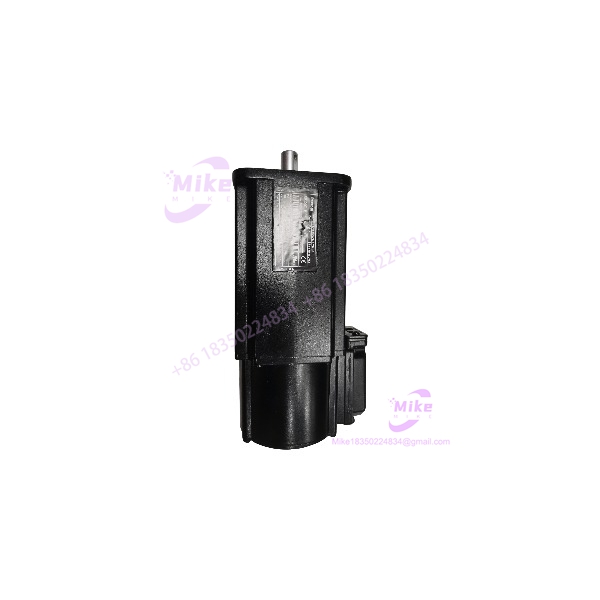
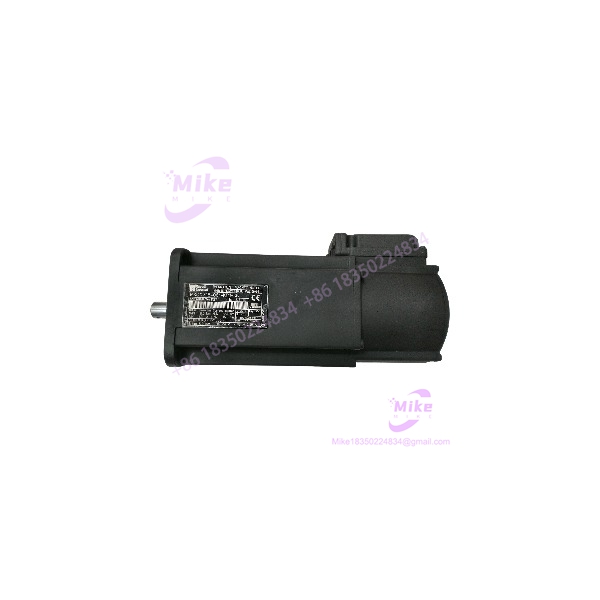
MKD071B-061-KP1-KN | 4500 RPM Servo Motor
Product Introduction
The Bosch Rexroth Indramat MKD071B-061-KP1-KN is an MKD-series permanent-magnet synchronous servo motor designed for closed-loop motion systems using compatible Indramat drive electronics. Its 071B frame and 061 winding are paired with resolver feedback and an integrated multiturn absolute encoder. The KP1 configuration specifies a keyed shaft and integrated holding brake, while the KN configuration completes the standard motor design.
For replacement work, the complete type code is important because the KP1 configuration combines two specific mechanical features: a keyed shaft and 5 Nm holding brake. The documented motor provides 8.0 Nm continuous standstill torque, 50.4 A peak current, and a 4,500 RPM characteristic speed, with absolute position detection exceeding 4,096 revolutions. The 115 mm flange and 95 mm centering diameter define the primary machine-side mounting interface.
MKD071B-061-KP1-KN
Key Technical Specifications
- Manufacturer: Bosch Rexroth Indramat
- Model: MKD071B-061-KP1-KN
- Material/Order Number: R911261989
- Series: MKD Synchronous Motors
- Motor Size: 071
- Motor Length: B
- Winding Code: 061
- Motor Design: Permanent-magnet synchronous servo motor
- Continuous Standstill Torque: 8.0 Nm
- Continuous Standstill Current: 11.2 A
- Peak Current: 50.4 A
- Characteristic Motor Speed: 4,500 RPM
- Maximum Speed: 6,000 RPM
- Pole Pairs: 4
- Torque Constant: Approximately 0.77 Nm/A at 20°C
- Winding Resistance: Approximately 1.45 ohms at 20°C
- Winding Inductance: Approximately 7.2 mH
- Feedback: Resolver with integrated multiturn absolute encoder
- Position Detection: Absolute, greater than 4,096 revolutions
- Shaft: Keyed shaft with shaft sealing ring
- Key Standard: DIN 6885-1
- Holding Brake: Integrated
- Holding Brake Torque: 5 Nm
- Brake Supply: 24 VDC
- Connection Type: Connection/junction box
- Connection Direction: Side B
- Flange Size: 115 mm
- Centering Diameter: 95 mm
- Protection Rating: IP65
- Insulation Class: F
- Cooling: Natural convection in the standard configuration
- Motor Mass: Approximately 8.8 kg
- Housing: Standard black finish
Application Scenarios & Pain Points
1. Legacy Indramat Servo-Axis Replacement
The MKD071B-061-KP1-KN is applicable where an installed MKD071B servo motor requires the same 061 winding, keyed-shaft interface, feedback configuration, and brake arrangement.
Engineering pain point: Selecting only by frame size can result in the wrong winding or feedback configuration.
2. Machine-Tool Positioning Axes
The multiturn absolute feedback arrangement supports closed-loop positioning applications where the compatible drive requires absolute position information.
Engineering pain point: The resolver/encoder combination must match the drive configuration. A conventional resolver-only replacement should not be assumed equivalent.
3. Packaging and Printing Machinery
The MKD family is used in automated machinery requiring coordinated servo motion, including packaging and printing-related equipment.
Engineering pain point: The keyed shaft and 115 mm flange must match the existing coupling and mounting arrangement. A plain-shaft motor is not a direct mechanical substitute.
4. Vertical and Load-Holding Servo Axes
The integrated 5 Nm holding brake can mechanically hold an axis when servo power is removed.
Engineering pain point: Brake torque must be evaluated against actual static load torque. The motor brake should not be treated as the machine’s dynamic stopping or safety system.
5. Legacy Maintenance Inventory
This model is appropriate for maintenance programs supporting older Rexroth Indramat motion systems where exact motor configuration matters.
Engineering pain point: A stored motor should undergo electrical, mechanical, brake, and feedback testing before being released as a production spare.
QA & Live Testing SOP
1. Identity Verification
- Photograph the complete nameplate.
- Confirm MKD071B-061-KP1-KN.
- Verify material number R911261989.
- Confirm winding code 061.
- Verify the KP1 configuration.
- Record serial number and manufacturing information.
2. Mechanical Inspection
- Verify the 115 mm flange.
- Verify the 95 mm centering diameter.
- Inspect the keyed shaft and keyway for wear or deformation.
- Inspect the shaft sealing ring.
- Rotate the shaft manually.
- Check for abnormal bearing noise.
- Check radial and axial play.
- Inspect mounting surfaces for corrosion or impact damage.
3. Holding-Brake Test
- Apply a controlled 24 VDC brake supply.
- Confirm clean mechanical release.
- Remove brake power and verify positive brake engagement.
- Measure brake current where the test procedure permits.
- Check for brake drag after release.
- Confirm the brake is mechanically capable of holding the expected static load.
- Do not use repeated dynamic brake stops as an incoming inspection method.
4. Motor Winding Test
- Measure phase-to-phase resistance.
- Compare all three phase readings for balance.
- Perform an appropriate insulation-resistance test.
- Check each winding against the motor frame.
- Record test results and ambient temperature.
- Keep resolver/encoder electronics isolated from inappropriate high-voltage testing.
5. Feedback Test
- Inspect resolver wiring and connection-box terminals.
- Check for corrosion, loose terminals, or damaged insulation.
- Connect the motor to a compatible Rexroth/Indramat test drive.
- Confirm resolver feedback detection.
- Verify feedback direction at low speed.
- Confirm absolute/multiturn position response through the compatible drive system.
6. Controlled Rotation Test
- Begin at low speed with current limits active.
- Confirm correct rotation direction.
- Monitor motor current and following error.
- Check vibration and bearing noise.
- Increase speed progressively within the test fixture’s verified limits.
- Do not treat 6,000 RPM as a routine incoming-test speed.
7. Packaging and Traceability
- Record nameplate photographs and serial number.
- Document winding, insulation, brake, feedback, and rotation tests.
- Protect the keyed shaft and keyway against impact.
- Protect the connection box from mechanical shock and moisture.
- Use rigid packaging that prevents shaft loading during transportation.
Field Engineer’s Pitfall Guide
❗ KP1 is not KP0.
The KP0 configuration has a keyed shaft but no holding brake. KP1 retains the keyed shaft and adds a 5 Nm holding brake.
❗ KP1 is not KG1.
Both configurations have a 5 Nm holding brake, but KP1 uses a keyed shaft, while KG1 uses a plain/smooth shaft. The coupling must match the actual shaft configuration.
❗ Do not confuse continuous standstill torque with brake torque.
The motor is documented at 8.0 Nm continuous standstill torque, while the integrated brake is rated at 5 Nm. These specifications serve different functions.
❗ Verify speed terminology before commissioning.
Published MKD data identifies 4,500 RPM characteristic speed and 6,000 RPM maximum speed for this configuration. Other commercial records may present a rated-speed value separately. Do not substitute one rating for another without checking the applicable motor documentation.
❗ The 061 winding is part of the motor’s electrical identity.
Changing from the 061 winding to another MKD071B winding can change the required drive parameters, current limits, torque/speed characteristics, and tuning.
❗ Do not assume the brake makes a vertical axis safe by itself.
Verify the actual load torque, brake condition, external safety circuitry, and machine-specific stopping strategy before placing a vertical axis into service.
Intent-Driven FAQ
What is the Bosch Rexroth -061-KP1-KN?
It is a Bosch Rexroth Indramat MKD permanent-magnet synchronous servo motor with a 071B frame, 061 winding, resolver/multiturn absolute feedback, keyed shaft, and integrated 5 Nm holding brake.
What is the material number?
The exact-model references identify R911261989 as the materialnumber for .
Does the have a holding brake?
Yes. The KP1 configuration includes a 5 Nm holding brake, operated from a 24 VDC brake circuit.
Does it have a keyed shaft?
Yes. The KP configuration uses a shaft with keyway and shaft sealing ring. The documented shaft key standard is DIN 6885-1.
What feedback does this motor use?
It uses resolver feedback with an integrated multiturn absolute encoder, with absolute position detection greater than 4,096 revolutions.
What is the continuous standstill torque?
The documented natural-convection value is 8.0 Nm continuous torque at standstill, with a corresponding continuous standstill current of approximately 11.2 A.
What is the maximum speed?
Published exact-model data identifies 6,000 RPM maximum speed and 4,500 RPM characteristic motor speed. These are different rating terms and should not be treated as interchangeable.
What are the mounting dimensions?
The motor uses a 115 mm flange and 95 mm centering diameter.
Can I replace an -061-KP0-KN with this motor?
The mechanical interface is partly similar because both use a keyed shaft, but the KP1 has a 5 Nm holding brake while KP0 has no brake. Confirm the machine’s brake wiring, drive configuration, and load-holding requirements before substitution.
Can I replace an -061-KG1-KN with this motor?
The brake configuration is the same at 5 Nm, but the shaft configuration differs: KP1 has a keyed shaft, while KG1 has a plain shaft. The coupling and shaft interface therefore require verification.
What should be tested before purchasing a surplus unit?
Verify the complete nameplate and R911261989 identity, keyed shaft and keyway, flange and centering dimensions, brake operation, winding resistance and insulation, resolver feedback, connection box, bearings, and low-speed rotation behavior.





