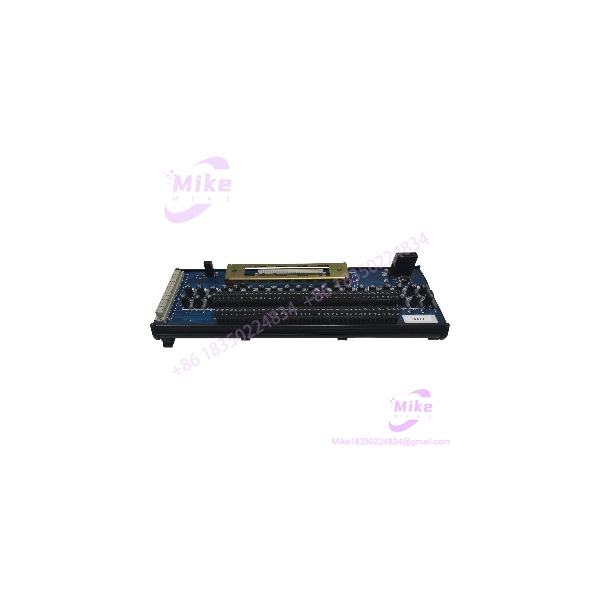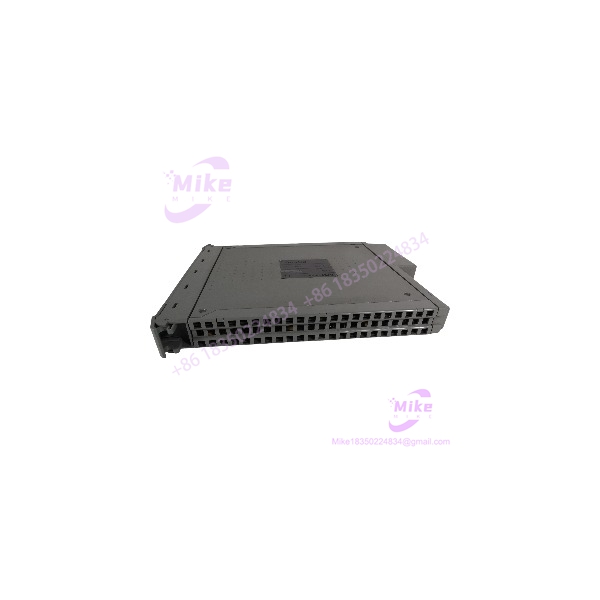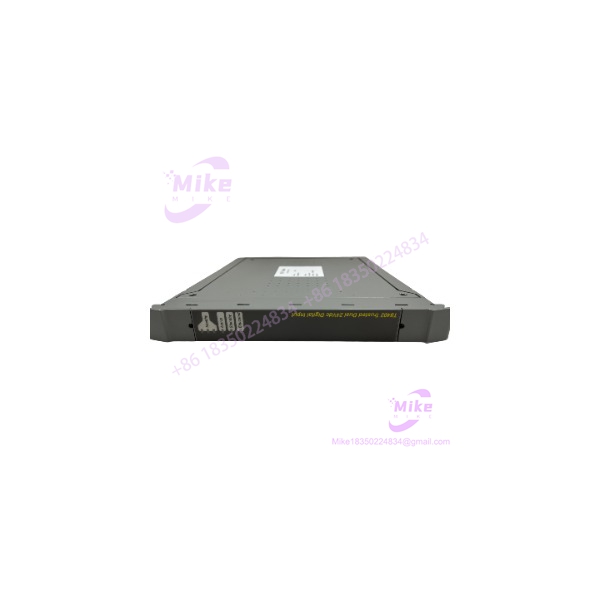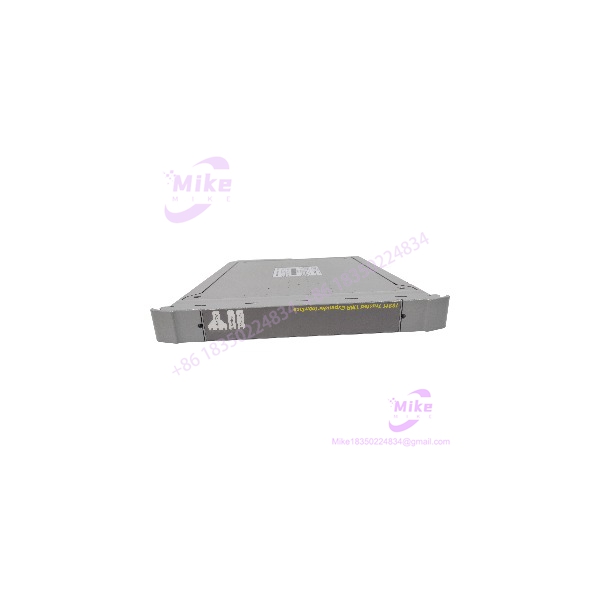

Description
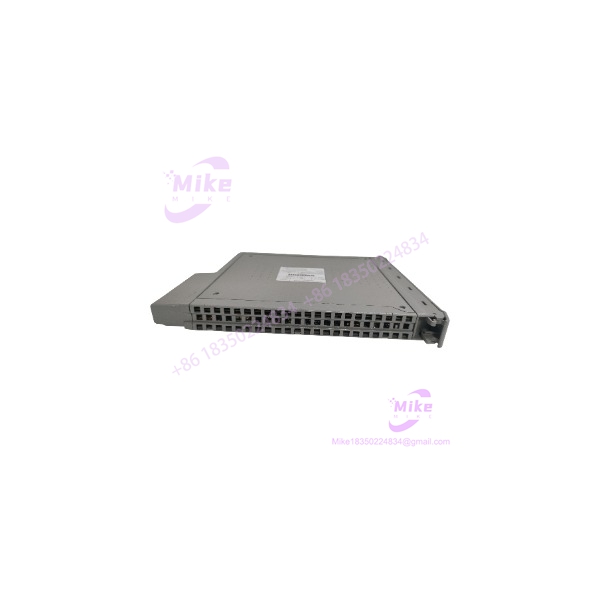
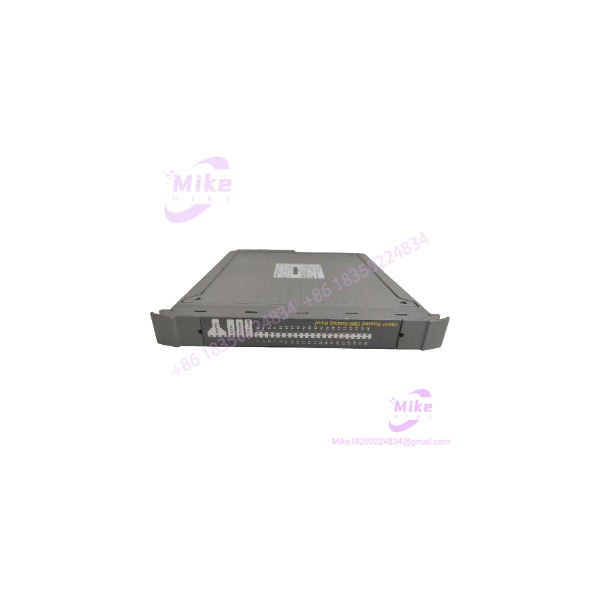
ICS Triplex T8431 | Trusted TMR Analog Input Module
Product Introduction
When a safety instrumented system starts reporting inconsistent field measurements, replacing the wrong I/O module can turn a manageable maintenance job into a prolonged shutdown. The ICS Triplex T8431 is not an ordinary analog input card. It is a 40-channel Trusted TMR (Triple Modular Redundancy) analog input module designed to acquire field signals within the ICS Triplex Trusted safety control architecture. Installed in a compatible T8100 or T8300 I/O module slot, it interfaces with sourcing field devices and works with the associated field termination assembly.
The engineering advantage comes from its triplicated measurement architecture. Each input channel supports redundant signal processing, while configurable voltage thresholds and onboard Sequence of Events (SOE) reporting provide additional diagnostic information. With a 0–22 mA input range, 3.906 µA resolution, and 1 ms SOE event resolution, the T8431 is designed for applications where signal integrity and event traceability matter. For maintenance teams managing legacy safety systems, retaining the correct hardware configuration can also reduce unnecessary engineering changes during module replacement.
T8431
Key Technical Specifications
Identification
- Manufacturer: ICS Triplex
- Model Number: T8431
- Product Family: Trusted TMR
- Module Classification: 24 VDC Analog Input Module
- Architecture: Triple Modular Redundancy
Input Characteristics
- Number of Input Channels: 40
- Input Current Range: 0–22 mA
- Input Voltage Range: 0–5.5 VDC
- Field Termination Assembly Input Impedance: 250 Ω
- Module Input Impedance: 16.967 kΩ
- Input Resolution: 3.906 µA
- Safety Accuracy: ±200 µA
- Calibration Accuracy: ±0.15%
- User-Configurable Thresholds: Supported
Electrical Characteristics
- Backplane Supply Voltage: 20–32 VDC
- Backplane Power Consumption: 20 W
- Maximum Power Dissipation: 20 W
- Field Supply: Not applicable
- Internal Fusing: None
Redundancy and Diagnostics
- TMR Signal Processing: Three measurement paths
- Line Monitoring: Configurable per channel
- Sequence of Events Resolution: 1 ms
- SOE Timestamp Accuracy: ±10 ms
- Channel-to-Channel Isolation: None
- Field Common Isolation: 50 V reinforced continuous
Environmental Conditions
- Operating Temperature: 0°C to +60°C
- Storage Temperature: -25°C to +70°C
- Relative Humidity: 10–95%, noncondensing
Mechanical Dimensions
- Height: 266 mm
- Width: 31 mm
- Depth: 303 mm
- Approximate Weight: 1.149 kg
Application Scenarios & Pain Points
1. Oil & Gas Processing – Continuous Analog Signal Monitoring
A refinery cannot afford to lose critical process measurements because of an incorrect I/O module replacement.
The T8431 supports 40 analog input channels within the Trusted TMR architecture, making it suitable for monitoring process instrumentation and maintaining established safety-system configurations.
Engineering considerations:
- Verify transmitter signal compatibility.
- Check field wiring polarity and termination.
- Confirm configured channel thresholds.
- Validate signal readings before returning the system to service.
2. Power Generation – Safety System Maintenance
With vs. Without:
- Without the correct replacement: Maintenance teams may need to investigate signal discrepancies, troubleshoot field wiring, and spend additional hours identifying incompatible hardware.
- With the correct T8431: Existing 40-channel analog acquisition hardware can be replaced while retaining the intended Trusted TMR system architecture, subject to configuration compatibility.
The 1 ms SOE event resolution also supports detailed event analysis when investigating process disturbances.
3. Petrochemical Plants – Field Wiring Fault Detection
Long cable runs and deteriorating field connections can create intermittent signal problems.
The T8431 offers configurable line-monitoring functionality for detecting open- and short-circuit field cable conditions. This helps maintenance engineers distinguish wiring faults from genuine process-variable changes.
4. Legacy DCS/SIS Migration – Hardware Obsolescence
When an installed Trusted controller reaches the maintenance phase of its lifecycle, sourcing the exact original module can be more practical than redesigning an entire I/O architecture.
The T8431 provides a replacement option for compatible existing systems. Before procurement, verify the associated T8830 field termination assembly, system configuration, and installed hardware revisions.
QA & Live Testing SOP (Trust Signal)
A product label alone does not prove that an industrial safety module is fit for service. Our recommended inspection and verification procedure for the ICS Triplex T8431 includes:
Step 1 – Origin and Physical Verification
- Inspect OEM identification labels and product markings.
- Check serial numbers and model identification.
- Inspect connectors, circuit boards, and housing.
- Look for corrosion, damaged pins, or previous repair marks.
- Review available OEM packaging and traceability documentation.
Step 2 – Electrical Inspection
- Inspect the module for visible component damage.
- Verify electrical characteristics against the manufacturer datasheet.
- Check the applicable backplane supply requirements.
- Inspect the module’s connector condition.
Step 3 – Powered Functional Testing
Where a suitable Trusted test rack and qualified test procedure are available:
- Power the module using a compatible test configuration.
- Check startup and diagnostic indicators.
- Exercise representative analog input channels.
- Verify current input response across the specified operating range.
- Check configurable thresholds and diagnostic behavior.
- Verify SOE event reporting and timestamp functionality.
A Fluke calibrator or equivalent precision signal source can be used for controlled input verification.
Step 4 – Packaging and Dispatch
- Apply ESD-safe protective packaging.
- Use suitable cushioning against mechanical impact.
- Protect connector pins during transportation.
- Provide inspection and test documentation where available.