

Description
Honeywell FS-SAI-1620m | 16-Channel Safety Analog Input
Dynamic Product Introduction
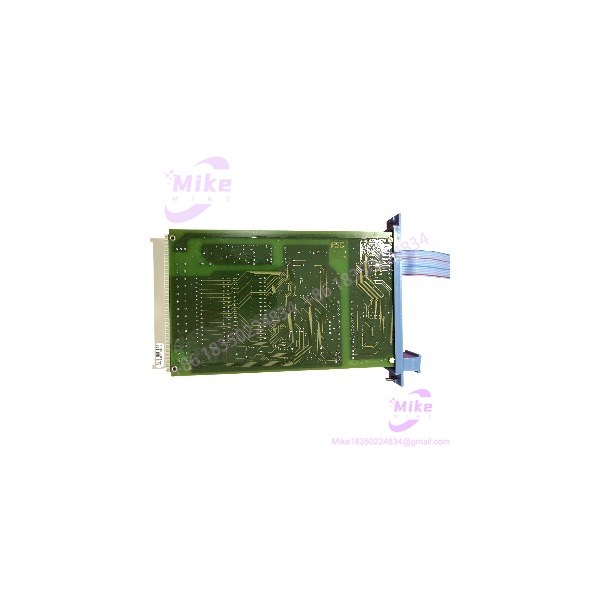
The Honeywell FS-SAI-1620m is a Safety Manager input card built for high-density analog acquisition in a safety-system environment. It provides 16 analog input channels in a relatively compact I/O module, allowing a Safety Manager installation to collect multiple process measurements without dedicating a separate card to every transmitter. Honeywell’s hardware reference explicitly lists FS-SAI-1620m as the FS type number for the SAI-1620m module.
There is an important technical detail here: the SAI-1620m does not directly behave like a conventional 4–20 mA analog input card. The module’s documented electrical input range is 0–4.1 V, with input resistance greater than 1 MΩ. Field current signals are conditioned through the appropriate field termination/conversion hardware before reaching the SAI-1620m. Honeywell documentation identifies the TSAI-1620m and other compatible conversion arrangements for this purpose.
That distinction matters during replacement. A technician who sees “16-channel analog input” and wires a transmitter directly into the card as though it were an ordinary DCS AI module can create a completely wrong installation.
The wider SAI-1620m family includes FS, FC, and FA variants. The Honeywell hardware reference lists FS-SAI-1620m, FC-SAI-1620m, and FA-SAI-1620m as separate type numbers, while certification/parts documentation distinguishes the conformal-coated FC version and ATEX-associated FA version.
So if a purchasing record says FS-SAI-1620MA, do not silently convert it into an FC or FA variant.
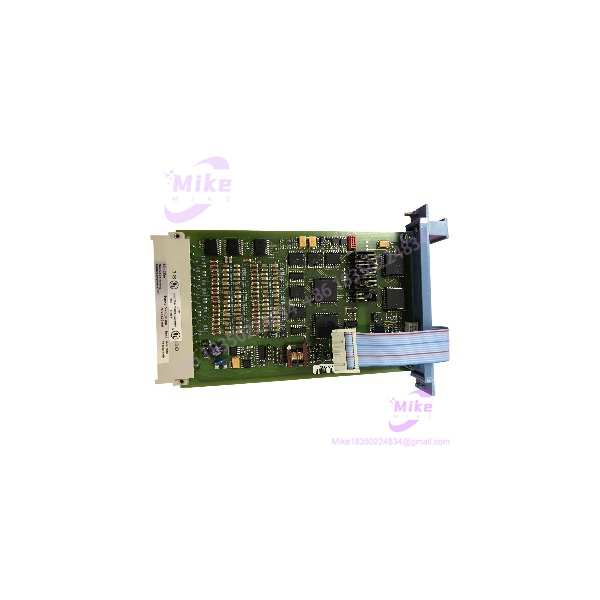
FS-SAI-1620m
Key Technical Specifications
- Manufacturer: Honeywell
- System: Safety Manager
- Exact documented type number: FS-SAI-1620m
- Related variants: FC-SAI-1620m, FA-SAI-1620m
- Product Type: Safe high-density analog input module
- Number of Input Channels: 16
- Input Range: 0–4.1 V DC
- Input Resistance: >1 MΩ
- Maximum Load Capacitance: 100 nF
- A/D Converter: 12-bit
- A/D Converter Inaccuracy: ±1 LSB
- Module Inaccuracy: <0.25%
- Absolute Maximum Input Signal: ±36 VDC
- Cross-Talk Between Channels: >60 dB
- External Voltage Readback Range: 0–4.1 V
- External Voltage Readback Input Resistance: Typically 1 MΩ
- Power Requirements: 5 VDC, 35 mA and 24 VDC, 35 mA
- Space Requirement: 4 TE, 3 HE
- Approvals Listed by Honeywell: CE, TÜV, UL, CSA, FM.
Signal Interface — Important
The field-side signal architecture should not be confused with the module’s raw input specification.
The SAI-1620m accepts a 0–4.1 V signal at its analog input. For conventional 0–20 mA or 4–20 mA transmitters, Honeywell’s Safety Manager architecture uses appropriate field termination/conversion equipment such as the TSAI-1620m, TSHART-1620m, TSGAS-1624, TSFIRE-1624, or the applicable BSAI conversion arrangement.
This is why descriptions that simply call FS-SAI-1620m a “4–20 mA input card” are incomplete.
Safety Application
The SAI-1620m belongs to the Safety Manager safety-I/O architecture. Available Honeywell-derived documentation identifies the module as a safe high-density analog input module, while project documentation specifies FS-SAI-1620m for Safety Manager SIS and FGS applications.
Do not, however, treat the loose module as an independently certified safety function. The applicable safety integrity and certification depend on the complete Safety Manager configuration, hardware revision, application software, field termination arrangement, and approved system architecture.
Global Sourcing & Live-Test SOP
Inbound Verification
For an FS-SAI-1620m, the first job is exact identification.
Record:
- Complete front-label model
- FS-SAI-1620m designation
- Hardware revision
- Serial number
- Date code
- PCB condition
- Connector condition
- Mounting/keying features
- Coating condition
- Any evidence of previous repair
If the seller calls the unit FS-SAI-1620MA, photograph the actual label and verify whether the final character is genuinely an “A” or simply a capitalization/transcription error.
Honeywell’s documented type number is FS-SAI-1620m, not FS-SAI-1620MA.
Variant Verification
Do not mix these without checking the installation:
- FS-SAI-1620m
- FC-SAI-1620m
- FA-SAI-1620m
Parts documentation identifies different part numbers and revisions for these variants. For example, the FS version is listed with 3402103/3402106 references in different revisions, while the conformal-coated FC version uses separate identifiers.
The difference can matter in hazardous-area, environmental, or certification-controlled installations.
Live Simulation
A meaningful test should use the appropriate Safety Manager rack/backplane and compatible field termination hardware.
Recommended sequence:
- Inspect the card and connector.
- Verify hardware identification and revision.
- Confirm the I/O rack and backplane are correct.
- Install the module in the appropriate slot.
- Verify system power.
- Confirm the controller recognizes the module.
- Inject known analog test voltages through the correct interface.
- Verify all 16 channels.
- Check channel diagnostics.
- Verify the external-voltage readback function where applicable.
- Confirm the Safety Manager controller reports normal module status.
Do not connect a 4–20 mA source directly to the card merely because the process transmitter uses a 4–20 mA loop. The field signal requires the appropriate conversion/termination architecture.
Diagnostics
A proper incoming test should verify:
- Module recognition
- Channel availability
- Input scaling
- A/D conversion
- Channel-to-channel behavior
- Cross-talk
- Diagnostic status
- Supply voltages
- External voltage readback
- Fault reporting
Honeywell’s documentation describes a controller-controlled self-test that checks absolute accuracy, conversion over the full range, cross-talk, channel input filters, and internal supply voltages.
That is considerably more useful than a simple “card powers on” inspection.
Final Preparation
Before shipment:
- Photograph the front label.
- Record hardware revision.
- Record test-rack configuration.
- Document tested channels.
- Protect the connector.
- Use ESD-safe packaging.
- Clearly distinguish tested from visually inspected stock.
For safety-system I/O, the test record should stay attached to the physical asset.
Field Engineer’s Pitfall Guide
❗ Do not wire 4–20 mA directly into the SAI-1620m
This is the most important installation warning.
The card’s documented analog input is 0–4.1 V, not a raw 4–20 mA input. Honeywell’s architecture uses dedicated termination/conversion hardware to convert field current signals to the voltage range required by the SAI-1620m.
If the existing cabinet uses a TSAI-1620m, TSHART-1620m, or another specified conversion assembly, keep that architecture intact.
❗ Do not confuse FS, FC, and FA variants
The basic SAI-1620m function appears across multiple Honeywell variants, but the type numbers are not interchangeable labels.
The hardware reference explicitly lists FS-SAI-1620m, FC-SAI-1620m, and FA-SAI-1620m as separate types. Parts documentation further identifies the FC version as conformal-coated and the FA version as an ATEX-related variant.
A replacement that has the same channel count but the wrong environmental/certification variant can be a procurement failure.





