

Description
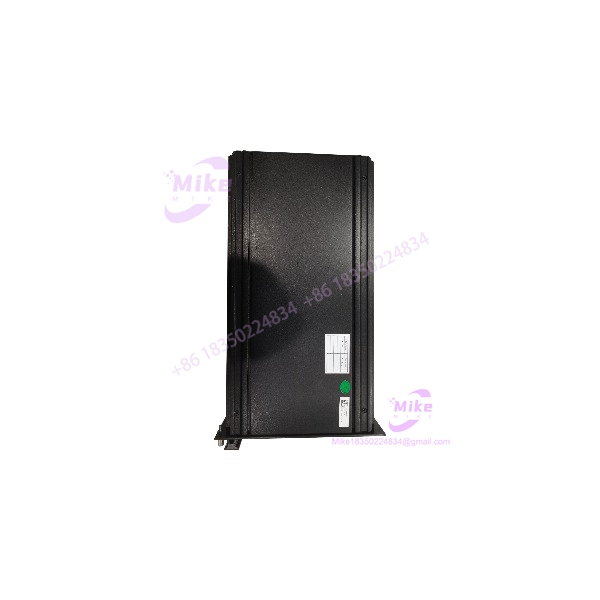
HollySys FM801 | 100 MHz DCS Controller
Dynamic Product Introduction
A dead HollySys FM801 can take an entire legacy DCS control station offline even when the I/O hardware itself is perfectly healthy. The controller sits at the center of the FM-series architecture: it collects and processes I/O data through the CNET/PROFIBUS-DP path, communicates upward through redundant industrial Ethernet, and exchanges controller-state information through the redundant RNET connection.
The FM801 uses an embedded x86-compatible processor running at 100 MHz, with 16 MB DRAM, 1 MB SRAM with battery backup, and 8 MB solid-state storage. It also incorporates a built-in PROFIBUS-DP master and redundant industrial Ethernet interfaces. The controller was designed for redundant operation and hot swapping, which is particularly relevant when maintaining older HOLLiAS MACS installations without disturbing the rest of the control station.
One important procurement point: the FM801 is obsolete in newer MACS migration paths. HollySys-related system documentation identifies FM802 as the replacement for FM801 in certain MACS V5 upgrade scenarios. That does not mean every FM801 installation should immediately be converted to FM802; existing application software, rack hardware, controller redundancy, and MACS version must be checked first.
FM801
Key Technical Specifications
- Model: HollySys
- System: HOLLiAS MACS FM Series
- Function: Main controller / field control station CPU
- Processor: Embedded x86-compatible processor
- CPU frequency: 100 MHz
- DRAM: 16 MB
- SRAM: 1 MB, battery-backed
- Solid-state storage: 8 MB
- Fieldbus: Built-in PROFIBUS-DP master
- Station network: Redundant industrial Ethernet
- Controller redundancy: Supported
- Controller-to-controller network: RNET data-exchange interface
- I/O communication: CNET through PROFIBUS-DP
- Mounting: Rail mounting
- Hot swap: Supported according to the hardware documentation
- Power environment: 24 VDC / +5 V internal controller architecture
- Maximum power consumption: Approximately 10 W at 24 VDC in the published FM-series comparison data.
- Documented FM-series operating temperature: 0°C to 45°C in the published comparison data.
The should therefore be classified as a DCS controller, not as a conventional PLC I/O module. Several third-party listings incorrectly describe using generic PLC specifications such as Modbus, 16-channel I/O, or RS-485. Those claims do not match the HollySys FM-series controller architecture documented for the .
Global Sourcing & Live-Test SOP
For a surplus HollySys , a power-on test is only the beginning. A controller can illuminate its LEDs and still fail the actual requirements of a redundant DCS control station.
Inbound Verification
Record the complete physical identity before energizing the module:
- model marking
- Hardware revision
- Serial number
- Controller identification
- Front-panel LED condition
- Connector condition
- Battery condition
- Evidence of corrosion or moisture
- Previous repair marks
- Storage-media condition
The front panel provides dedicated status indications including RUN, RNET, SNET1, SNET2, ERROR, STANDBY, BATTERY, RESET, and POWER. Those indicators are useful during acceptance testing because they provide immediate clues about controller state, redundancy, network status, and battery condition.
Live Simulation
The correct test environment is an actual compatible FM-series controller rack or equivalent engineering test system.
A useful acceptance sequence includes:
- 24 VDC supply verification
- Controller boot test
- RUN/ERROR status verification
- PROFIBUS-DP master initialization
- I/O station recognition
- Redundant Ethernet communication
- RNET controller communication
- Active/standby transition
- Controller restart
- Application/configuration verification
For redundancy testing, pair the with a known-good controller where the test architecture permits it. Verify that the active controller can transfer control responsibility correctly and that the standby unit receives the required state information.
Diagnostics
The FM-series architecture uses several distinct communication paths. CNET handles I/O data collection and processing through PROFIBUS-DP, SNET transfers field-control-station data to the system server over redundant industrial Ethernet, while RNET handles data exchange between redundant controllers.
That means the diagnostic procedure should not stop after checking Ethernet.
Test each layer separately:
- CNET: PROFIBUS-DP master and I/O communication
- SNET: redundant Ethernet communications
- RNET: controller redundancy/data exchange
- CPU: logic execution and scan behavior
- SRAM: retained data and battery status
- Storage: application/system image access
A calibrated Fluke multimeter is appropriate for checking the incoming DC supply and relevant power rails; a PROFIBUS diagnostic analyzer is preferable when investigating intermittent fieldbus faults.
Extended Run and Final Prep
Run the controller long enough to establish stable operation at operating temperature. For critical spare inventory, I would use an extended test rather than a five-minute boot check.
Record:
- Hardware revision
- Firmware/system revision where accessible
- Battery indication
- PROFIBUS status
- Ethernet status
- Redundancy behavior
- Test duration
- Observed alarms
Then package the in ESD-safe material with the connectors mechanically protected.
The Field Engineer’s Pitfall Guide
❗ Do not confuse with FM802, FM803, or newer FM-series controllers. The uses a 100 MHz processor and 8 MB solid-state storage, while the FM803 uses a 266 MHz processor and 16 MB storage. HollySys migration documentation also identifies FM802 as the replacement path for in certain MACS V5 applications. A visually similar controller is not automatically an application-compatible replacement.
❗ Do not ignore the active/standby configuration. The supports redundant operation, with RNET handling controller-to-controller data exchange. If you replace only one controller in a redundant pair, verify standby synchronization before allowing it to assume control. I’ve seen maintenance teams replace the hardware correctly and still create an unnecessary plant interruption because the standby controller was not synchronized.
❗ Do not treat a PROFIBUS problem as an Ethernet problem. The has a built-in PROFIBUS-DP master for I/O communication, while redundant industrial Ethernet handles the supervisory/network side. If the SNET indicators look normal but field I/O remains unavailable, move downstream into the CNET/PROFIBUS path rather than repeatedly rebooting the controller.
Intent-Driven FAQ
What is the HollySys used for?
The HollySys is the main controller used in the FM-series field control station of the HOLLiAS MACS DCS. It executes control functions and manages communication between the field I/O network and higher-level system infrastructure.
Is a PLC CPU or a DCS controller?
It is more accurately described as a DCS field-control-station controller. Although its embedded x86-compatible processor performs CPU functions similar to a PLC, the is designed around the MACS architecture, including PROFIBUS-DP I/O communication, redundant Ethernet, and controller redundancy.
Does the have a built-in PROFIBUS interface?
Yes. The includes a built-in PROFIBUS-DP master interface for communicating with field I/O.
Can operate in redundant configuration?
Yes. Redundancy is one of the documented features. The RNET interface is used for data exchange between the primary and backup controllers.
Is still manufactured?
The is a legacy controller. Published HollySys system material states that is no longer produced and identifies FM802 as the replacement in a specific MACS V5 migration context. For an existing installation, keeping a tested spare can therefore be a practical strategy when an immediate system migration is not justified.
Can I directly replace with FM802?
Not blindly. The documented migration path makes the replacement for in certain MACS V5 configurations, but the actual installation needs to be checked for MACS version, application software, controller rack, redundancy arrangement, and related hardware. A replacement controller should be validated in the actual engineering configuration before being introduced into a live process.
Is hot-swappable?
The documentation identifies hot swap as a feature. Even so, follow the site’s approved maintenance procedure. Hot-swap capability does not eliminate the need to verify the controller’s redundancy state, power architecture, and application-specific restrictions.
What should I verify when buying a used ?
At minimum, verify the exact model, hardware revision, battery status, controller boot behavior, PROFIBUS-DP communication, redundant Ethernet interfaces, RNET behavior, and compatibility with the installed MACS software version. For a redundant system, test the controller as a redundant pair rather than accepting a standalone power-on test.
What warranty should I expect for a surplus ?
Get the warranty terms in writing. For an obsolete DCS controller, I would want the seller to specify whether the unit is tested, refurbished, or merely power-tested, along with the DOA period, functional coverage, and return procedure. “Working” should not mean only that the POWER LED illuminates.
Procurement Verdict
The HollySys is a legacy HOLLiAS MACS FM-series main controller, built around a 100 MHz embedded x86-compatible processor, 16 MB DRAM, 1 MB battery-backed SRAM, 8 MB solid-state storage, redundant industrial Ethernet, and an integrated PROFIBUS-DP master.
For a running MACS installation, the remains a meaningful spare-part target when the objective is to restore an existing control station without immediately undertaking a platform migration. However, procurement should distinguish between exact replacement and -based modernization. Those are different engineering decisions.
If sourcing an today, I would prioritize a unit with documented controller boot testing, PROFIBUS-DP verification, redundancy testing, battery inspection, and known MACS compatibility. That is far more useful than a generic “tested PLC module” description.





