


Description
Hilscher CIF 104-DNM | PC/104 DeviceNet Master Communication Interface Core Category
Dynamic Product Introduction
Embedded PC/104 architectures deployed in harsh legacy environments often struggle to interface with sprawling DeviceNet field architectures without major footprint expansions. The CIF 104-DNM solves this physical constraint by integrating a complete DeviceNet master stack directly onto a stackable, low-profile card format. Rather than burdening the host CPU with heavy protocol overhead, this CIF 104-DNM controller autonomously manages cyclic and explicit messaging across the network bus.
Keeping older embedded industrial PCs running without expensive motherboard redesigns relies heavily on sourcing reliable, drop-in hardware variants like the CIF 104-DNM. Whether managing high-speed discrete node polling or gathering diagnostic parameters from distributed drives, the CIF 104-DNM maintains stable real-time data exchange.
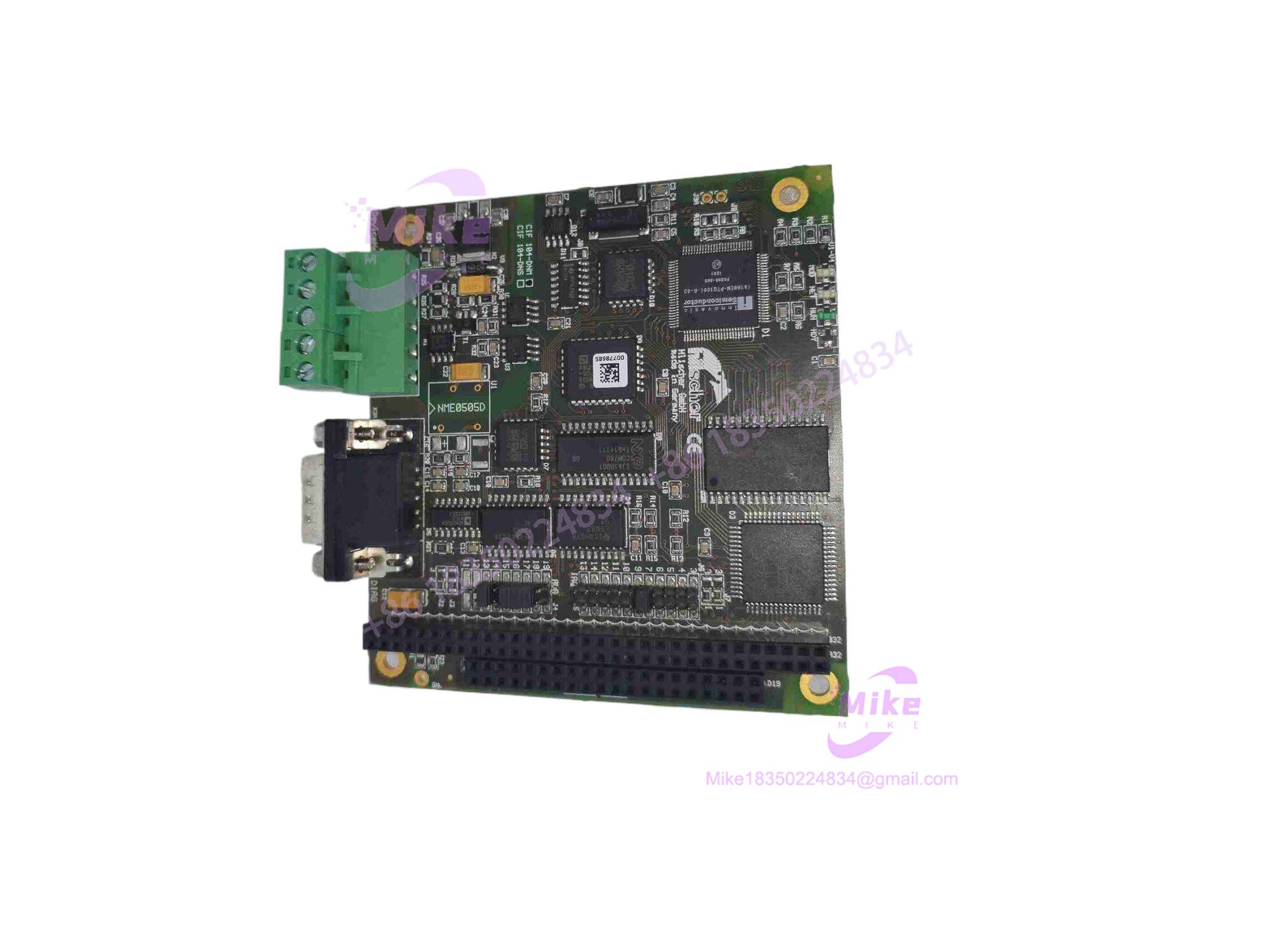
CIF 104-DNM
Key Technical Specifications
| Core Parameter | Technical Specification |
|---|---|
| Form Factor | PC/104 stackable embedded module |
| Communication Protocol | DeviceNet Master (compliant with ODVA specifications) |
| Max Slaves Supported | Up to 63 nodes |
| I/O Data Size | 7 KB dual-port memory (DPRAM) allocation |
| Supported Messaging | Polling, Bit-strobe, Cyclic, Change of State (COS), Explicit |
| Host Interface | Dual-Port RAM (DPRAM) with configurable base addresses |
| Diagnostic Port | Non-isolated RS-232 interface |
| Operating Temperature | 0 °C to 50 °C (standard industrial tier) |
| Dimensions | 90 mm × 96 mm × 23 mm |
| Part Number | CIF 104-DNM |
Global Sourcing & Live-Test SOP (Transparency Core)
Procuring mature, application-specific embedded cards requires an uncompromising chain of custody. Every pre-owned or surplus CIF 104-DNM unit undergoes a rigorous multi-step evaluation sequence:
- Inbound Verification: Technicians perform microscopic inspections of the PC/104 stackable pin headers for bending or oxidation, cross-referencing serial identifiers against factory release records.
- Live Simulation: The CIF 104-DNM is mounted onto a verified PC/104 test rack, coupled to an active CPU board, and powered via an isolated industrial supply.
- Diagnostics: Engineers execute full communication polling sweeps against a physical array of DeviceNet slave nodes, measuring packet error rates and validating DPRAM handshakes. Units are subjected to a 24-hour thermal stress test to verify stability.
- Final Prep: Memory registers are completely cleared, firmware is verified against baseline configurations, and the module is hermetically sealed in antistatic packaging.
The Field Engineer’s Pitfall Guide
- ❗ DPRAM Address Conflicts: Overlapping the Dual-Port RAM memory window of the CIF 104-DNM with other legacy expansion cards on the PC/104 stack causes immediate system lockups. (—though this can easily be avoided by mapping jumpers or software base addresses correctly.) I’ve seen field techs spend an entire shift troubleshooting a “dead” CPU stack only to find a memory address collision.
- ❗ Bus Power Isolation Errors: Forgetting to supply an independent, regulated 24 VDC power source to the DeviceNet bus line while expecting the CIF 104-DNM internal logic to drive transceivers will result in instant node initialization failures.
- ❗ PC/104 Stacking Stress: Applying uneven torque when tightening the four mounting corners of the CIF 104-DNM can micro-fracture the internal circuit board layers. Always tighten standoffs in a crisscross pattern.
Intent-Driven FAQ
Will swapping a damaged CIF 104-DNM card wipe out my network configuration files?
No. The actual DeviceNet scanlist and configuration parameters are typically compiled and stored on the host industrial PC’s storage drive via configuration tools like SYCON, rather than saved directly on the CIF 104-DNM card.
Can this card operate as a DeviceNet slave instead of a master?
The hardware architecture of the CIF 104-DNM is specifically targeted toward master (scanner) functionality. Attempting to flash it into a dedicated slave profile requires specific Hilscher firmware packages and alternative target identifiers.
What software tool is required to configure the network parameters?
Hilscher provides the SYCON system configuration utility, which interfaces via the host software layer to map node addresses, set baud rates, and define cyclic data exchanges for the CIF 104-DNM.
Is it safe to hot-swap a CIF 104-DNM card on a running PC/104 stack?
No. PC/104 bus architectures do not support live electrical insertion. Power must be completely dropped from the entire chassis before installing or extracting the CIF 104-DNM to prevent destroying the ISA-based parallel data lines.
What kind of warranty covers surplus or pre-owned units?
Qualified industrial suppliers generally back secondary-market CIF 104-DNM modules with an operational 1-year warranty covering both processor execution and bus transceiver health.
Are you pairing this CIF 104-DNM card with a specific x86 embedded CPU board in your current PC/104 stack?





