


Description
Fife CDP-01-MH | 120 VAC Web Guide Controller Specs
Dynamic Product Introduction
Managing lateral material drift during high-speed printing, converting, or packaging runs can quickly result in costly edge damage and wasted stock. When legacy web guide controllers suffer from sluggish response times or signal drift, maintaining precise alignment across rollers becomes an uphill battle.
Enter the Fife CDP-01-MH, a rugged web tracker control assembly engineered to anchor high-precision closed-loop guiding systems. By processing live feedback from optical, ultrasonic, or infrared edge sensors and translating it into crisp actuation commands, this CDP-01 hardware base eliminates lateral wandering across paper, film, and foil substrates. Facilities upgrading to this controller experience tighter web alignment and significantly reduced material waste—though this strictly depends on proper sensor calibration and stable mechanical linkage.
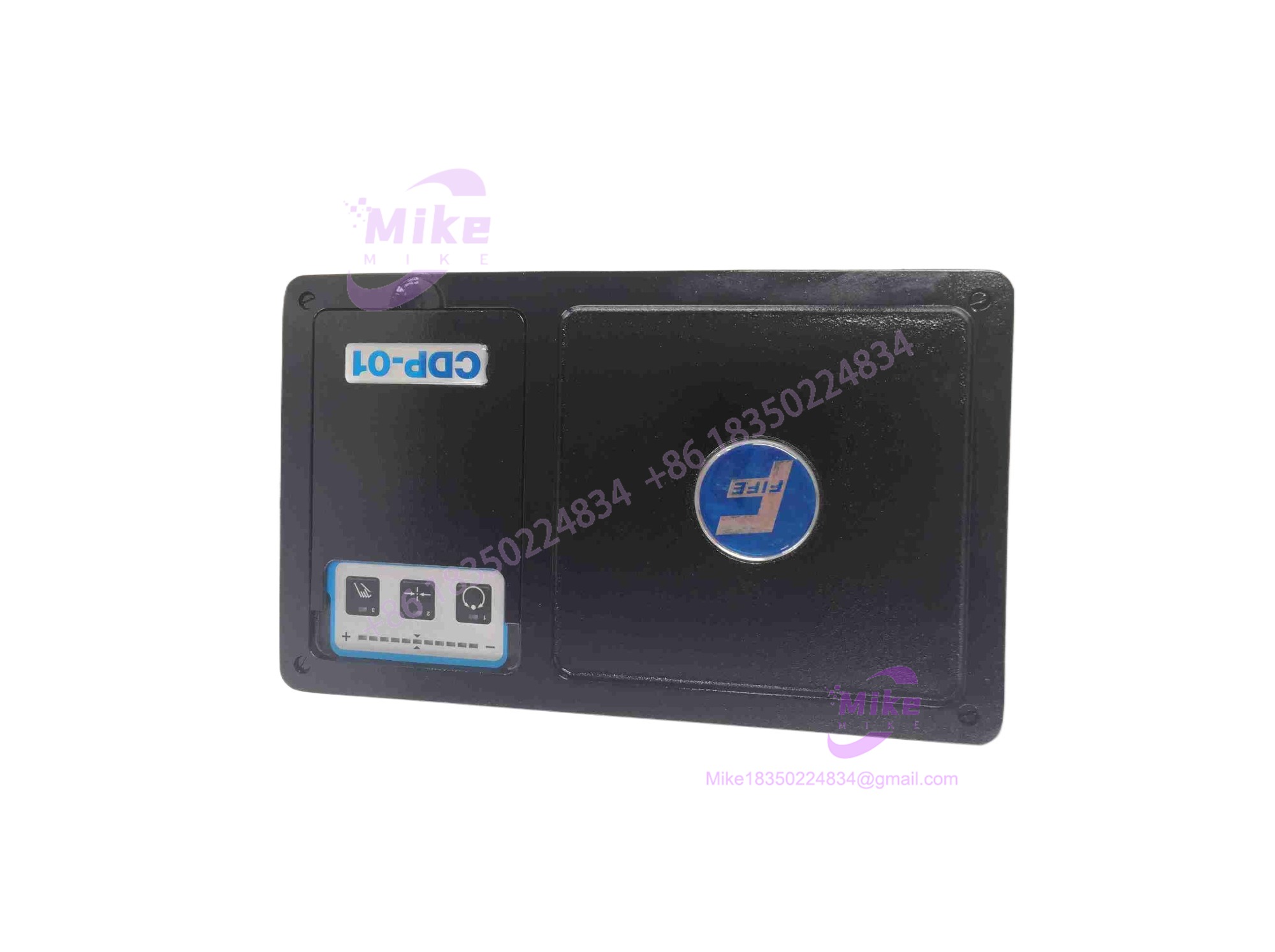
CDP-01-MH
Key Technical Specifications
| Core Parameter | Technical Specification |
| Product Series | CDP-01 Web Guide Controller Line |
| Product Type | Web Tracker Control Assembly |
| Input Voltage | 120 VAC (50/60 Hz) |
| Control Architecture | Closed-Loop Edge / Center Guide |
| Sensor Compatibility | Optical, Ultrasonic, and Infrared Edge Sensors |
| Actuator Support | Electro-Mechanical, Hydraulic, or Pneumatic Guides |
| User Interface | Front-Panel Operator Controls & Status Indicators |
| Operating Temperature | 0^\circC to 55^\circC |
| Mounting Style | Industrial Enclosure / Panel Mount |
| Approximate Weight | ~5.4 kg (12 lbs) |
Global Sourcing & Live-Test SOP (Transparency Core)
Procuring specialized web handling and motion control hardware demands an uncompromising quality control pipeline. In production lines, dropping an untested controller onto an active press can result in immediate web breaks and costly downtime.
- Inbound Verification: Every incoming shipment of the Fife CDP-01-MH undergoes meticulous customs documentation review alongside high-magnification holographic serial number checks to block gray-market counterfeits.
- Live Simulation: Technicians mount the controller onto a dedicated Fife test rig, linking it to standard ultrasonic or optical edge sensors and proportional actuators.
- Diagnostics: Engineers execute full-scale servo-center verification tests, check loop response linearity across the error band, and run a 24-hour thermal heat run to flush out infant mortality defects.
- Final Prep: Once cleared, the unit is logged by revision level, packed in anti-static shielding, and vacuum-sealed for storage.
The Field Engineer’s Pitfall Guide
❗ Servo-Center Misalignment: Failing to calibrate the controller to the true mechanical center of the guide roll during startup will cause the web to pull off-center the moment automatic mode is engaged. Always perform a servo-center zero check.
❗ Line Voltage Discrepancies: Hooking a 120 VAC CDP-01-MH unit into a 240 VAC un-stepped industrial drop will instantly fry the internal power regulation circuitry. Always verify incoming supply voltage prior to termination.
❗ Sensor Noise Coupling: Running unshielded sensor signal cables parallel to high-power AC motor drives introduces severe electromagnetic interference (EMI), leading to erratic actuator hunting and oscillation.
Intent-Driven Field FAQ
- Will I lose my calibration settings if I swap out a faulty CDP-01-MH controller?
Basic tuning parameters and deadband configurations may need to be re-verified or adjusted on the front-panel controls depending on the specific revision of the replacement unit.
- What types of sensors are compatible with this controller?
The CDP-01-MH interfaces seamlessly with a broad array of standard Fife sensors, including optical, infrared, and ultrasonic edge detectors.
- Can this unit control both hydraulic and electro-mechanical actuators?
Yes, it provides flexible output drive signals designed to interface with various actuator types utilized in web guiding systems.
- What maintenance tools are required to verify controller health locally?
A calibrated digital multimeter for checking power rails and sensor excitation voltages, alongside a signal simulator, is recommended for bench testing.
- Are factory-sealed units supplied with updated internal firmware?
Surprise surplus inventory often ships with baseline factory firmware revisions. Always verify compatibility against your specific machine architecture before final commissioning.





