

Description
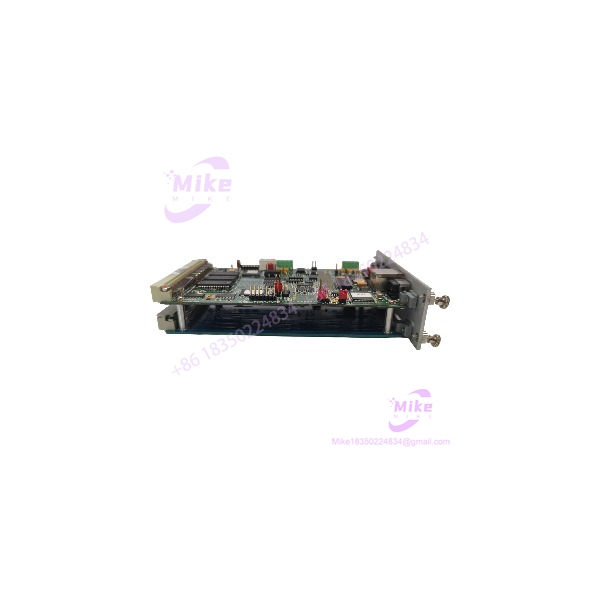
Delta Tau PMAC2 CPU | Programmable Multi-Axis Controller Module
Product Introduction
When a multi-axis CNC machine or high-speed robotic cell freezes up due to a processor fault, the entire manufacturing cell goes dark. The PMAC2 CPU isn’t a standard generic PLC card; it is a heavy-duty motion controller engineered specifically to manage complex kinematics and tight servo loops with sub-millisecond precision. Forcing low-tier controllers to handle high-axis interpolation leads to severe path error and trajectory jitter—making this exact processor vital for high-accuracy automation lines.
Operating inside demanding industrial control enclosures requires hardware built for rigorous electrical environments. The PMAC2 CPU processes raw feedback data from encoders, executes advanced PID control algorithms, and spits out precise analog or digital command signals to drives simultaneously. Built-in watchdog timers safeguard your mechanical assets against runaway conditions—though you must ensure your backplane power rails remain stable to prevent memory corruption during brownouts.
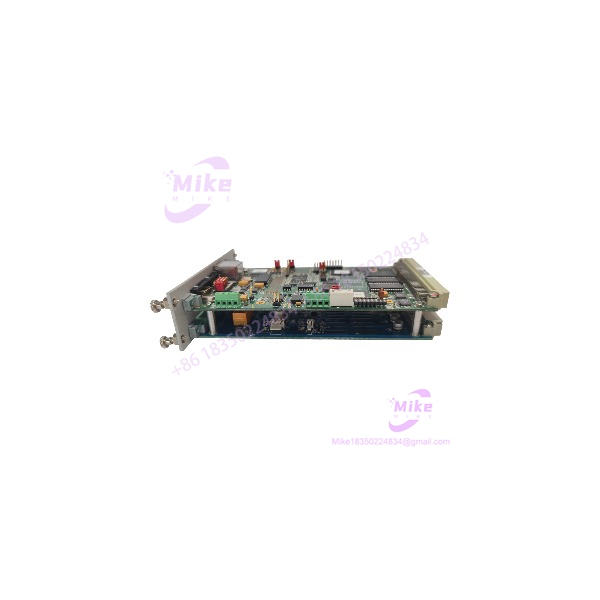
PMAC2 CPU
Key Technical Specifications
- Processor Architecture: High-speed industrial digital signal processor (DSP) core
- Axis Control Capacity: Multi-axis coordinated motion control (expandable via accessory slots)
- Memory Configuration: Non-volatile flash memory and battery-backed RAM for motion programs and parameter storage
- Communication Interfaces: High-speed serial ports, host communication channels, and expansion bus connectors
- Power Requirements: Powered via rack backplane power distribution rails
- Operating Temperature Range: 0°C to +55°C (32°F to 131°F)
- Storage Temperature Envelope: -20°C to +85°C (-4°F to +185°F)
- Relative Humidity Tolerance: 5% to 95% non-condensing operating environment
- Enclosure Form Factor: Industrial rack-mount printed circuit board assembly
- Mounting Configuration: Card-edge slot installation into dedicated PMAC2 chassis cages
Application Scenarios & Pain Points
A high-precision semiconductor packaging facility in California suffered chronic trajectory lag and following errors whenever older motion controllers struggled with complex multi-axis interpolation paths. Swapping out the degrading processor for a tested PMAC2 CPU restored deterministic scan loops and tightened positional accuracy across all axes, eliminating costly wafer alignment scrap.
With vs. Without Dedicated Motion Controllers:
- Without the PMAC2 CPU: Standard automation PLCs struggle with coordinated multi-axis math, resulting in jerky motion profiles, velocity ripple, and excessive mechanical wear on gearboxes.
- With the PMAC2 CPU: Dedicated hardware-level trajectory generation delivers ultra-smooth path execution and rapid settling times for demanding industrial machinery.
Aerospace Multi-Axis Milling Centers:
- Condition: Continuous multi-shift machining operations running heavy cutting loads in noise-dense environments.
- Impact: Electrical transients and thermal drift cause controller lockups and ruined parts.
- Solution: Deploying the rugged PM2AC2 CPU inside a shielded rack enclosure maintains reliable execution stability under harsh factory conditions.
QA & Live Testing SOP (Trust Signal)
Every PMAC2 CPU card that enters our facility goes through a strict, hands-on validation routine. We start with a full microscopic inspection of the printed circuit board traces, gold-plated edge fingers, and surface-mount components to verify there is zero thermal stress, corrosion, or handling damage. Next, the card is inserted into a dedicated PMAC2 test rack powered by a regulated bench supply—we measure bus voltage regulation and current draw using a calibrated Fluke digital multimeter.
During live functional testing, we connect the processor to our development software environment, downloading test motion programs to verify execution speed, memory integrity, and communication port responsiveness across all channels. We run a 24-hour thermal soak test to ensure zero watchdog faults or memory degradation under continuous load. Once verified, the board is wiped clean, slipped into anti-static shielding, and packed into custom foam-lined boxes for safe transit.
Field Engineer’s Pitfall Guide
❗ GOTCHA #1: Lithium Battery Backup Voltage Do not install a surplus PMAC2 CPU without checking the voltage of the onboard lithium backup battery. If the battery has drained during long warehouse shelf storage, the unit will dump its RAM parameters and motion programs upon power loss, forcing a complete project reload.
❗ GOTCHA #2: Backplane Power Rail Droop When adding high-density expansion accessory cards to a PMAC2 rack, verify that your power supply can handle the total current draw. Power rail droop will destabilize internal conversion circuits and trigger phantom watchdog resets.
❗ GOTCHA #3: Edge Connector Seating & Pin Alignment When sliding the PMAC2 CPU into the rack slot, press it firmly and straight until the card edge seats completely into the backplane connector. Off-center insertion can bend delicate backplane pins, causing permanent communication loss across the system bus.
Intent-Driven FAQ
What is the primary function of the PMAC2 CPU in an automation system?
The PMAC2 CPU acts as the central intelligence engine for multi-axis motion control systems, managing trajectory generation, axis interpolation, kinematic calculations, and closed-loop servo regulation.
Can I hot-swap the PMAC2 CPU while the machine power is active?
No. Pulling or inserting the PMAC2 CPU while the rack backplane is energized will short out power rails, corrupt memory registers, and potentially fry sensitive integrated circuits. Always power down the system before servicing controller boards.
What software is used to configure and program this processor?
Configuration, tuning, and motion program development for the PMAC2 CPU are handled using specialized software development environments like PEWIN, Executive, or IDE utilities provided by the manufacturer.
How do I troubleshoot a persistent watchdog fault on startup?
A watchdog fault typically indicates a corrupted parameter file, low backup battery voltage, or a hardware memory failure. Connect via the primary serial port using configuration software to read the exact error registers rather than attempting a blind reset.
Is the PMAC2 CPU backward compatible with older PMAC-1 accessory cards?
While some basic expansion principles overlap, the PMAC2 CPU is designed specifically for the advanced PMAC2 bus architecture. Mixing older PMAC-1 hardware directly onto the same high-speed bus can cause communication handshaking failures.





