Description
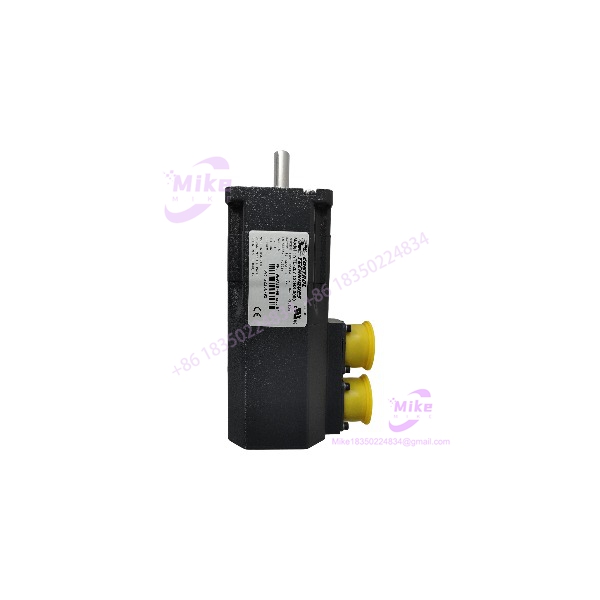
Control Techniques NTE-207-CONS-0000 Servo Motor | 230 VAC, 5000 RPM
Product Introduction
A servo motor replacement must match the machine’s mechanical interface and its motion-control architecture. The NTE-207-CONS-0000 is listed as an NT Series motor intended for precision motion applications where low rotor inertia and encoder feedback support controlled acceleration, deceleration, and position monitoring.
Its listed 0.85 Nm rated torque and 5,000 RPM speed make it important to check the machine’s torque-speed requirements rather than selecting a motor on speed alone. The listed 2048 PPR encoder is another critical consideration: the installed drive must support the motor’s feedback type and signal configuration.
This model is specified as unbraked. Applications requiring holding torque when power is removed may need a separate mechanical holding solution or a different motor configuration. Do not assume a similar-looking NT Series motor is interchangeable; the NTE designation identifies an English-flange configuration, while related models may use different mounting arrangements.
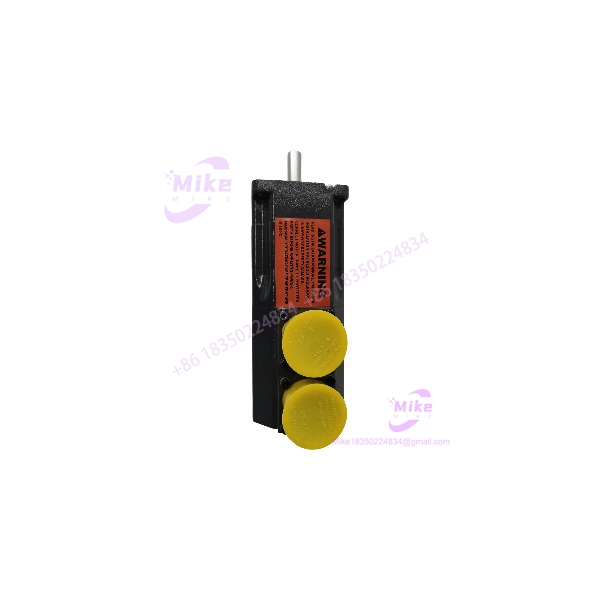
NTE-207-CONS-0000
Key Technical Specifications
- Part number: NTE-207-CONS-0000
- Manufacturer: Control Techniques, Nidec
- Product family: NT Series
- Motor type: Brushless AC servo motor
- Rated voltage: 230 VAC
- Supply frequency: 50/60 Hz, as listed by suppliers
- Power rating: Approximately 0.43 kW
- Continuous rated torque: 7.5 lb-in (0.85 Nm)
- Peak torque: Approximately 22.5 lb-in (2.54 Nm), according to the NT Series product information
- Maximum listed speed: 5,000 RPM
- Rated current: 1.7 A, as listed by suppliers
- Feedback device: Incremental encoder; commonly listed as 2048 PPR
- Frame size: 2-inch frame (50.8 mm)
- Mounting flange: English/NEMA-style flange
- Brake: No holding brake
- Rotor inertia: Low
- Protection rating: IP65
- Connection: MS connectors
- Shaft seal: Listed as standard for the NT Series
- Approximate dimensions: 3.35 × 2.30 × 6.70 inches, per one distributor’s listing
- Manufacturer drawing reference: NTE-207-CONS
Specifications are based on distributor listings and Control Techniques NT Series literature. Confirm the exact nameplate data and drawing revision before using these values for a replacement design. Encoder resolution terminology can vary between pulses per revolution and counts per revolution; verify the drive’s feedback settings rather than treating these terms as interchangeable.
Application Scenarios & Pain Points
Precision indexing and positioning
Packaging equipment, automated assembly systems, and indexing mechanisms may use compact servo motors to control repeatable angular or linear movement. The low-inertia design of the NTE-207-CONS-0000 can be useful where rapid acceleration and frequent direction changes are required, provided the load and drive are correctly sized.
Legacy machine restoration
When an installed NT Series motor fails, sourcing the same part number can reduce mechanical redesign and commissioning work. Check the original motor’s flange, shaft, connector orientation, feedback wiring, and mounting dimensions before ordering.
High-cycle automation
Repeated start-stop movement can increase thermal stress and mechanical wear. Confirm that the application’s RMS torque, peak torque, acceleration profile, and duty cycle remain within the motor and drive ratings. A maximum speed specification alone does not establish continuous operating capability.
Industrial equipment exposed to dust or moisture
The listed IP65 rating can help with protection against dust ingress and water jets when the motor is correctly installed. It does not mean the motor is suitable for immersion, aggressive washdown chemicals, or every outdoor environment.
Important limitation: This is an unbraked motor. Vertical axes, suspended loads, and mechanisms that must hold position after power loss require a separate assessment of mechanical holding and safety requirements.
QA & Live Testing SOP
Use a documented inspection process before releasing a sourced NTE-207-CONS-0000 motor for production service.
- Part-number verification: Compare the complete model code, serial number, nameplate ratings, and connector arrangement against the removed motor and purchasing specification.
- Condition inspection: Check for cracked housing, damaged mounting surfaces, bent shaft, corrosion, damaged connector pins, and signs of unauthorized repair.
- Mechanical verification: Measure shaft dimensions and mounting geometry against the machine drawing. Check shaft rotation manually only when the motor is isolated and the manufacturer’s handling guidance permits it.
- Insulation and winding checks: Have qualified personnel perform appropriate electrical tests using procedures and limits approved for this motor. Do not apply an insulation tester through connected feedback electronics or other sensitive components.
- Encoder and cable verification: Inspect feedback cabling, connector pinout, shielding, and grounding. Confirm the encoder signal type and resolution are supported by the target drive.
- Drive compatibility check: Verify the drive’s voltage class, motor parameters, current limits, commutation requirements, feedback configuration, and tuning procedure.
- Controlled functional test: With the machine secured and personnel clear of moving parts, test at low speed and reduced command limits first. Check rotation direction, feedback stability, current, noise, vibration, and temperature.
- Load validation: Increase operating demand gradually, then verify positioning accuracy, acceleration, stopping behavior, and thermal performance against approved machine limits.
- Documentation: Record test results, inspection photographs, serial number, repair history if available, and the final acceptance decision.
Never connect an unknown motor directly to a drive simply because its connector appears to fit. A pinout or feedback mismatch can damage equipment or cause uncontrolled motion.
Field Engineer’s Pitfall Guide
- Confusing flange variants: The NTE-207-CONS-0000 uses an English-style mounting flange. Related NT Series variants may use different flange or connector arrangements. Confirm the complete model code, not just “NTE-207.”
- Assuming a matching voltage guarantees compatibility: Drive compatibility also depends on motor electrical characteristics, feedback signals, commutation, and parameter support.
- Overlooking the missing brake: This model is listed as unbraked. Do not substitute it into a vertical axis or load-holding application without reviewing the machine’s braking and safety design.
- Misreading encoder resolution: A listing that says “2048 PPR” may use terminology differently from a drive manual that specifies counts or quadrature decoding. Verify the actual interface and parameter convention.
- Treating 5,000 RPM as a continuous duty guarantee: Confirm the torque-speed curve, load inertia, duty cycle, and drive limits for the actual application.
- Accepting IP65 without checking installation details: Cable connections, seals, mating connectors, and installation practices affect the completed assembly’s protection.
- Skipping incoming inspection for surplus stock: Request clear nameplate photographs and confirm whether the unit is new, unused, refurbished, or repaired. Condition and warranty terms vary by seller.
Intent-Driven FAQ
the ?
It is a Control Techniques NT Series brushless AC servo motor with a 2-inch frame and English-style mounting flange. It is commonly identified by manufacturer number 960750-06.
Q2: What are its main electrical and performance ratings?
Supplier listings specify 230 VAC, approximately 0.43 kW, 0.85 Nm continuous torque, and a maximum listed speed of 5,000 RPM. Confirm the motor nameplate and applicable technical documentation before commissioning.
the include a holding brake?
No. The listed configuration is unbraked. If the application requires a brake for load holding or safe stopping, verify the complete system requirements before selecting a replacement.
Q4: What feedback device does this motor use?
Supplier specifications identify an incremental encoder, commonly listed at 2048 PPR. Confirm the exact feedback interface and resolution convention with the drive documentation and motor label.
Q5: Can I replace another NT Series 207 motor with this model?
Not automatically. Compare the full model code, flange type, shaft geometry, connector configuration, brake status, feedback arrangement, and drive compatibility. A motor with the same frame size may still be mechanically or electrically unsuitable.
Q6: What should I request when sourcing this motor?
Ask for current nameplate photographs, the exact part number and serial number, physical-condition details, included cables or accessories, test documentation, warranty terms, and confirmation of the unit’s condition. If it is intended for a critical machine, request a functional test report before purchase.
Q7: Where can I find a dimensional drawing?
Control Techniques provides a downloads catalog with an NTE-207-CONS drawing entry. Access may require a registered account. Use the drawing to verify mounting and shaft interfaces before finalizing a replacement.
Q8: What is the key replacement risk?
The largest risks are a mismatch in mounting geometry, feedback configuration, or brake requirements. Verify those three items first, then confirm the motor’s electrical ratings and the drive’s supported motor parameters.