

Description
Bosch Rexroth HVR03.2-W045N | 45kW DIAX04 Power Supply
Dynamic Product Introduction
The difference between the HVR03.2-W045N and the HVE04.2-W075N you may encounter in the same DIAX04 cabinet is not simply the power rating. The HVR is the regulated regenerative supply architecture. During deceleration, energy from the servo motors can flow back through the DC bus and into the supply, allowing the system to return energy toward the AC mains rather than relying exclusively on a braking resistor.
For the HVR03.2-W045N, Bosch Rexroth specifies a 750 VDC regulated bus, 3-phase 380–480 VAC input, and a 45 kW continuous DC-bus rating at 400 VAC. The same technical table specifies 105 kW for 3-second DC-bus operation and 135 kW for a 0.3-second peak. Those short-term values are part of the DIAX04 power-planning model; they should not be advertised or engineered as continuous output ratings.
This architecture is particularly relevant in older high-power machine tools and multi-axis motion systems where rapid acceleration and deceleration create significant regenerative energy. The HVR’s job is to manage that energy as part of the complete DIAX04 DC-bus system.
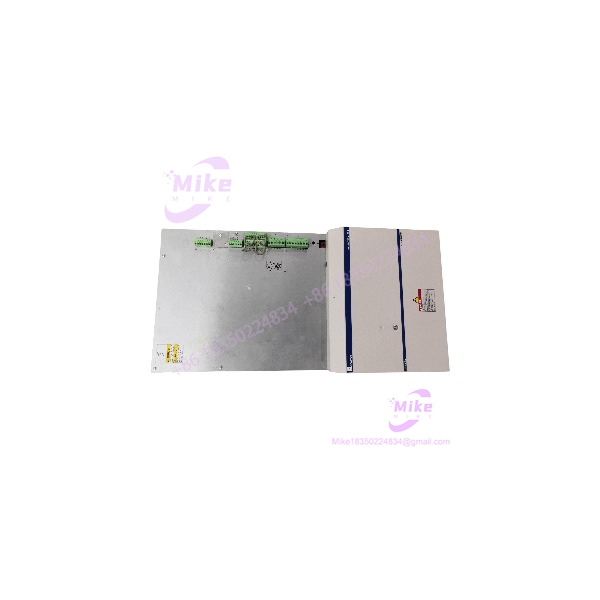
HVR03.2-W045N
Key Technical Specifications
- Model: HVR03.2-W045N
- Product family: DIAX04 HVR
- Product line: HVR03.2
- Design generation: 2
- Cooling code: W = internal air cooling with built-in blower
- Power code: 045 = 45 kW nominal class
- Other-design code: N = no additional design designation in the standard type code
- Mains input: 3 × 380–480 VAC ±10%
- Frequency: 50–60 Hz ±2 Hz
- DC-bus voltage: 750 VDC regulated
- Continuous DC-bus power: 45 kW at 400 VAC
- DC-bus power for 3 seconds: 105 kW
- DC-bus peak power for 0.3 seconds: 135 kW
- Continuous regenerative power: 45 kW
- Peak regenerative power: 90 kW
- Maximum regenerated energy: 80 kWs
- Internal DC-bus capacitance: 2.0 mF nominal
- Maximum external DC-bus capacitance: 20 mF
- Basic power loss: Approximately 300 W
- Power loss at maximum continuous output: Approximately 1.35 kW
- Protection class: IP10
- Approximate mass: 31 kg
The type-code structure itself is documented as HVR / 03 / .2 / W / 045 / N: HVR family, 03 series, second design generation, internal air cooling, 45 kW nominal power, and no additional design suffix.
Regeneration and DC-Bus Behavior
This is where the HVR03.2-W045N earns its distinction from an ordinary rectifier.
Bosch Rexroth specifies:
- 750 VDC regulated DC bus
- 45 kW continuous regenerative power
- 90 kW peak regenerative power
- 80 kWs maximum regenerated energy
- 135 kW DC-bus peak output for 0.3 seconds
- 105 kW DC-bus power for 3 seconds
The HVR technical documentation also identifies a short-term-load strategy for the DIAX04 power supply family: continuous loading applies beyond roughly 10 seconds, while substantially higher power can be accepted for 3 seconds and for 0.3 seconds. Exceeding those project-planning limits can damage the supply.
The regenerative figures should therefore be considered system design limits, not simply marketing numbers. Connected motor inertia, acceleration/deceleration profile, external DC-bus capacitance, mains conditions, and the configuration of the drive modules all affect the actual energy flow.
Material Number and Variant Verification
There is an unusual procurement issue with this model.
The exact type code .2-W045N appears in different supplier records against multiple Bosch Rexroth material numbers, including:
- R911190005
- R911278341
- R911290396
The R911190005 and R911278341 records both explicitly identify the type code as .2-, while R911290396 does the same.
This does not mean that all three material numbers should automatically be treated as interchangeable.
For an installed machine, record the complete physical nameplate and compare the machine’s original bill of materials before purchasing. A suffix such as RE02 is also a separate configuration; for example, R911291727 is listed as .2–RE02.
Global Sourcing & Live-Test SOP
1. Inbound Verification
For a used or refurbished .2-, photograph the complete nameplate before cleaning.
Record:
- .2-
- Bosch Rexroth material number
- Serial number
- Hardware revision
- Date code
- Front diagnostic indicators/display
- AC input terminals
- DC-bus terminals
- Cooling fan/blower
- Contactor and power components
Do not accept a listing that identifies only “.2-” when the material number is visible but omitted from the description.
2. High-Voltage Inspection
The regulated DC bus is 750 VDC.
Before energization:
- Inspect bus terminals for arcing or carbon tracking.
- Check power terminals for discoloration.
- Inspect capacitors for swelling or leakage.
- Check cooling channels and blower condition.
- Inspect cabinet mounting points.
- Check protective-earth connections.
- Inspect semiconductor power-stage areas for thermal damage.
- Verify the unit has been safely discharged before physical inspection.
Use appropriately rated high-voltage test equipment and the original service procedure. Do not treat a blank display as evidence that the DC bus is discharged.
3. Controlled AC Power-Up
Apply the specified three-phase supply through properly rated protective equipment.
Monitor:
- Phase-to-phase input voltage
- Input current
- DC-bus rise
- 750 VDC regulation
- Contactor sequence
- Diagnostic state
- Blower operation
- Abnormal acoustic noise
- Fault codes
A no-load power-up is only the first screening step.
4. Regenerative Test
Where the proper test configuration is available, verify regenerative operation using a controlled drive load.
Monitor:
- DC-bus voltage during acceleration
- DC-bus voltage during deceleration
- Regenerative current
- Supply fault behavior
- Thermal response
- Diagnostic indications
Do not create a large regenerative event simply to “prove” the HVR works. The test fixture needs to be engineered around the unit’s documented energy limits.
5. Extended Heat Run
For a refurbished spare, conduct a controlled extended run and record:
- AC input
- DC-bus voltage
- Load percentage
- Regenerative events
- Ambient temperature
- Power-stage temperature
- Blower operation
- Fault history
- DC-bus stability
A 24-hour run can expose marginal cooling and aged components, but it does not replace Bosch Rexroth factory qualification.
Field Engineer’s Pitfall Guide
❗ 1. Do Not Confuse HVR With HVE
The .2- uses a regulated 750 VDC bus and regenerative power architecture. The HVE family is a different supply architecture. This is not a cosmetic distinction when designing the DC-bus and braking system.
If replacing an HVR with an HVE, the entire regenerative-energy strategy must be reviewed.
❗ 2. Do Not Treat 135 kW as a Continuous Rating
The 135 kW figure is the documented 0.3-second peak DC-bus output. Continuous DC-bus power is 45 kW at the specified 400 VAC condition. The 105 kW figure applies for the documented 3-second short-time condition.
A reseller headline that simply says “135 kW HVR” can therefore give a misleading impression of the usable continuous capacity.
❗ 3. Verify the Material Number, Not Just the Type Code
Multiple procurement records use .2- with different R911 material numbers.
For a critical spare, match the complete nameplate, machine documentation, connected HDS/HDD modules, DC-bus arrangement, and any additional suffix such as RE02.
Intent-Driven FAQ
What is Bosch Rexroth .2-?
It is a HVR regenerative power supply used to provide a regulated common DC bus for connected Bosch Rexroth Indramat drive controllers.
What voltage does .2- produce?
The .2- provides a regulated 750 VDC bus. The connected drive controllers must be designed for this DC-bus architecture.
What is the continuous power rating?
The documented continuous DC-bus power is 45 kW at 400 VAC input. Short-duration capability is higher: 105 kW for 3 seconds and 135 kW for 0.3 seconds.
Does .2- support regenerative braking?
Yes. Regeneration is one of the defining characteristics of the HVR architecture. The technical data specifies 45 kW continuous regenerative power, 90 kW peak regenerative power, and 80 kWs maximum regenerated energy for the .2-.
What input voltage does it require?
The documented mains input is 3 × 380–480 VAC ±10%, at 50–60 Hz ±2 Hz.
What does mean?
The type-code documentation identifies W as internal air cooling with a built-in blower, 045 as the 45 kW nominal power designation, and N as the standard “no additional design” field.
Is .2- the same as .2–RE02?
No. The RE02 designation is a separate configuration. For replacement work, preserve the complete type code and material number rather than assuming the base .2- is interchangeable with an RE02 unit.
Is .2- obsolete?
It is a legacy product and is primarily encountered today through specialist industrial automation, repair, refurbished, and surplus channels. Current suppliers continue to list both the .2- and repair/exchange services.





