

Description
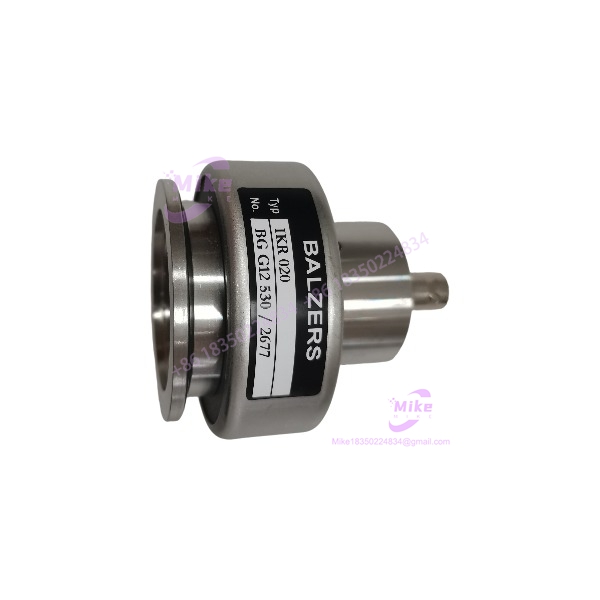
Balzers IKR 020 | Cold-Cathode Vacuum Gauge Head
Product Introduction
In high-vacuum equipment, pressure measurement depends on more than the sensor’s ability to produce a reading. The gauge head, controller, electrical cable, vacuum connection, and cleanliness of the sensing chamber all influence measurement reliability. The Balzers IKR 020 is a cold-cathode ionization gauge head designed to measure total pressure in high- and ultra-high-vacuum applications.
The IKR 020 operates with a compatible Balzers gauge control unit, which supplies the required high voltage and interprets the discharge current to determine pressure. Its published measuring range extends from approximately 5 × 10⁻³ mbar down to 10⁻¹⁰ mbar, although the effective lower limit depends on the gauge-head sealing material and controller used. For semiconductor, coating, laboratory, and other vacuum-system maintenance applications, verify the flange configuration, controller compatibility, and actual sensor condition before treating a surplus IKR 020 as a ready-to-install replacement.
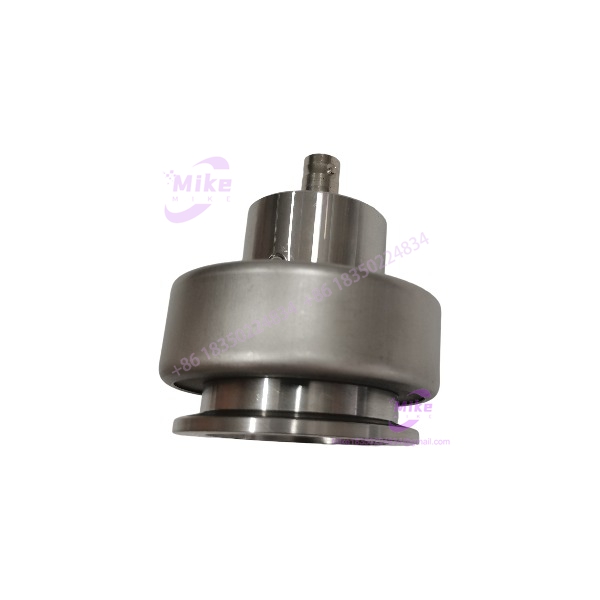
IKR 020
Key Technical Specifications
- Manufacturer: Balzers
- Model: IKR 020
- Device Type: Cold-cathode ionization gauge head
- Measurement Principle: Cold-cathode/Penning discharge
- Measured Parameter: Total pressure
- Published Pressure Range: Approximately 5 × 10⁻³ to 1 × 10⁻¹⁰ mbar
- Pressure Range Dependency: Effective lower limit depends on sealing material and the connected control unit
- Controller Requirement: Compatible Balzers vacuum gauge control unit
- Electrical Connection: High-voltage coaxial cable to the compatible controller
- Vacuum Interface: Standard KF or CF flange, depending on configuration
- KF Configuration: DN 40 KF version documented
- CF Configuration: DN 35 CF version documented
- Mounting Orientation: Flexible, provided condensate and contamination cannot collect in the measurement chamber
- Measurement Accuracy: Short-term reproducibility approximately 5% for a single gauge head, according to the IKR 020 manual
- Gas Dependence: Pressure indication depends on gas species; controller calibration is generally based on air/nitrogen
- Controller Interchangeability: Compatibility with specific Balzers controllers must be confirmed from the applicable documentation
- Supplied Assembly: Gauge head only unless the offer explicitly states otherwise
- Condition & Calibration: Unit-specific; verify the seller’s condition statement and any available test documentation.
The listed pressure range is a gauge-head family specification, not a guarantee that every used unit will achieve the lower limit. Electrode contamination, insulation condition, sealing materials, and controller compatibility can affect measurement performance.
Global Sourcing & Live-Test SOP
Vacuum gauge heads can appear physically intact while delivering unstable or inaccurate readings. Incoming verification should focus on mechanical condition, electrical insulation, and performance with a compatible controller.
Incoming Verification
- Confirm the model marking: IKR 020.
- Photograph the nameplate, identification markings, and flange configuration.
- Inspect the gauge body, vacuum connection, electrical connector, and accessible surfaces.
- Check for corrosion, impact damage, damaged sealing surfaces, or signs of contamination.
- Confirm whether the unit has a KF or CF flange.
- Record included accessories separately from the gauge head.
Authenticity & Traceability
- Compare visible model markings with available Balzers documentation.
- Record serial or identification numbers where present.
- Review supplier documentation and condition statements.
- Flag inconsistent markings or missing identification for review.
Mechanical & Electrical Inspection
- Inspect vacuum sealing surfaces for scratches, damage, or contamination.
- Check accessible electrical connections and cable interfaces.
- Assess insulation condition using the OEM-recommended procedure.
- Do not apply high voltage to a gauge head with suspected insulation damage or contamination.
Functional Verification
- Connect the IKR 020 only to a compatible gauge controller using the appropriate high-voltage coaxial cable.
- Verify that the controller recognizes the gauge head and produces a stable reading under suitable test conditions.
- Where a controlled vacuum setup is available, compare readings against a suitable reference gauge.
- Record the test pressure, controller model, cable arrangement, and observed stability.
- Do not claim full-range calibration unless the gauge has been tested across the stated range using an appropriate reference setup.
Extended Test & Documentation
- Perform an extended operating test only when a suitable vacuum test setup is available.
- Record actual test duration and observed pressure stability.
- Document any ignition delay, unstable discharge, or insulation-related symptoms.
- Preserve inspection findings and test records with the inventory record.
Packaging & Shipment
- Protect the vacuum flange and sealing surfaces against impact and contamination.
- Secure the gauge head to prevent movement during transit.
- Use suitable protective packaging for the sensor and electrical connector.
- Include available inspection and test documentation.
Procurement note: Stock status, condition, flange configuration, testing, included accessories, and warranty are seller-specific. Confirm these details against the actual unit before purchase.
Field Engineer’s Pitfall Guide
❗ Do not confuse the IKR 020 gauge head with its controller. The IKR 020 is the sensor assembly. It requires a compatible Balzers control unit and the appropriate high-voltage coaxial cable. A gauge head alone is not a complete pressure-measurement system.
❗ Verify the flange and sealing arrangement before ordering. The IKR 020 is documented with KF and CF connection options. Confirm the exact flange on the installed gauge and the replacement unit. Seal material and condition can also affect the attainable lower pressure limit.
❗ Do not interpret an unstable or delayed reading as proof of controller failure. At very low pressures, ignition delay can occur; contamination or inadequate insulation can also produce inaccurate or unstable indications. Check the gauge head, cable, and controller as a system before condemning a component.
Intent-Driven FAQ
Q1: What is the Balzers IKR 020 used for?
The IKR 020 is a cold-cathode ionization gauge head used to measure total pressure in high- and ultra-high-vacuum systems.
Q2: What pressure range does the IKR 020 cover?
The published range is approximately 5 × 10⁻³ to 10⁻¹⁰ mbar. The effective lower limit depends on the gauge-head sealing material and compatible controller.
Q3: Does the IKR 020 operate without a controller?
No. It requires a compatible Balzers vacuum gauge control unit and high-voltage coaxial cable for operation and pressure indication.
Q4: Is the IKR 020 compatible with KF and CF vacuum systems?
Documented versions use DN 40 KF or DN 35 CF connections. Confirm the actual flange configuration before ordering.
Q5: Can the IKR 020 replace an IKR 010?
The IKR 020 manual states that systems designed for IKR 010 gauge heads can be operated with the IKR 020. However, the improved features and extended measuring range of the IKR 020 may not be available when used with some IKR 010 system configurations. Confirm controller compatibility and application requirements.
Q6: What should I check if the gauge reading is unstable?
Check gauge-head cleanliness, insulation condition, high-voltage cable integrity, and controller operation. Contamination and insulation faults can affect the indicated pressure, particularly at very low pressures.
Q7: What should I verify before buying a surplus IKR 020?
Confirm the exact model, flange type, physical condition, electrical connector condition, compatibility with your controller, test documentation, included accessories, warranty, and return terms. For critical vacuum applications, request functional testing with a compatible controller and documented pressure conditions.





