

Description
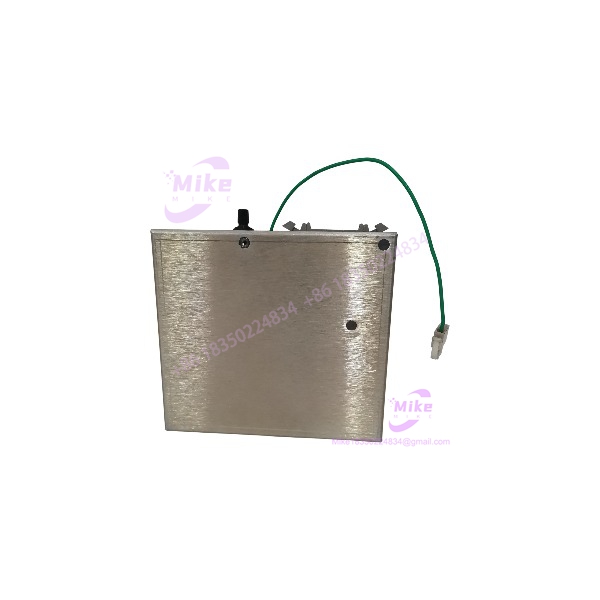
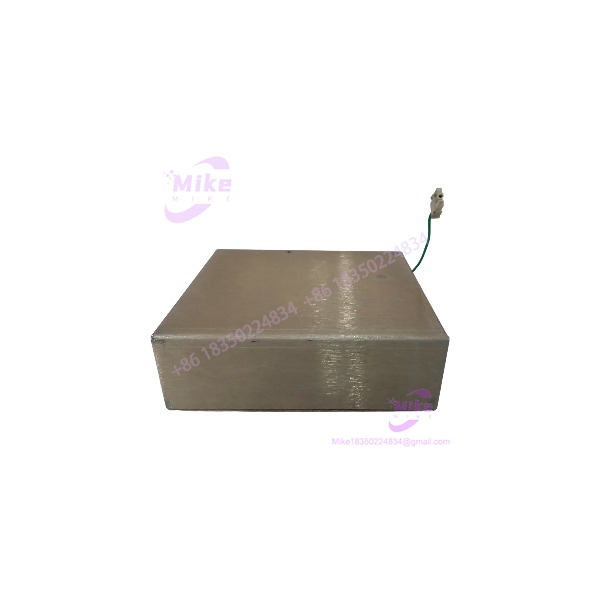
Agilent G1946-80060 | HED Power Supply for LC/MS
Dynamic Product Introduction
A detector power-supply failure on an LC/MS platform is not the kind of fault that should be diagnosed by swapping unrelated boards until the instrument starts behaving again. The G1946-80060 is a dedicated high-energy dynode power supply, and its job sits directly in the detector power architecture of compatible Agilent mass spectrometers.
Agilent identifies the G1946-80060 as a fast-switching high-energy dynode power supply for 61XX Series single-quadrupole and 64XX Series triple-quadrupole instruments. Agilent’s replacement-parts documentation also identifies this part as the HED power supply for G1946B/D and G1956B configurations.
That distinction matters during procurement. The G1946-80060 should not be treated as a generic high-voltage supply simply because the physical assembly appears similar to another Agilent LC/MS power module. Earlier parts documentation, for example, distinguishes the G1946-80060 from G1946-80029, with the latter assigned to different G1946/G1956 instrument configurations.
G1946-80060
Key Technical Specifications
- Manufacturer: Agilent Technologies
- Part Number: G1946-80060
- Component Type: High-energy dynode power supply
- Common Description: HED power supply
- Electrical Function: High-voltage detector/dynode power generation
- Switching Characteristic: Fast switching
- Application: LC/MS and LC/MSD
- Supported Platform Group: 61XX Series single quadrupole
- Supported Platform Group: 64XX Series triple quadrupole
- Documented G1946-family compatibility: G1946B/D
- Documented G1956-family compatibility: G1956B
- Agilent UNSPSC: 41115700
- Agilent product category: Electrical
- Current Agilent listing: Product is still identifiable through Agilent’s official product catalog.
One caution on specifications: Agilent’s public product page does not publish a complete output-voltage/current specification for the . I would not insert an estimated high-voltage value into a procurement listing simply because third-party listings use terms such as “bipolar” or “single output.” The exact electrical limits should be taken from the applicable service documentation or the instrument-specific assembly documentation.
Global Sourcing & Live-Test SOP
For the , visual inspection has limited diagnostic value. A power supply can pass a basic continuity check and still fail when subjected to the voltage, switching, and load conditions present inside an LC/MS detector assembly.
1. Inbound Verification
Record the complete part number exactly as marked:
Then photograph the identification label, connector assembly, housing, mounting points, and PCB condition.
For used or surplus inventory, record:
- Part number
- Serial or manufacturing identification
- Visible revision information
- Connector condition
- Housing condition
- Evidence of overheating
- Corrosion or contamination
- Previous service markings
- Packaging condition
Agilent’s historical replacement-parts documentation specifically identifies as the HED power supply for G1946B/D and G1956B. That platform association should be checked against the instrument serial number before installation.
2. Electrical Bench Test
Do not improvise a high-voltage test simply to prove that the unit produces an output.
The preferred procedure is tt the using an appropriate Agilent service environment or qualified high-voltage test fixture with current-limited instrumentation.
Verify:
- Input supply behavior
- Startup sequence
- Output enable behavior
- High-voltage output stability
- Polarity-switching response where applicable
- Output leakage/current behavior
- Abnormal acoustic or thermal behavior
- Fault/interlock response
A calibrated high-voltage measurement system should be used when direct output measurement is required. A normal handheld multimeter is not automatically suitable for the high-voltage section.
3. Instrument-Level Validation
The strongest functional test is installation in a compatible LC/MS system followed by the manufacturer’s normal diagnostic procedure.
The system should be evaluated for:
- Detector power-up
- HED supply initialization
- Polarity switching
- Detector response
- Background behavior
- Mass-spectrum stability
- Instrument diagnostic status
- Reproducibility after thermal stabilization
The is a detector-side power component, so a successful bench startup does not by itself prove that the complete LC/MS detector will operate correctly.
4. Final Preparation
Before shipment, record the tested part number and the instrument configuration used for validation.
For used inventory, provide the buyer with the actual condition classification rather than calling every unit “new.” Factory sealed, unused surplus, tested used, refurbished, and pulled-from-equipment are materially different procurement categories.
The connector and PCB should be protected against ESD and mechanical shock. Keep the assembly dry and free from contamination during storage.
The Field Engineer’s Pitfall Guide
❗ Do nnfuse with -80029.
Agilent’s replacement-parts documentation assigns these HED supplies to different instrument configura. The is documented for G1946B/D and G1956B, while -80029 is associated with other /G1956 variants. Confirm the instrument configuration before ordering.
❗ Do not apply external high voltage just to “see if the supply works.”
This is an LC/MS high-voltage power component. Improvised probing can damage the supply or create a serious electrical hazard. Use the applicable service procedure and properly rated test equipment.
❗ Do not diagnose the entire LC/MS detector from the power-supply board alone.
A detector fault can originate from cabling, control electronics, vacuum conditions, detector components, or the power supply itself. I’ve seen replacement boards get blamed for faults that were actually caused by another assembly in the instrument. Check the system diagnostics and associated power rails before condg the .
Intent-Driven FAQ
What is tilent ?
The is a fast-switching high-energy dynode power supply used in compatible Agilent LC/MS mass spectrometers. Agilent identifies it for 61XX Series single-quadrupole and 64XX Series triple-quadrupole applications.
Which Agilent instrumene the ?
Agilent’s replacement-parts documentation idens the as the HED power supply for G1946B/D and G1956B configurations. The current Agilent product page describes the broader application as 61XX single-quadrupole and 64XX triple-quadrupole LC/MS systems. Verify the specific instrument model and serial-number range before replacement.
Is a complete mass spectrometer?
No. The is a component-level power supply. It forms part of the LC/MS detector power architecture and should not be confused with the complete mass analyzer, detector, or electronics assembly.
Canplace with another power supply?
Not automatically. Agilent’s own parts documentation distinguishes several HED power-supply part numbers by instrument configuration. Confirm the exact part number against the instrument’s service documentation before substitution.
Does have firmware?
The is a power-supply assembly rather than a programmable PLC/DCS controller. Firmware revision management is therefore not the primary replacement concern. Electrical compatibility, instrument configuration, connector arrangement, and high-voltage performance are the relevant checks.





