


Description
ABB DSTC456 | Digital/Analog Multiplexer Card, Available Now
Architect’s Product Breakdown
The ABB DSTC456 functions as a specialized multiplexer unit within legacy ABB Advant OCS and Master Series distributed control architectures. Its core engineering purpose is to aggregate multiple discrete digital and analog input/output points from remote termination racks, serializing them into a robust communication stream for long-distance transmission over twisted-pair lines, multi-drop RS485 networks, or dedicated modems. This capability allows industrial plants, water treatment facilities, and power generation sites to monitor distant field stations without incurring the immense cost of trenching new multi-core cabling.
Because the Advant OCS platform is long obsolete, sourcing an exact part number match (such as the 5751017-L revision) is critical during system maintenance or retrofit projects. Minor variations in multiplexer firmware or backplane communication speeds can result in framing errors or complete loss of telemetry data at the central controller node. When swapping a failed unit, technicians must meticulously verify ribbon cable connections, termination jumper settings, and channel address configurations to maintain synchronized data polling across the loop.
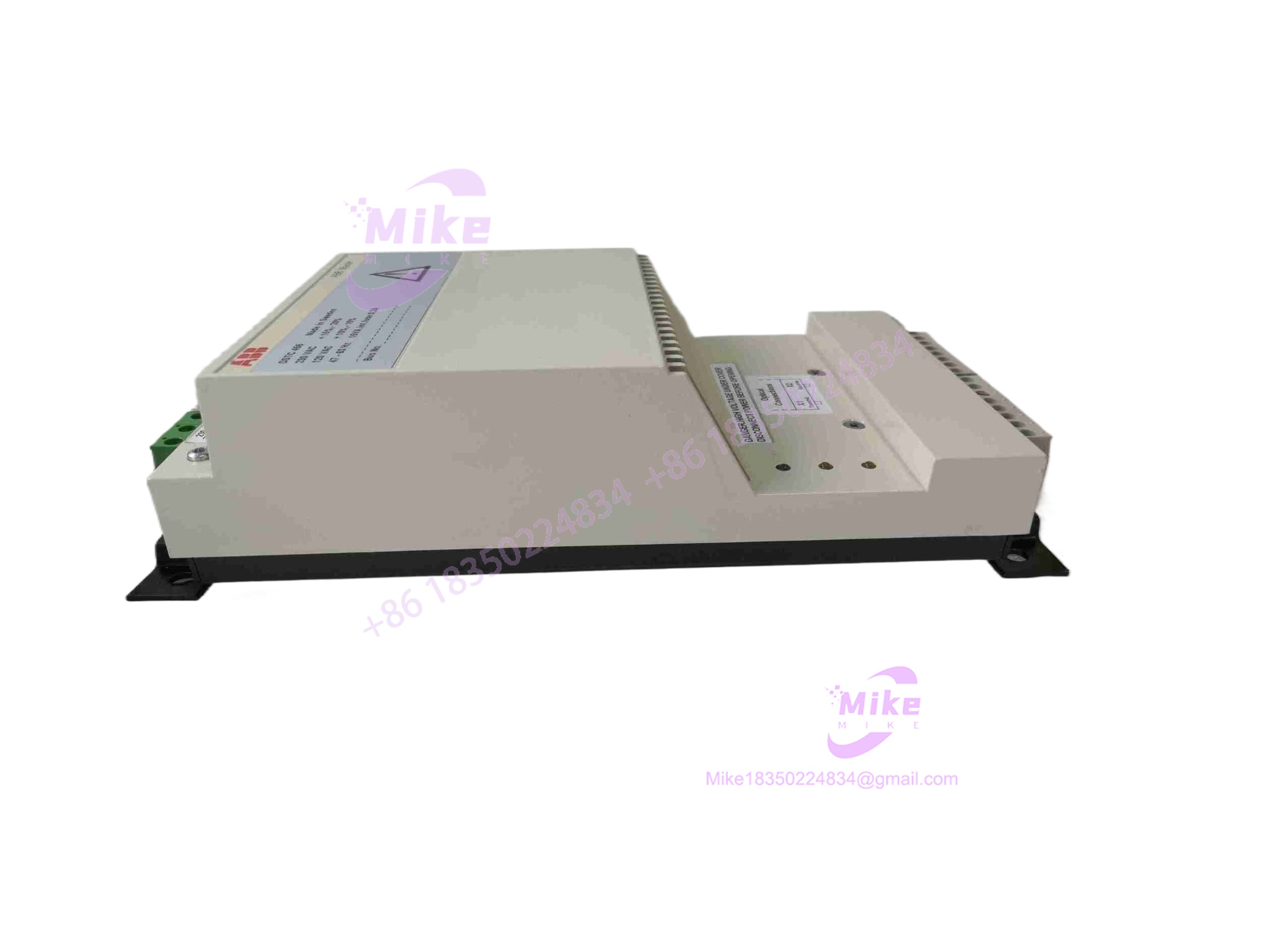
DSTC456
Key Technical Specifications
| Parameter | Specification |
| Series | ABB Advant OCS / S100 I/O Family |
| Module Type | Multiplexer / Telemetry Unit |
| Part Number | 5751017-L |
| Communication Interface | RS485 / Ribbon cable headers to S100 termination units |
| Power Supply | 24 V DC (standard industrial rail supply) |
| Mounting | DIN-rail (35 mm) or panel mounting |
| Operating Temperature | -20°C to +60°C |
| Environmental Protection | Industrial enclosure housing with conformal-coated internal circuitry |
Field Engineer’s Pitfall Guide
- WARNING: Ribbon Cable Pin Alignment. Forcing internal ribbon cable connectors onto the DSTC456 headers offset by even one pin will short logic rails or scramble data polling sequences across connected input channels.
- WARNING: Unmatched Baud / Communication Settings. Replacing a multiplexer unit without matching the DIP switch or jumper configurations for transmission speed will cause continuous frame dropouts and communication timeouts at the master controller.
- WARNING: Ground Loop Voltage Differentials. Failing to properly tie remote cabinet ground references to the main system ground can induce high-frequency common-mode noise, corrupting serial data streams over long cable runs.
- Field Anecdote: I remember a remote pump station telemetry link failing intermittently during heavy motor starts because a replacement DSTC456 unit was installed without securing the shield drain wire to the local cabinet earth bar, leaving the serial receiver vulnerable to induced electromagnetic noise.
QA & Testing SOP
- Visual & Origin Verification: Inspect the printed circuit board under optical magnification for trace damage, component wear, and verify original ABB manufacturing stamps and part number tags (5751017-L).
- Live Test Bench Environment: Mount the module onto a dedicated S100 test rack powered by a regulated 24 V DC supply bench.
- Diagnostics & Loop Testing: Inject simulated digital and analog signals into the input blocks, verify proper serialization, and check communication handshakes across the RS485 output port.
- Anti-Static Packaging: Wrap the tested unit in high-shielding anti-static materials and enclose it in structured high-density foam packaging to protect edge connectors and terminals during transit.
Technical FAQ
Can the DSTC456 be integrated directly into modern ABB System 800xA networks?
Not directly on its own. The DSTC456 is native to legacy Advant OCS / S100 architectures; bridging it to modern 800xA systems typically requires compatible gateway bridges, serial communication servers, or complete migration hardware.
Does this multiplexer store configuration programs internally?
No. The is a hardware-driven multiplexing unit; configuration is primarily managed through physical jumpers, switch settings, and the overall system setup defined in the central controller node.
What causes periodic communication timeouts on this module?
Timeouts usually stem from degraded cable shielding, loose terminal screws on RS485 loops, failing 24V power supplies, or oxidized ribbon cable connections.
Is the hot-swappable while powered on?
No. Removing or inserting the module while system power is energized risks backplane bus corruption, ribbon cable arcing, and permanent damage to internal solid-state components.





