

Description
Triconex MP2101 | Main Processor Baseplate
Product Introduction
The Triconex MP2101 is a main processor baseplate used as part of the Tricon safety-control architecture. Its job is structural and electrical rather than computational: it provides the mounting interface and backplane connectivity required by the main processor assembly and associated controller hardware.
That distinction matters during a legacy SIS repair. MP2101 is not the processor executing the safety application. It is the baseplate/backplane infrastructure around that processor. A defective backplane can therefore create symptoms that resemble CPU, communication, or module faults even when the processor itself is healthy.
The MP2101 is associated with Tricon’s TMR architecture, where redundant processing paths are used to maintain fault tolerance. For maintenance teams supporting installed Tricon systems, preserving the correct baseplate revision and system architecture can be considerably more practical than replacing an entire controller platform.
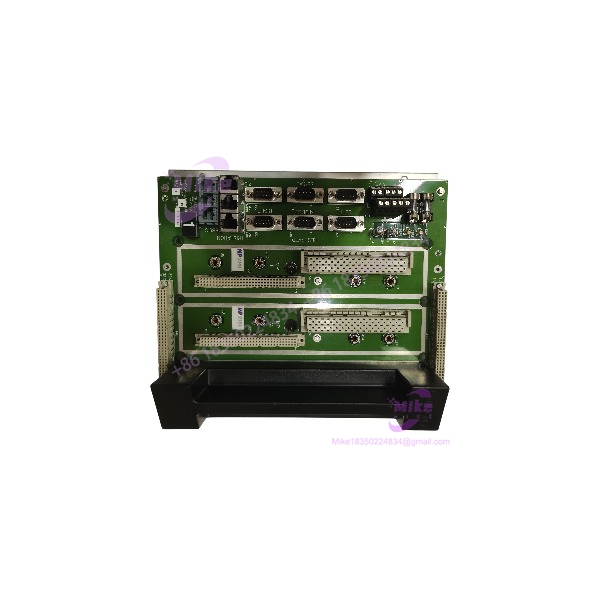
MP2101
Key Technical Specifications
- Manufacturer: Triconex
- Model: MP2101
- Common assembly/reference number: 7400207-001
- Product type: Main Processor Baseplate
- System: Tricon Safety Instrumented System
- Controller architecture: Triple Modular Redundant (TMR)
- Primary function: Main processor mounting and backplane interconnection
- Logic execution: Not performed by the baseplate
- Installation: Tricon controller rack/chassis
- Backplane function: Provides electrical interconnection between processor and controller modules
- Power distribution: Controller backplane power distribution
- Processor compatibility: Tricon main processor architecture; exact generation must be verified
- Maintenance consideration: Backplane connector integrity is critical
- Referenced dimensions: Approximately 24.7 × 23 × 6 cm for the 7400207-001 assembly in several industrial references
- Referenced input supply: 24 VDC in available 7400207-001 documentation
- Environmental specification: Exact limits should be confirmed against the applicable Tricon hardware revision
- Lifecycle: Legacy industrial automation hardware
Available references associate 7400207-001 with the MP2101 designation and identify it as a main processor baseplate. However, online reseller specifications conflict on dimensions, processor generation, temperature limits, memory, and I/O capacity. Those conflicting values should not be treated as guaranteed specifications without the applicable Tricon hardware manual.
Application Scenarios & Pain Points
Legacy Tricon SIS Maintenance
The is relevant when maintaining an installed Tricon safety system in which the existing processor baseplate has suffered connector, power-distribution, PCB, or physical damage.
The practical objective is usually to restore the existing controller architecture without disturbing validated safety logic unnecessarily.
Main Processor Rack Support
The baseplate provides the physical and electrical infrastructure needed for the main processor assembly.
Engineering point: A processor replacement will not correct a damaged backplane connector. Likewise, replacing the baseplate will not restore a missing application configuration.
Emergency Shutdown Systems
Tricon systems are commonly deployed in safety-instrumented applications where redundant controller architecture is used for high-integrity process protection.
Potential applications include:
- Emergency shutdown systems
- Process safety systems
- Burner and equipment protection
- Fire and gas-related control architectures
- Critical process interlocking
The exact application depends on the installed Tricon configuration and validated safety application.
Brownfield Control-System Repair
For a legacy installation, maintaining the original baseplate can be preferable to modifying the rack architecture during an outage.
The becomes particularly relevant when the failure is localized to the controller’s physical infrastructure rather than the application processor.
Spare-Parts Inventory
A baseplate is a different procurement category from an MPU, digital I/O module, or communications module.
Maintaining the correct spare baseplate can reduce troubleshooting time when a controller develops intermittent backplane communication or power-distribution faults.
QA & Live Testing SOP
For a safety-system spare such as , inspection should be substantially more rigorous than a visual “powers on” check.
1. Identity verification
Confirm:
- designation
- Complete assembly/part number
- Hardware revision
- Serial number
- Manufacturer markings
Photograph all identification labels before installation.
2. PCB and connector inspection
Inspect the complete backplane for:
- Bent contacts
- Damaged connector pins
- Burn marks
- Oxidation
- Cracked solder joints
- PCB contamination
- Damaged mounting points
- Evidence of overheating
Connector damage deserves particular attention because intermittent backplane connections can be difficult to reproduce during normal bench testing.
3. Mechanical verification
Check that processor and module mounting interfaces are mechanically sound.
Do not force any processor or module into a connector that does not seat naturally.
4. Electrical inspection
Before energizing the assembly, verify that there are no visible shorts, damaged power contacts, or abnormal resistance paths.
Apply the applicable controller power under controlled laboratory conditions.
5. Backplane verification
With the correct Tricon test configuration, verify that the installed processor modules and associated controller hardware are correctly recognized.
Check for:
- Processor communication faults
- Backplane errors
- Power faults
- Module initialization faults
- Diagnostic alarms
6. Redundancy verification
Where permitted by the approved maintenance procedure, verify correct interaction among the redundant processor paths.
This should be performed using the site’s validated Tricon maintenance procedure — not an improvised field test.
7. System restoration
After replacement, verify the complete controller configuration and diagnostic status before returning the SIS to normal service.
8. Documentation
Record:
- part number
- Revision
- Serial number
- Physical inspection result
- Connector inspection
- Electrical test result
- Diagnostic status
- Installation date
This is a recommended QA and commissioning SOP. It does not imply that the particular used unit in the supplied listing has undergone these tests.
Field Engineer’s Pitfall Guide
❗ is a baseplate, not the safety CPU.
Do not purchase an when the actual failure is a main processor module. The baseplate provides the processor’s physical/electrical interface; it does not execute the application logic.
❗ Do not trust generic search results blindly.
Some catalogs describe as a digital-input module, while others identify it as a main processor baseplate. The supplied listing and multiple dedicated references identify the part as a Main Processor Baseplate. Verify the physical label and assembly number.
❗ Check the complete Tricon hardware generation.
Tricon hardware evolved across multiple generations. A baseplate that appears physically similar may not be interchangeable with a different controller generation.
❗ Inspect connectors before condemning the processor.
Intermittent backplane connections can generate processor communication or module diagnostic faults. A known-good processor installed into a verified-good baseplate is a useful diagnostic comparison.
❗ Do not treat “used and operational” as equivalent to SIS-qualified.
The supplied listing identifies the unit as used and states that it is fully operational, but a safety-system spare still requires appropriate inspection, traceability, and site acceptance testing before installation.
❗ Verify the assembly number.
7400207-001 is repeatedly associated with in available industrial references. If the nameplate shows a different assembly number or revision, stop and verify compatibility rather than relying on the designation alone.
Intent-Driven FAQ
What is Triconex ?
The is a Main Processor Baseplate used within a Tricon safety-instrumented control architecture. It provides the mounting and electrical backplane interface for the main processor assembly.
Is the Triconex CPU?
No. The is the baseplate/backplane assembly. The actual processor hardware is installed into the controller architecture supported by the baseplate.
What is the common part number associated with ?
Available references associate with 7400207-001. Verify the actual nameplate and revision before purchasing because Tricon hardware has multiple generations and configurations.
What does the baseplate do?
It provides the mechanical mounting and electrical interconnection required for the main processor/controller hardware, including backplane communication and power-distribution functions.
Is part of a TMR system?
Yes. Available references identify the as part of the Tricon TMR safety architecture. The baseplate itself does not perform the voting algorithm; that function belongs to the active Tricon controller architecture.
Can I replace a damaged with any Triconex baseplate?
No. Verify the complete part number, hardware revision, controller generation, processor compatibility, connector arrangement, and approved system configuration before replacement.
What should I inspect on a used ?
Focus on the backplane connectors, PCB condition, power contacts, mounting hardware, corrosion, overheating evidence, and identification labels. Connector integrity is particularly important because intermittent backplane faults can be difficult to diagnose.
Does contain the safety application program?
No. The baseplate is passive infrastructure. It does not constitute the application CPU or application-memory storage.
Is the suitable as a legacy Tricon spare?
It can be relevant as a legacy Tricon main-processor baseplate spare, provided the complete assembly number and hardware generation match the installed controller. The supplied listing identifies the particular unit as used, so condition and test evidence should be verified independently before deployment in a safety-critical system.





