

Description
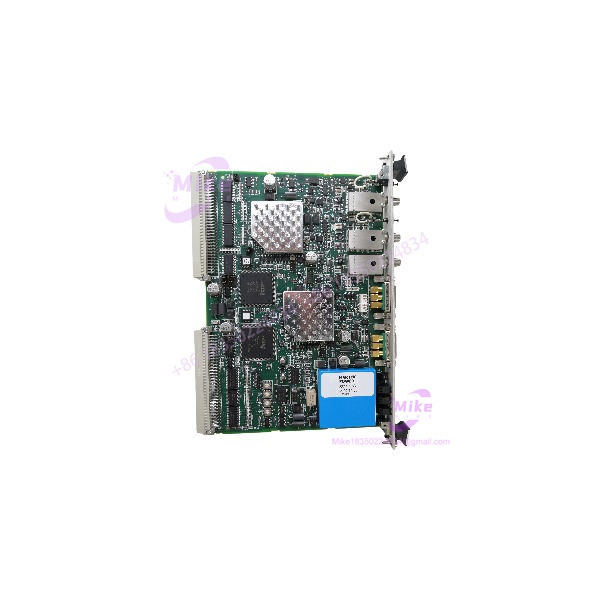
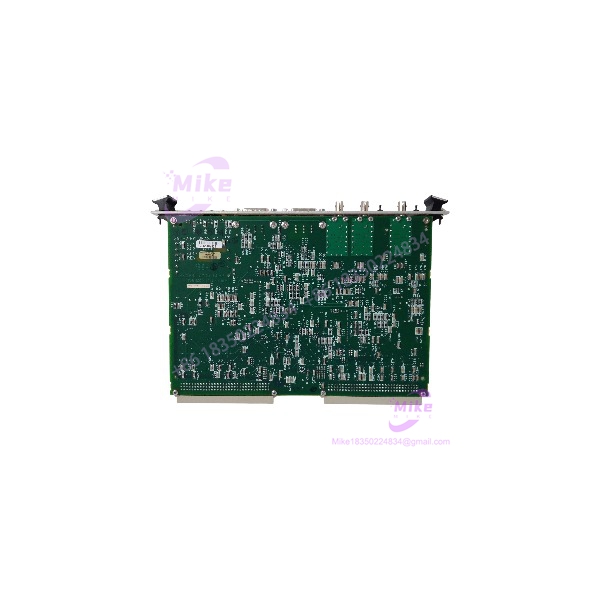
Zygo ZMI-2002 | VME Laser Metrology Board
Dynamic Product Introduction
In advanced semiconductor lithography, precision diamond turning, and high-accuracy optical metrology, maintaining sub-nanometer stage positioning is critical to manufacturing success. Standard optical encoders cannot match the thermal stability and nanometer-scale resolution required for these applications. The Zygo ZMI-2002 metrology board serves as a dedicated digital processing core designed to interpret high-frequency interference signals generated by laser interferometers.
Engineered to integrate directly into VME bus enclosures, the ZMI-2002 accepts raw quadrature phase signals from remote laser interferometer receivers, processing them via onboard digital signal processors (DSPs) to calculate ultra-precise displacement data. (Honestly, maintaining phase lock during rapid stage accelerations requires robust hardware decoding that prevents cycle slips and keeps positioning errors at bay.) Backed by reliable VME data transfer capabilities, the ZMI-2002 remains a cornerstone in legacy precision metrology setups—though long-term measurement reliability depends entirely on maintaining clean optical alignments and stable laser source frequencies.
ZMI-2002
Key Technical Specifications
- Manufacturer & System Platform: Zygo Corporation / ZMI Precision Metrology Series
- Module Model & Part Number: ZMI-2002 / ZMI 2002 VME Board
- Bus Architecture: VME bus standard backplane interface (IEEE 1014)
- Channel Capacity: Multi-axis high-speed interferometer measurement processing channels
- Position Resolution: Sub-nanometer displacement resolution (dependent on system optics and laser wavelength)
- Processing Core: High-speed digital signal processing (DSP) architecture for real-time fringe counting and phase interpolation
- Input Signals: Differential quadrature photoreceiver signals from Zygo laser optics
- Data Output: Real-time position words accessible via VME bus read/write cycles
- Operating Ambient Temperature: +15°C to +30°C (optimized for climate-controlled cleanroom environments)
- Power Requirements: Standard VME backplane DC power rails (+5V, \pm 12V)
Global Sourcing & Live-Test SOP (Transparency Core)
Sourcing secondary-market or legacy semiconductor metrology boards demands rigorous electronic and bus communication testing before installing hardware into active positioning systems. Every Zygo ZMI-2002 board passing through our inventory undergoes a strict five-stage bench test protocol:
- Inbound Visual & Inspection: Part numbers, serial tags, and PCB trace layers are cross-referenced against Zygo engineering specifications. We inspect the VME DIN connector pins for gold-plating wear or bending and examine onboard surface-mount components for thermal stress.
- VME Chassis Insertion & Bus Enumeration: The ZMI-2002 is inserted into a test VME rack chassis. We execute low-level VME master/slave read and write cycles to verify board address mapping, interrupt generation, and backplane communication handshakes.
- Optical Signal Simulation: Using a specialized optical simulator board that injects calibrated differential quadrature signals into the input channels, we simulate high-speed stage movement across the measurement axes.
- DSP & Fringe Interpolation Testing: We verify that the onboard DSP array correctly decodes phase shifts without dropping counts or introducing calculation jitter during simulated high-velocity movements.
- Final Prep: Non-volatile configuration registers are cleared, DIN connector pins are cleaned with electronic contact cleaner, and the ZMI-2002 board is vacuum-sealed in heavy-duty anti-static moisture-barrier packaging.
The Field Engineer’s Pitfall Guide
❗ Exceeding VME Slot Power & Thermal Limits: The ZMI-2002 packs dense processing circuitry onto a single VME card. Operating the board in unventilated or poorly cooled VME enclosures causes localized overheating, leading to clock drift in the signal processing pipeline and intermittent position errors.
❗ Electrostatic Discharge (ESD) Damage to Sensitive Front-End Receivers: The input amplifier and phase-decoding stages of the ZMI-2002 are highly sensitive to electrostatic discharge. Always wear a grounded ESD wrist strap and handle the board strictly by its edge extractors when installing or removing it from a VME rack.
❗ Ignoring Optic Alignment and Laser Frequency Stability: Even a perfectly functioning ZMI-2002 board will output erratic or degraded position data if the upstream laser head experiences frequency drift or if the remote interferometer optics lose alignment due to mechanical vibration or thermal expansion in the chamber.
Intent-Driven FAQ
Q: What is the primary function of the Zygo ZMI-2002 in a motion control or metrology system? The ZMI-2002 processes high-frequency optical signals generated by laser interferometers, calculating ultra-precise, sub-nanometer position data for moving stages and transmitting those measurements in real time to the host controller via the VME bus.
Q: Can the ZMI-2002 board operate as a standalone unit outside of a VME enclosure? No. The ZMI-2002 is designed specifically as a VME bus plug-in module. It relies entirely on the VME backplane for structural mounting, DC power distribution, and communication interfacing with the host system computer.
Q: What indicates a communication or hardware failure during VME rack boot-up? If the host system fails to recognize the ZMI-2002 during VME bus enumeration, check the backplane address jumpers/switches, verify that the board is firmly seated in the DIN slot, and inspect the VME power supply rails for voltage sag.
Q: Is the ZMI-2002 compatible with newer PC-based control architectures? Because the ZMI-2002 relies strictly on a VME bus interface, integrating it into modern PC-based architectures typically requires a VME-to-PCI or VME-to-PCIe bridge adapter card inside an external VME expansion chassis.
Q: How does the ZMI-2002 differ from later models like the ZMI-4104? While both serve as VME bus metrology boards within Zygo’s ecosystem, later models like the ZMI-4104 generally feature expanded channel density, faster DSP clock speeds, and enhanced processing capabilities to handle multi-axis precision stages simultaneously.





