


Description
Yokogawa A1BA4D-05 | Analog Terminal Board, New Surplus
Architect’s Product Breakdown
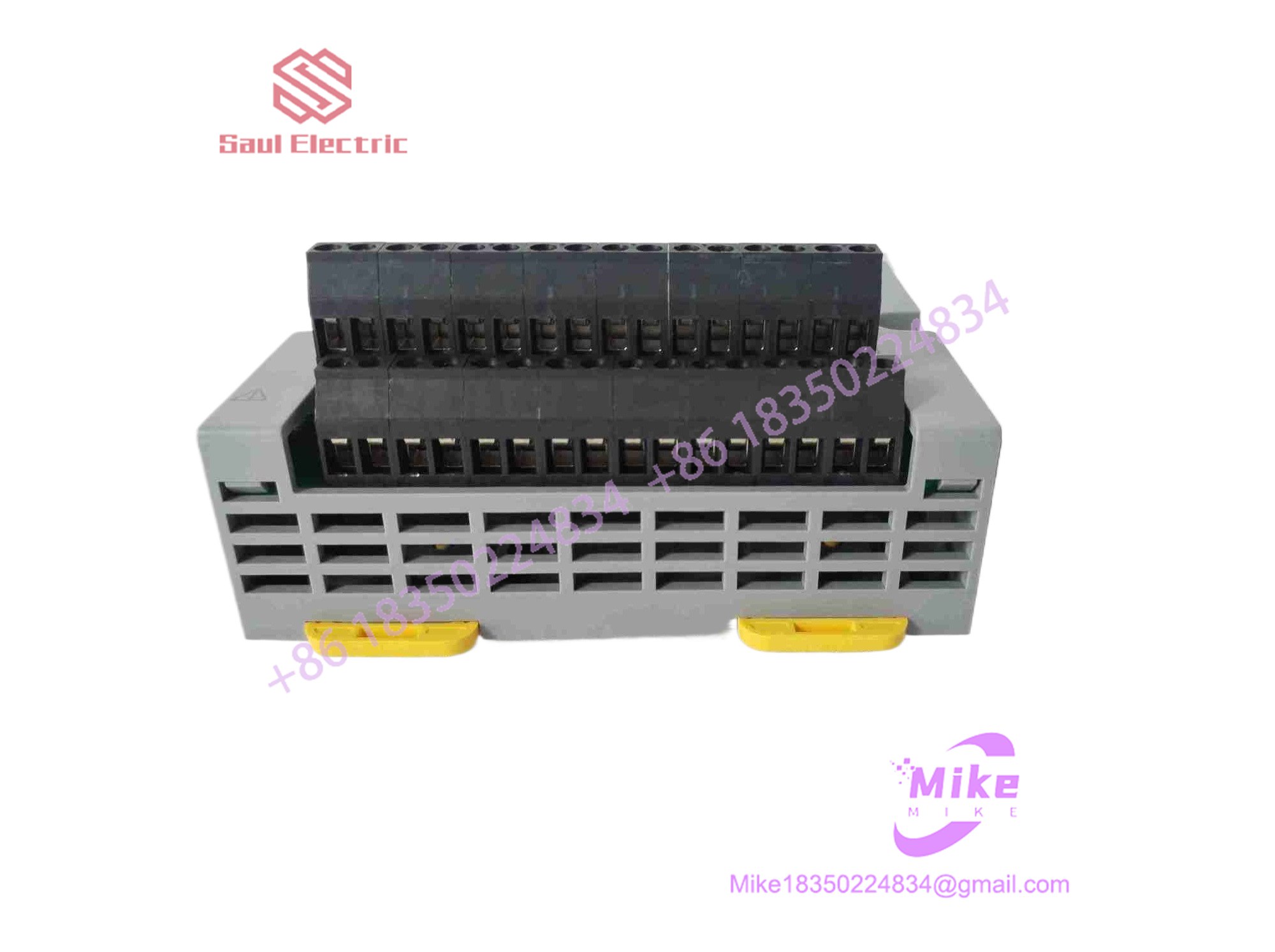
The Yokogawa A1BA4D-05 functions as a robust terminal board engineered specifically for Yokogawa’s Field-based I/O (FIO) architecture within CENTUM distributed control systems. Its primary role is to cleanly interface analog control signals—supporting configurations such as 16-channel or 8-channel setups—while accommodating single or dual-redundant module arrangements.
Deploying or replacing this termination board requires careful verification of multi-core signal cable matching and pressure clamp terminal integrity. Instrument engineers must ensure that individual channel shields are properly landed to prevent common-mode noise from distorting low-level analog process variables across continuous manufacturing loops.
Key Technical Specifications
| Parameter | Specification |
| Manufacturer | Yokogawa |
| Model / Part Number | A1BA4D-05 |
| Product Type | Terminal Board for Analog Signals (FIO) |
| Compatibility | CENTUM VP / CENTUM CS 3000 FIO Modules |
| Channel Configuration | 16-channel x 1 or 8-channel x 1 (Single/Redundant) |
| Mounting Type | DIN Rail Mount Type |
| Suffix Options | -0 (Standard) / 5 (Basic type, non-explosion protected) |
| Insulation Resistance | 10 MΩ or greater at 500 V DC |
| Approx. Weight | 0.3 kg |
Field Engineer’s Pitfall Guide (Unique Value)
- Pressure Clamp Over-Tightening: Applying excessive torque to the pressure clamp terminals can crush fine wire strands or strip internal springs, resulting in intermittent analog signal drops.
- Redundancy Cable Mismatches: When deploying dual-redundant configurations, ensure that signal mapping harnesses are identical across paths to avoid configuration mapping errors in the engineering node.
- Shield Grounding Omissions: Leaving cable shields floating at the terminal board assembly introduces electrical noise from nearby variable frequency drives, causing erratic analog readings on control screens.
QA & Testing SOP (Transparency)
- Visual & Origin Verification: Units are inspected for authentic Yokogawa label stamps, uncompromised printed circuit traces, and undamaged terminal blocks.
- Continuity & Isolation Testing: Automated test equipment verifies trace-to-trace isolation, dielectric strength, and continuous pin-to-pin mapping across all channels.
- Environmental & Mechanical Checks: Spring clamps and DIN-rail mounting latches undergo physical stress verification to ensure secure cabinet retention under heavy industrial vibration.
- Anti-Static Packaging: Post-testing, units are sealed inside moisture-barrier static-shielding bags with high-density foam padding to prevent transit damage.
Technical FAQ
- Does this terminal board require external software configuration? No. As a passive/interface terminal board component, it requires no software configuration; logic mapping is handled entirely by the connected I/O card and system controller.
- What causes sudden signal fluctuations on connected analog loops? This is usually driven by a loose wire termination, an ungrounded signal shield, or minor oxidation on the multi-core cable connector pins.
- Is the -05 suffix rated for hazardous environments? No. The “-05” designation indicates the standard basic type with no explosion protection.
- What warranty is provided with a surplus unit? Units carry a standard 12-month replacement warranty backed by comprehensive bench testing.





