


Description
WEG EUCFW110024T40FAZ | 400V 24A CFW11 Drive
Product Introduction
This is not a generic 24 A inverter pulled from the CFW11 catalog. WEG specifically assigns EUCFW110024T40FAZ to WMagnet motor applications, including the 11 kW / 15 HP, 400 V configurations shown in WEG’s motor selection documentation. That makes the exact suffix important when replacing an installed drive.
The EUCFW110024T40FAZ belongs to WEG’s CFW11 frequency-inverter platform. WEG documents the CFW11 family for control of three-phase induction motors and permanent-magnet synchronous motors, while the exact FAZ variant appears in WMagnet system selection tables.
For procurement, the distinction between the complete model code and a generic CFW11 24 A description matters. The drive may share a current class with other CFW11 variants, but enclosure, filtering, braking, safety options, and motor-control configuration can differ by suffix.
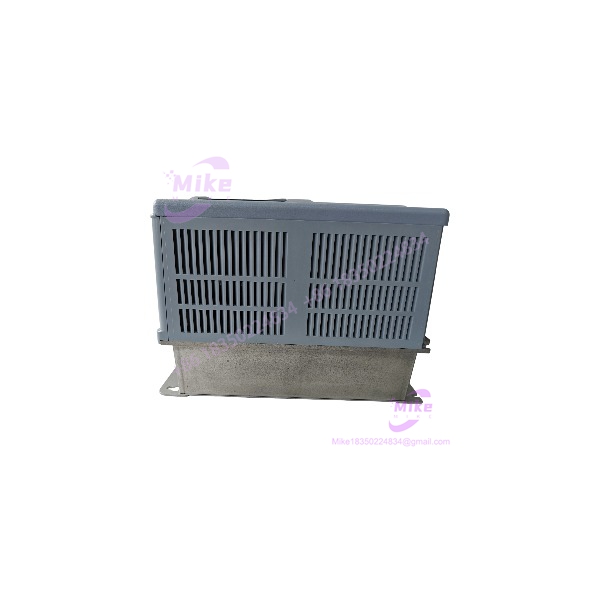
EUCFW110024T40FAZ
Key Technical Specifications
- Manufacturer: WEG
- Series:
- Full Model: EUCFW110024T40FAZ
- Product Type: Variable frequency drive / AC frequency inverter
- Input Voltage: 380–480 VAC
- Input Phase: Three-phase
- Rated Current, Normal Duty: 24 A
- Rated Current, Heavy Duty: 19 A
- WEG Motor Application: WMagnet permanent-magnet motor system
- Associated Motor Output: 11 kW / 15 HP in the documented 400 V, 1,500 rpm WMagnet configuration
- Inverter Frame/Size: B
- Motor Control: Applicable to WEG motor-control architecture
- Application Frequency: Industrial variable-speed motor control
- Input Terminals: R/L1, S/L2, T/L3
- Motor Output Terminals: U/T1, V/T2, W/T3
- DC Bus: DC+ / DC- terminals are part of the power architecture
- Grounding: PE protective-earth connection
- Dynamic Braking: platform supports braking configurations; exact implementation should be verified against the physical FAZ unit and documentation
- Communication: supports expansion and communication accessories; installed interface must be verified on the actual unit
- Enclosure / Protection: Verify exact FAZ configuration from the nameplate before publishing a guaranteed IP rating
- Hardware Revision: Verify from unit label
- Firmware: Verify before replacement or commissioning
WEG’s official product data for the corresponding 24 A, 380–480 V class confirms 24 A normal-duty / 19 A heavy-duty operation.
WEG’s WMagnet selection documentation specifically maps EUCFW110024T40FAZ to an 11 kW / 15 HP, 400 V, 1,500 rpm motor configuration. The same inverter code also appears for an 11 kW / 15 HP, 1,000 rpm WMagnet configuration, so the inverter code should not be interpreted as establishing one fixed motor speed.
Application Scenarios & Maintenance Pain Points
WEG WMagnet Motor Systems
This is the strongest documented application. WEG’s own motor-selection data pairs EUCFW110024T40FAZ with WMagnet permanent-magnet motors. That makes it particularly relevant when maintaining an existing WEG integrated motor-drive package.
Industrial Variable-Speed Drives
The platform is intended for industrial motor-speed control, covering applications where controlled acceleration, deceleration, torque production, and operating speed are required.
Legacy Drive Replacement
When a installation has accumulated years of operating time, replacing the drive with an exact model can avoid unnecessary changes to motor parameters, cabinet wiring, protection settings, and commissioning procedures.
Permanent-Magnet Motor Retrofit or Maintenance
The WMagnet pairing is especially important. A permanent-magnet motor should not be treated as interchangeable with an ordinary induction motor simply because the power and voltage appear similar.
The motor nameplate and WEG motor/inverter pairing should be checked before commissioning.
Spare-Parts Inventory
For plant inventory, record the entire code rather than shortening it to “ 24 A.” The suffix carries configuration information that matters during replacement.
QA & Live Testing SOP
We treat as a configured industrial drive, not simply as a generic chassis.
Step 1 — Nameplate verification
Confirm:
- WEG manufacturer marking
- Complete
model number - Serial number
- Hardware revision
- Input voltage
- Current rating
- Certification markings
- Installed option information
Step 2 — Mechanical inspection
Inspect:
- Power terminals
- Control terminals
- Cooling path
- Heat sink
- Fan assembly where fitted
- PCB areas
- Mounting points
- Covers and terminal guards
Look for carbon tracking, contamination, corrosion, overheated terminals, and damaged connectors.
Step 3 — DC-bus safety
A contains high-energy DC-bus circuitry.
Before internal inspection, allow the drive to discharge according to the manufacturer’s safety procedure and verify the DC bus with an appropriate meter. Do not rely on the display being off as proof that the bus is safe.
Step 4 — Controlled power test
Apply the correct three-phase supply using appropriate upstream protection.
Verify:
- Normal initialization
- Display operation
- No immediate fault code
- Stable input current
- Cooling operation
- Control-panel response
Step 5 — Motor test
For the WMagnet application, use the correct WEG permanent-magnet motor parameters.
Do not substitute arbitrary induction-motor parameters into a WMagnet installation. The motor data, control mode, rated current, speed, and applicable motor constants must match the actual motor.
Step 6 — Functional load test
Where the correct motor and test equipment are available, verify:
- Start/stop response
- Speed reference
- Acceleration
- Deceleration
- Direction
- Current behavior
- Fault handling
- Load response
Step 7 — Packaging
After testing, protect the keypad, terminal area, connectors, and cooling surfaces against impact and contamination. Use appropriate ESD precautions around exposed electronic assemblies.
Field Engineer’s Pitfall Guide
❗ Do not confuse 24 A drive class with 24 A motor current.
The WEG documentation gives the drive’s rated current class as 24 A normal duty and 19 A heavy duty. The actual WMagnet motor paired with this code has its own rated current and operating parameters.
❗ Do not assume the inverter is for one fixed motor speed.
WEG documents with both 1,500 rpm and 1,000 rpm WMagnet motor configurations. Match the drive to the actual motor model.
❗ Do not substitute a standard variant by current rating alone.
A with the same nominal current can have different enclosure, filter, braking, safety, or option configurations.
❗ Do not use the incorrect 2.4 A specification circulating online.
A third-party listing currently describes as a roughly 2.4 A, 0.75–1.1 kW drive. That conflicts with WEG’s official motor-system documentation, which identifies this exact code in the 11 kW / 15 HP WMagnet application.
❗ Treat permanent-magnet motor commissioning differently from ordinary induction-motor setup.
The correct WEG motor parameters and control strategy must be loaded before attempting a production run.
Intent-Driven FAQ
What is WEG ?
The is a -series variable frequency drive used in WEG WMagnet permanent-magnet motor systems.
What voltage does use?
The documented WMagnet configuration is associated with a 400 V motor system, while the corresponding drive class is specified for 380–480 VAC, three-phase input.
What is the current rating?
The corresponding 24 A class is rated 24 A for normal duty and 19 A for heavy duty.
What motor power is associated with ?
WEG’s WMagnet documentation pairs this exact inverter code with an 11 kW / 15 HP motor configuration at 400 V.
Is a ?
Yes. The code is listed by WEG within the frequency-inverter system and appears in WEG’s WMagnet motor/inverter selection data.
Is suitable for a standard induction motor?
The platform supports three-phase induction motors as well as permanent-magnet synchronous motors, but this specific FAZ configuration is documented as part of WEG’s WMagnet system. For a replacement application, verify the intended motor type and the exact WEG application before commissioning.
Why is the exact model suffix important?
identifies more than the basic current class. Other 24 A variants exist with different option combinations, filters, safety functions, and enclosure configurations. For example, WEG separately lists 24 A variants with and without RFI filters and STO.
What should I verify before purchasing a replacement?
Confirm the complete marking, input rating, hardware revision, option configuration, existing motor model, motor type, and control parameters. For a WMagnet installation, verify the motor/inverter pairing against WEG documentation before energizing the replacement.





