

Description
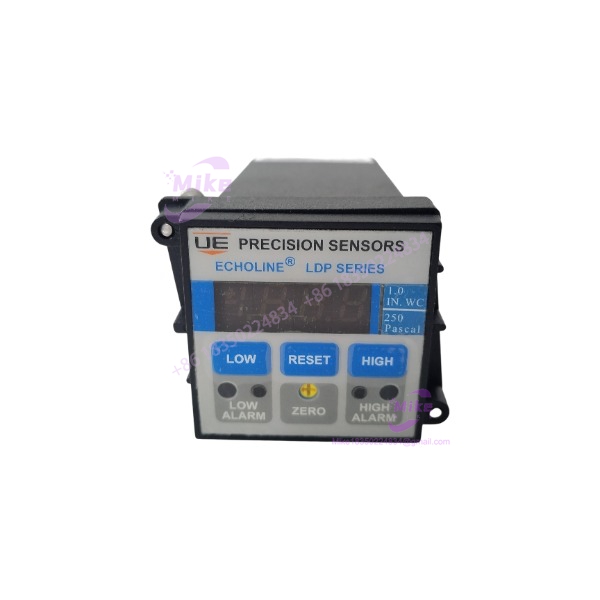
UE LDP1WC/250P-16 | ECHOLINE Differential Pressure Monitor
Product Introduction
Low-pressure alarms are only useful when the instrument’s range, alarm behavior, and output configuration match the application. The UE Precision Sensors ECHOLINE LDP series was developed for low-pressure monitoring, including gas cabinet exhaust systems, and combines a digital indication with adjustable alarm switching.
The LDP1WC/250P-16 is identified in surplus listings as an ECHOLINE low differential-pressure indicating switch. Manufacturer documentation confirms the broader LDP family’s 12–24 VDC supply, adjustable alarm setpoints, relay output, and optional analog signal. However, the exact meaning of the 250P-16 suffix—and whether the offered unit includes a particular analog-output or pressure-connection option—should be verified from its nameplate or configuration record before purchase.
For replacement work, do not rely on the model string alone to establish the pressure range or connection style. Confirm the existing instrument’s range, pressure port arrangement, alarm logic, and wiring before substituting the unit.
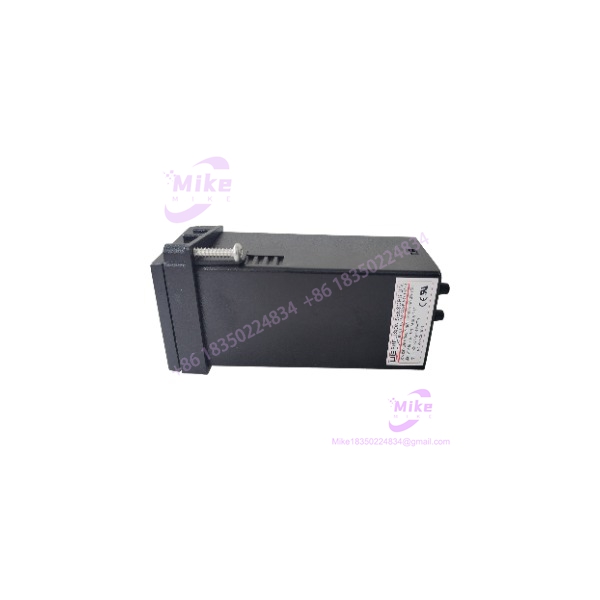
LDP1WC/250P-16
Key Technical Specifications
The following are manufacturer-documented ECHOLINE LDP family specifications unless otherwise noted. Exact configuration details for the full LDP1WC/250P-16 suffix require verification.
- Model: LDP1WC/250P-16
- Manufacturer: UE Precision Sensors / United Electric Controls
- Series: ECHOLINE LDP
- Measurement Type: Low differential-pressure monitoring
- Display: Digital LED pressure indication
- Supply Voltage: 12–24 VDC
- Power Consumption: 1.4 W, per LDP installation instructions
- Switch Output Rating: 1 A at 30 VDC
- Alarm Setpoints: Adjustable; manufacturer documents 5–95% of range for the LDP family
- Switching Response: Selectable 1–30 seconds
- Switch Repeatability: ±0.5% full scale for the standard LDP family
- Display Accuracy: 1% full scale at 0–40°C, per family documentation
- Analog Output Options: 4–20 mA or 0–10 VDC, depending on configuration
- Diagnostic Output: ECHO electronic-circuit-health relay
- Operating Temperature: 0 to +40°C for standard LDP models
- Pressure Connections: Vary by configuration; verify the actual unit
- Exact Pressure Range: Not conclusively confirmed for this full suffix
Range caution: Do not automatically interpret 250P as a confirmed 0–250 Pa calibrated range. The manufacturer’s published ordering literature lists specific Pascal ranges, but the exact 250P-16 configuration was not conclusively decoded in the available documentation.
Global Sourcing & Live-Test SOP
1. Inbound Verification
- Photograph the complete model label and front display.
- Confirm the exact LDP1WC/250P-16 marking.
- Record serial number and any configuration or option codes.
- Inspect the display, front buttons, enclosure, mounting hardware, and pressure ports.
- Check for damaged fittings, contamination, corrosion, or signs of liquid ingress.
- Photograph the rear terminal area and pressure connections.
- Confirm whether the unit is supplied with mounting hardware, cover, or other accessories.
2. Configuration and Compatibility Review
- Match the full model number against the installed instrument’s documentation.
- Verify the pressure range and engineering units.
- Confirm whether the application requires single-port pressure monitoring or true differential-pressure measurement.
- Check pressure port type, tubing size, and connection orientation.
- Verify the required 12–24 VDC supply and terminal assignment.
- Identify whether the unit has a 4–20 mA, 0–10 VDC, or no analog-output option.
- Confirm alarm latching behavior and any maintenance-mode option.
3. Controlled Power-Up
- Verify terminal assignments and supply polarity before energizing.
- Use a current-limited 12–24 VDC supply.
- Confirm display startup and normal initialization.
- Follow the manufacturer’s instruction to press RESET after power-up, where applicable.
- Check for fault indications and verify ECHO status.
- Do not apply pressure until the pressure range and port arrangement are confirmed.
4. Pressure and Output Testing
Use a calibrated low-pressure source and a suitable reference instrument.
- Apply pressure within the confirmed operating range.
- Verify the displayed pressure against the reference.
- Exercise the high and low alarm setpoints.
- Confirm relay response and alarm delay.
- Test the analog output only if the offered unit is configured with that option.
- Verify ECHO output behavior using the applicable wiring instructions.
- Record test points, observed readings, and output states.
5. Extended Run and Final Preparation
Where a suitable test fixture is available, perform an extended powered run with representative pressure changes.
Record:
- Test date and duration
- Applied supply voltage
- Confirmed pressure range
- Reference instrument used
- Alarm setpoints and delay
- Relay and analog-output results
- ECHO diagnostic behavior
- Any functions not tested
Protect the pressure ports from contamination and use ESD-safe packaging for the electronic assembly. Include the test report where available, and clearly disclose any unverified functions.
Field Engineer’s Pitfall Guide
❗ Do not assume the exact pressure range from the suffix
The 250P portion may suggest a Pascal-related configuration, but the exact range was not conclusively verified from the manufacturer’s public ordering literature. Confirm the actual unit label or configuration record before setting alarm limits.
❗ Confirm pressure-port configuration before plumbing
ECHOLINE LDP variants can differ in pressure connection style and intended pressure input. A connection mismatch can produce incorrect readings or prevent proper operation. Match the replacement to the installed tubing and pressure arrangement.
❗ Verify the output option and alarm behavior
The LDP family supports optional analog output and configurable alarm behavior. Do not assume the offered LDP1WC/250P-16 includes a 4–20 mA output or has the same latching, maintenance-mode, and relay arrangement as another LDP variant.
Intent-Driven FAQ
What is the UE /250P-16?
It is identified in surplus listings as a UE Precision Sensors ECHOLINE LDP low differential-pressure indicating switch/monitor. The precise configuration should be confirmed from the actual unit’s label.
What does the ECHOLINE LDP series measure?
The series is designed for low-pressure monitoring, including gas cabinet exhaust applications. Manufacturer documentation describes adjustable alarms, digital indication, and diagnostic features.
What power supply does the /250P-16 require?
The ECHOLINE LDP family uses 12–24 VDC. Confirm the exact unit’s terminal markings and wiring instructions before energizing.
Does this model provide a 4–20 mA output?
The LDP family offers optional 4–20 mA or 0–10 VDC output. The exact option fitted to the /250P-16 must be verified from the unit’s configuration or wiring label.
Can it replace another ECHOLINE LDP monitor?
Only after confirming the full model, pressure range, port arrangement, alarm behavior, power requirements, and output options. Similar family names do not guarantee identical configuration.
Is the /250P-16 hot-swappable?
Do not assume it is. Treat replacement as a controlled maintenance task: isolate power, depressurize or safely isolate the pressure lines as required, and follow the equipment’s installation procedure.
What should I verify before buying a used unit?
Request clear label and terminal photographs, serial number, pressure-range confirmation, output-option details, condition disclosure, and pressure/relay test evidence. Verify that the offered configuration matches the installed instrument.
Bottom Line for Buyers
The UE Precision Sensors /250P-16 belongs to the ECHOLINE LDP low-pressure monitoring family. Manufacturer literature confirms the family’s core operating features, but the exact range and option decoding for this full suffix remain open verification items.
For procurement, match the complete model marking, confirm the pressure range and connection style, and verify the fitted output options. A used unit should not be treated as a direct replacement until its pressure response and alarm outputs have been checked against the installed application.





