


Description
Siemens 6GT2800-5DA00 | SIMATIC RF380T Heat-Proof Tag In Stock
Architect’s Product Breakdown
The Siemens 6GT2800-5DA00 (designated as the RF380T) is a heavy-duty, heat-resistant RFID transponder engineered specifically for extreme industrial environments such as automotive paint shops, powder coating lines, foundry drying tunnels, and heat-treatment ovens. Built into a cylindrical housing measuring 114 mm in diameter and 83 mm in height, the RF380T is designed to withstand severe cyclic thermal shock ranging from -25°C up to +220°C.
At the heart of the 6GT2800-5DA00 is a 32 KB FRAM (Ferroelectric Random Access Memory) chip. Unlike standard EEPROM tags, FRAM allows virtually unlimited write/read cycles (>10^{10}) and ultra-fast data transfer rates (up to 106 kbit/s) without requiring a battery. This allows large data structures—such as vehicle color codes, job routing instructions, and quality logs—to be written directly to the tag while the skid is in motion.
Operating at 13.56 MHz on the high-performance RF300 proprietary protocol, the RF380T achieves an operating distance of up to 160 mm when paired with large RF300 readers (such as the RF380R or RF382R). Its IP68-rated PPS outer shell protects internal tuning components against aggressive solvents, steam cleaning, phosphate baths, and paint oven vapors.
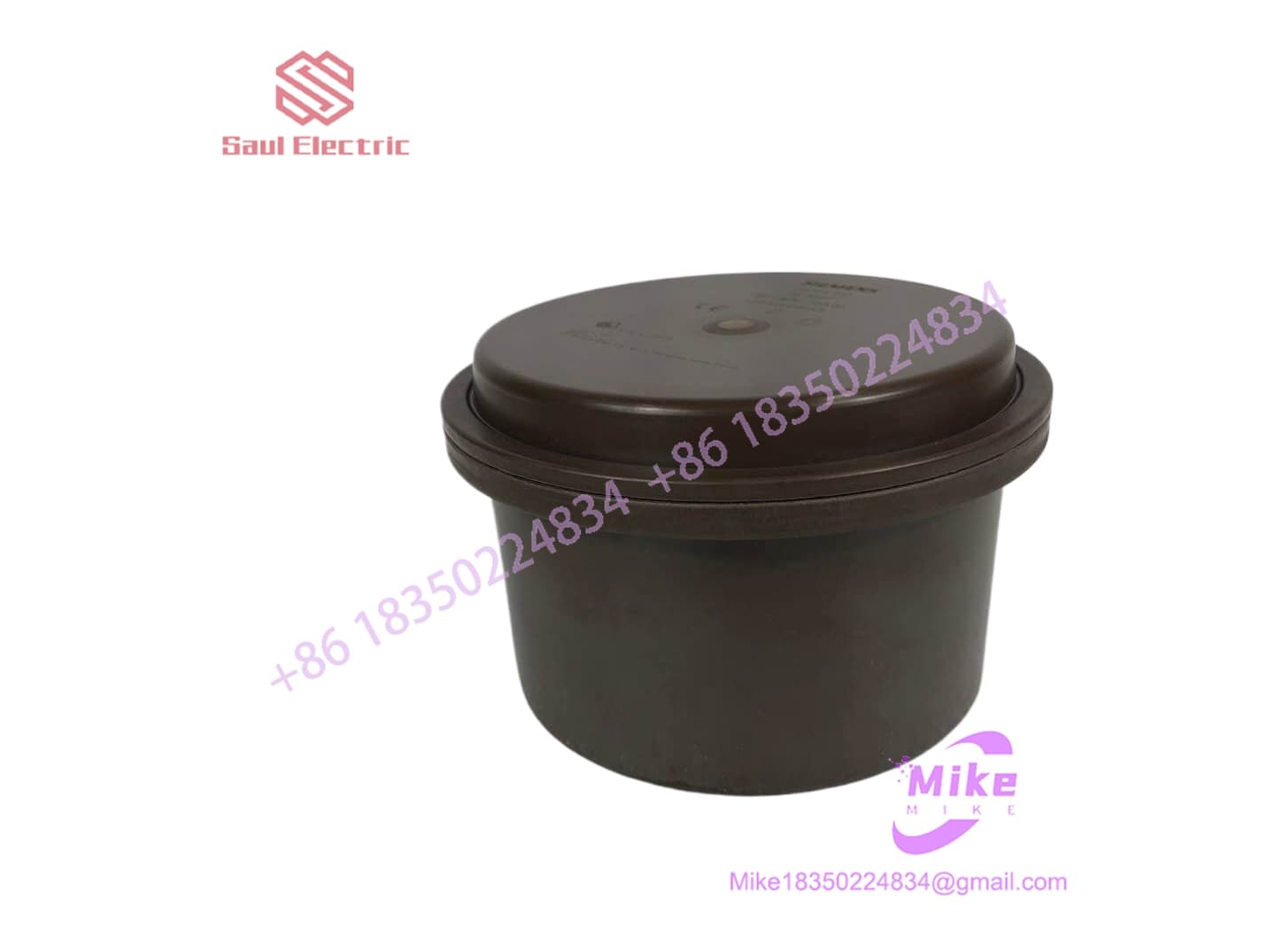
6GT2800-5DA00
Key Technical Specifications
| Parameter | Technical Specification |
| Manufacturer | Siemens AG |
| Product Line | SIMATIC RF300 |
| Model / Type | RF380T High-Temperature Transponder |
| Operating Frequency | 13.56 MHz (High Frequency / Inductive Coupling) |
| User Memory | 32 KB FRAM (Non-Volatile, Battery-Free) |
| Maximum Operating Range | Up to 160 mm (depending on reader antenna size) |
| Data Transmission Rate | Up to 106 kbit/s (RF300 proprietary protocol) |
| Thermal Range (Continuous) | -25°C to +85°C (-13°F to +185°F) |
| Thermal Range (Cyclic Peak) | Up to +220°C (+428°F) for max. 2 hours per cycle |
| Enclosure Rating | IP68 (Dust-tight and continuous water submersion) |
| Dimensions & Weight | Diameter: 114 mm, Height: 83 mm |
Field Engineer’s Pitfall Guide (Unique Value)
- READING/WRITING TO THE TAG AT PEAK TEMPERATURE (+220°C): Do not attempt active RF data transfers while the tag is at its maximum peak temperature (+220°C). The thermal limit of +220°C is rated for passive survival and memory retention during oven passes. Active wireless read/write operations should occur at reading stations located before entry or after exit when the tag temperature drops back within the active operational window (below +85°C).
- VIOLATING OVEN DWELL & COOL-DOWN CYCLES: Respect the mandatory cooling phase after high-temperature exposure. A typical cycle permits exposure to +220°C for a maximum of 2 hours, followed by a mandatory cool-down period at room temperature. Continuous exposure beyond two hours will heat the interior electronic core, leading to permanent detuning of the 13.56 MHz antenna coil.
- FLUSH METAL MOUNTING WITHOUT SPACERS: Never recess the RF380T flush inside a solid steel skid pocket without verifying metal clearances. Surrounding steel absorbs inductive RF energy and alters the coil’s resonant frequency. Always maintain a minimum clearance zone around the circumference or use an official non-metallic mounting spacer to ensure maximum read distance.
QA & Testing SOP (Transparency)
- Visual & Casing Integrity Inspection: Inspection of the cylindrical housing, mounting flange, and ultrasonic weld seams for cracks, chips, or thermal fatigue.
- RF Transponder Tuning Audit: Resonant frequency tested at 13.56 MHz using an RF network analyzer to verify coil Q-factor and field sensitivity.
- Memory Sector Read/Write Stress Test: Complete 32 KB FRAM memory space written and verified over 1,000 continuous block cycles using an RF380R test reader.
- Thermal Survival & Retention Verification: Subjected to elevated temperature verification to confirm FRAM non-volatile memory retention across thermal cycles.
- Anti-Static & Protective Packaging: Cleared of test memory blocks, wrapped in static-shielding material, and packed in high-density foam shipping boxes.
Technical FAQ
Can the 6GT2800-5DA00 () be read by ISO 15693 (RF200 / MOBY D) readers?
No. The uses the high-speed RF300 proprietary protocol on 13.56 MHz. It is designed specifically for RF300 series readers (e.g., RF310R, RF340R, RF380R, RF382R) and cannot be read by standard ISO 15693 or ISO 14443 reader heads.
How many times can data be rewritten to the 32 KB FRAM memory?
FRAM memory technology provides virtually unlimited write/read cycles (at least 10^{10} write cycles and infinite read cycles). Unlike standard EEPROM tags that wear out after 100,000 writes, FRAM tags can be rewritten continuously for years without memory degradation.
Does the tag contain an internal battery?
No. The is a passive RFID transponder. Power is transferred wirelessly via electromagnetic induction from the reader’s antenna whenever the tag enters the 13.56 MHz field. Data stored in FRAM is retained indefinitely without external battery power.
What happens if the tag stays inside an oven at +220°C for longer than 2 hours?
Exceeding the 2-hour window at peak temperature (+220°C) allows heat to soak into the encapsulated internal electronics. Over-exposure can detune the antenna, cause structural stress on internal solder joints, and reduce the overall lifespan of the tag.
How is the physically mounted to skids or pallets?
The features a heavy-duty mounting flange around its base. It is typically secured to workpiece carriers or paint shop skids using standard M6 mounting bolts, ensuring the active top face points toward the reader’s line of sight.





