

Description
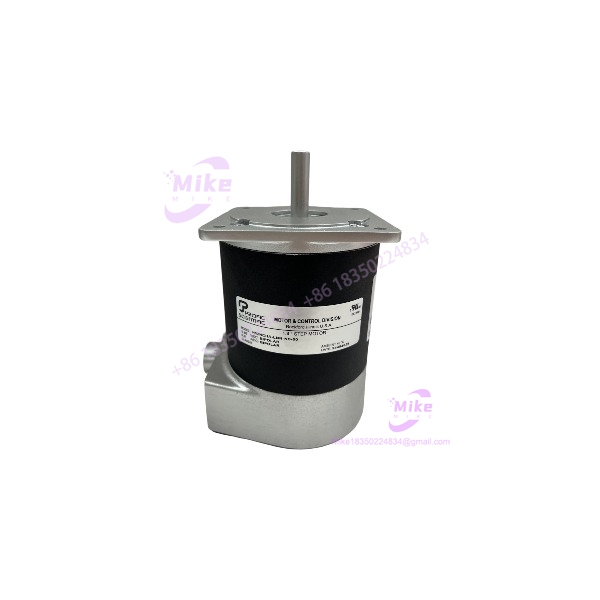
Pacific Scientific H32NCHA-LNN-NS-00 | 5.6A Hybrid Stepper Motor
Product Introduction
The H32NCHA-LNN-NS-00 belongs to the Pacific Scientific H-Series of hybrid step motors. It is a conventional stepper-motor solution for positioning systems where the drive controls phase current and step sequence directly rather than relying on an integrated servo feedback loop. Exact-part records identify the motor as a 65 V, 5.6 A, 133 W unit with a 1,500 RPM rating.
The useful specification for replacement work is the combination of 445 oz-in holding torque, 5.6 A phase current, and four-lead bipolar-parallel winding. That winding arrangement must be matched to the stepper drive’s current configuration; simply matching the physical NEMA mounting pattern is not enough. The exact model is also listed with two rotor stacks and a 0.39 Ω phase resistance.
For legacy machinery, this distinction matters. A mechanically compatible motor can still produce poor acceleration, excessive heating, missed steps, or drive overcurrent faults if the phase-current setting and winding connection are wrong.
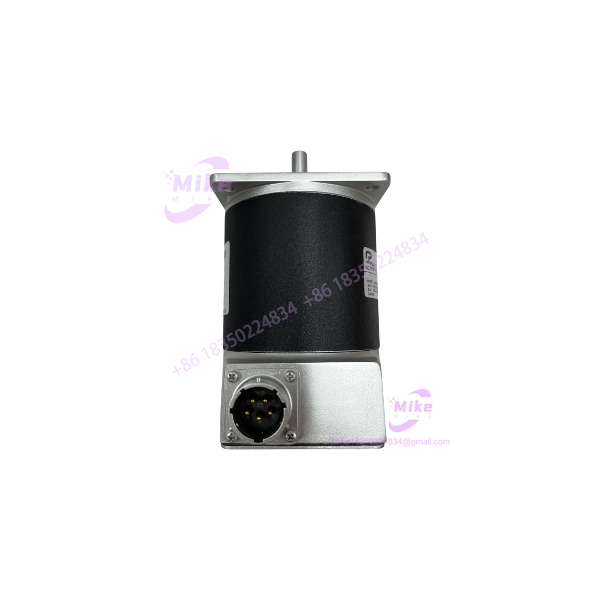
H32NCHA-LNN-NS-00
Key Technical Specifications
- Model: H32NCHA-LNN-NS-00
- Manufacturer: Pacific Scientific
- Series: H-Series
- Motor type: Hybrid stepper motor
- Frame size: NEMA 23 / approximately 2.25 in. diameter
- Rated voltage: 65 V
- Rated current: 5.6 A
- Rated power: 133 W
- Rated speed: 1,500 RPM
- Holding torque: 3.14 N·m / 445 oz-in
- Phase resistance: 0.39 Ω
- Winding: 4-lead, bipolar parallel
- Rotor stacks: 2
- Shaft configuration: Single, smooth shaft
- Mounting: NEMA configuration
- Application: Industrial positioning and motion-control systems
The 65 V and 5.6 A figures should be treated as the motor’s documented electrical ratings, not as a recommendation to apply 65 V directly to the windings without a current-regulated stepper drive. Stepper amplifiers normally regulate winding current, and the correct drive must be selected around the motor’s phase-current and inductive characteristics. Exact-part records support the 5.6 A and 0.39 Ω values.
Global Sourcing & Live-Test SOP
1. Inbound Verification
- Confirm the complete marking H32NCHA-LNN-NS-00.
- Photograph the motor nameplate before installation.
- Record serial number and manufacturing information where present.
- Inspect the shaft for scoring, bending, corrosion, or damaged key/surface features.
- Rotate the shaft manually and check for abnormal mechanical roughness.
- Inspect the mounting flange and bolt holes.
- Examine all four winding leads for insulation damage.
- Confirm that the motor has not been confused with H32NCHT, H32NRFA, H32NRFP, or another H-Series variant.
Exact-part market records identify the H32NCHA-LNN-NS-00 as a Pacific Scientific motor, while current industrial inventories may list the same part under Kollmorgen. Preserve the original manufacturer and part-number markings when creating purchasing records.
2. Winding Verification
Before connecting the motor to a drive:
- Identify the two motor phases.
- Measure phase-to-phase resistance.
- Confirm approximately 0.39 Ω per documented phase resistance, allowing for measurement technique and winding temperature.
- Check that neither winding is shorted to the motor frame.
- Verify the four-lead bipolar-parallel arrangement.
- Do not guess lead polarity from wire colors alone.
For low-resistance windings, an ordinary handheld multimeter can introduce significant measurement error. A four-wire resistance measurement is preferable when verifying a replacement motor.
3. Drive Compatibility Test
Configure the stepper amplifier for the motor’s actual winding arrangement.
Verify:
- Phase current setting
- Parallel-winding configuration
- Supply voltage
- Microstepping configuration
- Acceleration rate
- Maximum operating speed
- Current reduction/idle-current settings
- Motor thermal behavior
Do not start at maximum acceleration. Begin with low-speed indexing and gradually increase speed while monitoring current and mechanical behavior.
4. Functional Test
A suitable bench test should verify:
- Correct phase sequencing
- Forward rotation
- Reverse rotation
- Low-speed stepping
- Microstep operation
- Holding torque
- Acceleration
- Deceleration
- Repeatable positioning
- Motor temperature
- Drive fault behavior
Where the original machine uses an encoder or external position sensor, remember that this does not automatically turn the motor itself into a servo motor. The H32NCHA-LNN-NS-00 should be treated as the stepper motor specified by its original part number.
5. Extended Heat Run
For critical replacement inventory, perform a representative loaded test and monitor:
- Phase current
- Motor case temperature
- Drive temperature
- Shaft vibration
- Audible resonance
- Positioning repeatability
- Missed-step behavior
- Mechanical bearing noise
A heat run is particularly useful on used or long-stored motors because insulation condition and bearing condition cannot be established from appearance alone.
6. Final Procurement Record
Record:
- Exact model
- Manufacturer marking
- Serial number
- Winding resistance
- Winding configuration
- Test-drive model
- Current setting
- Supply voltage
- Test speed
- Load condition
- Motor temperature
- Test date
Package with the shaft protected from impact and keep the winding leads secured against connector or terminal damage.
Field Engineer’s Pitfall Guide
❗ Do Not Treat NEMA 23 as a Complete Replacement Specification
The NEMA 23 mounting format tells you about mechanical interchangeability, not electrical compatibility. The is a 5.6 A, 65 V motor with a four-lead parallel winding. A different NEMA 23 motor can have substantially different current, resistance, inductance, torque, and thermal characteristics.
❗ Parallel Winding Must Be Configured Correctly
This is a four-lead bipolar-parallel motor. The stepper drive must be capable of supplying the required phase current in the specified winding arrangement.
Incorrect phase identification can produce vibration instead of rotation. Incorrect current settings can produce overheating or inadequate torque (a common commissioning mistake when an engineer changes the motor but leaves the previous drive parameters untouched).
❗ Do Not Confuse This Part With H32NCHT
The H-Series contains multiple closely related model numbers. and H32NCHT-LNN-NS-00 should not be treated as interchangeable merely because both begin with H32NCH. The exact suffix defines the motor configuration, and the replacement should be matched against the machine’s original motor data.
Intent-Driven FAQ
Is the a servo motor?
No. The exact part is identified as a hybrid stepper motor in the Pacific Scientific H-Series. Some reseller databases incorrectly categorize individual H-Series parts as servo motors, so the complete model number should take precedence over a generic website category.
What is the holding torque?
The documented exact-part specification is 3.14 N·m, or approximately 445 oz-in, under the stated motor conditions.
What is the current rating?
The exact-part documentation available for lists 5.6 A and a 65 V rating. The stepper drive should be configured according to the manufacturer’s current-control requirements rather than simply applying the voltage directly to the winding.
How many motor leads does it have?
The exact model is documented with four leads and a bipolar-parallel winding configuration.
What frame size is the ?
It is identified as a NEMA 23 frame, approximately 2.25 inches in diameter, with a NEMA mounting configuration.
Can I replace another Pacific Scientific H-Series motor with this one?
Only after comparing the complete part numbers and electrical requirements. H-Series motors with similar physical dimensions can have different windings, shaft configurations, torque characteristics, and current requirements. Match the complete model suffix, not just the H32 prefix.





