


Description
OY International ECL-10 | Excitation Current Limiter
Product Introduction
When a synchronous generator is pushed into excessive reactive loading, excitation current can become the problem that turns an electrical disturbance into a winding-temperature problem. OY International ECL-10 is an excitation current limiter designed to intervene in that part of the generator control chain, limiting excitation current under reactive-power overload conditions rather than allowing the field circuit to run unchecked.
The ECL-10 belongs in the generator excitation/AVR architecture—not in the ordinary PLC I/O category. Available technical descriptions associate it with marine generators, industrial power stations, and standalone generation systems. Its documented nameplate information includes 230 VAC maximum input voltage for 10 seconds, and surviving units are identified as Made in Finland.
This is a legacy component, so specification discipline matters. Do not substitute a generic overcurrent limiter simply because the enclosure or terminal count looks similar.
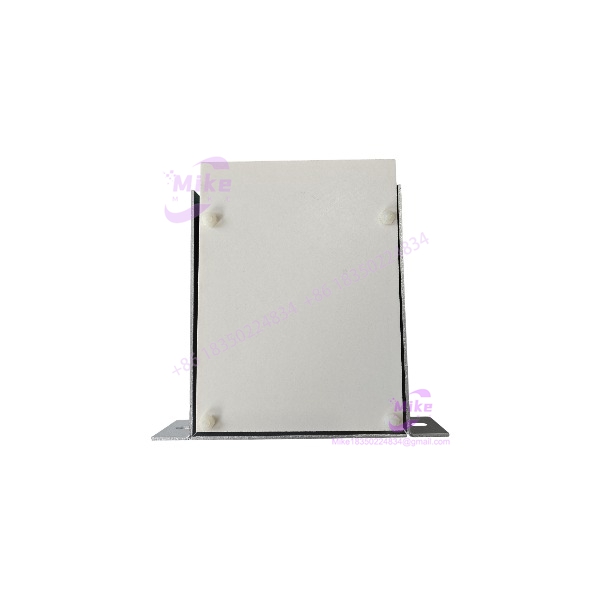
ECL-10
Key Technical Specifications
| Parameter | ECL-10 Technical Detail |
|---|---|
| Manufacturer | OY International Electric Company |
| Model | ECL-10 |
| Product Type | Excitation Current Limiter |
| Primary Function | Generator excitation-current limiting |
| System Application | AVR / excitation control |
| Generator Type | Synchronous generator applications |
| Maximum Input Voltage | 230 VAC |
| Maximum Duration at Stated Input | 10 seconds |
| Manufacturing Origin | Finland |
| Example Unit Date Marking | March 2011 |
| Certification/Marking | E325367 appears on one documented unit |
| Marine Application | Yes |
| Industrial Generator Application | Yes |
| Lifecycle | Legacy / limited availability |
Specification warning: Public documentation for ECL-10 is sparse. The 230 VAC / 10-second figure is a documented product marking, not evidence that 230 VAC is the normal continuous operating voltage. Do not apply 230 VAC continuously unless the original system documentation explicitly permits it.
Application Scenarios & Pain Points
Generator Reactive-Load Protection
The is intended to limit excitation current when a generator experiences excessive reactive-power loading. The objective is straightforward: prevent prolonged excessive field current from becoming a thermal problem in the excitation winding.
Without the limiter:
A reactive-load event can drive the excitation system toward excessive field current.
With the correctly integrated:
The excitation-control system has a dedicated current-limiting function that can intervene during the abnormal condition.
Marine Generator Systems
This is where the shows up repeatedly in industrial spare-parts channels. It is associated with marine electrical systems, generator switchboards, and excitation-control equipment.
For a vessel sitting alongside a berth, the engineering problem is not simply finding “an excitation limiter.” The replacement needs to match the exact configuration, terminal arrangement, and generator-control architecture.
Legacy AVR Maintenance
Older excitation systems can remain in service for decades. The generator itself may still have years of useful mechanical life while one small control component becomes impossible to source through normal OEM channels.
That makes the a classic lifecycle-management part: small component, disproportionate downtime risk.
Industrial Standalone Generation
The same function is relevant to industrial generators and shore-based autonomous power systems. Existing technical descriptions associate the with industrial power-generation applications as well as marine installations.
Emergency Spare Stock
For a generator supporting essential loads, keeping one verified spare can make more sense than waiting until an excitation fault occurs and then searching the secondary market.
The market evidence also shows why condition needs to be stated clearly: current listings include used, tested, refurbished, and legacy-stock descriptions rather than a consistent new-production supply.
QA & Live Testing SOP
For OY International , a simple continuity check is not enough.
Incoming Inspection
- Identity Verification
- Confirm manufacturer marking: OY International Electric Company.
- Verify on the identification label.
- Record date codes, serial/reference markings, and visible revision information.
- Nameplate Inspection
- Confirm the stated voltage information.
- Check for the 230 VAC / 10-second marking where applicable.
- Photograph the complete label before energization.
- Physical Inspection
- Examine terminals, insulation, housing, PCB surfaces, and mounting points.
- Look for corrosion, heat discoloration, cracked insulation, or evidence of previous component replacement.
- Controlled Electrical Test
- Use an isolated, current-limited test arrangement.
- Verify the unit’s electrical response against the applicable system documentation.
- Do not treat the 230 VAC marking as a continuous test voltage.
- Functional Verification
- Test the limiter within an appropriate excitation-system simulator or approved generator-control test setup.
- Confirm limiting behavior at the specified threshold.
- Verify recovery after the abnormal condition is removed.
- ESD and Transit Protection
- Use ESD-safe packaging for electronic assemblies.
- Protect terminal blocks and exposed conductors from impact.
- Seal against moisture during international shipment.
Field rule: Never prove an excitation limiter by deliberately applying an uncontrolled fault to a live generator. Use a controlled test setup. The generator is not the test bench.
Field Engineer’s Pitfall Guide
❗ Do not interpret “230 VAC for 10 seconds” as a normal supply rating
This is the biggest trap in the available documentation.
The surviving product marking specifically states MAX INPUT VOLTAGE: 230 VAC FOR 10 SECONDS. That does not establish a continuous 230 VAC operating specification.
Treat the duration limit literally until the original excitation-system documentation proves otherwise.
❗ Do not replace the based only on voltage
Two excitation modules can have similar voltage ratings and completely different current-limiting characteristics.
Before substitution, compare:
- Input/output function
- Limiting threshold
- Time characteristic
- Terminal configuration
- Generator excitation architecture
- AVR interaction
- Physical mounting arrangement
❗ Verify the generator/AVR circuit before energizing
The is part of a protection/control function. Incorrect wiring can affect the generator’s excitation behavior—not merely produce a communication fault.
Isolate the excitation circuit, identify every terminal from the original schematic, and verify polarity and signal paths before applying power.
Intent-Driven FAQ
What is OY International used for?
is an excitation current limiter used in generator excitation systems. Its purpose is to limit generator field/excitation current during excessive reactive-power loading and help protect the excitation winding from overheating.
Is OY used in marine generators?
Yes. Available technical and spare-parts records specifically associate the with marine automation, ship electrical systems, generator switchboards, and excitation systems.
What is the maximum input voltage of ?
A documented unit is marked 230 VAC maximum input voltage for 10 seconds. Do not interpret this as a continuous 230 VAC operating rating without confirming the original system documentation.
Where is OY International made?
Documented units are marked Made in Finland.
Is still a current-production component?
The available market evidence points to legacy/limited-stock availability, with current secondary-market listings commonly describing the units as used or tested. That makes exact part-number verification especially important when sourcing a replacement.
Can I replace with a generic excitation current limiter?
Not without an engineering compatibility check. The limiter is part of the generator’s excitation-control loop. Matching only the voltage rating does not establish compatibility. Threshold, timing, wiring, excitation topology, and AVR interaction must also match.
What should I verify before buying an ?
Verify the complete designation, nameplate markings, voltage information, date/revision markings, terminal arrangement, physical dimensions, and condition. For a production-critical generator, request actual electrical test evidence rather than accepting a photograph as proof of functionality.





