


Description
Okuma E4809-770-065-B | SVC-II Type A Servo Drive Board, In Stock
Architect’s Product Breakdown
The Okuma E4809-770-065-B functions as a vital servo control and drive interface board (designated as the SVC-II Board Type A) within Okuma’s legacy CNC control architectures, such as the OPUS7000 series. Operating inside the main control rack or servo amplifier assembly, this printed circuit board processes high-speed motion commands from the CNC processor, translates them into precise motor control currents, and processes feedback signals from axis encoders.
Because legacy Okuma CNC machinery relies on exact hardware and firmware compatibility, replacing a failing control board requires matching the exact part number string (E4809-770-065-B) to prevent axis tracking errors, drive alarms, or communication faults with the main rack.
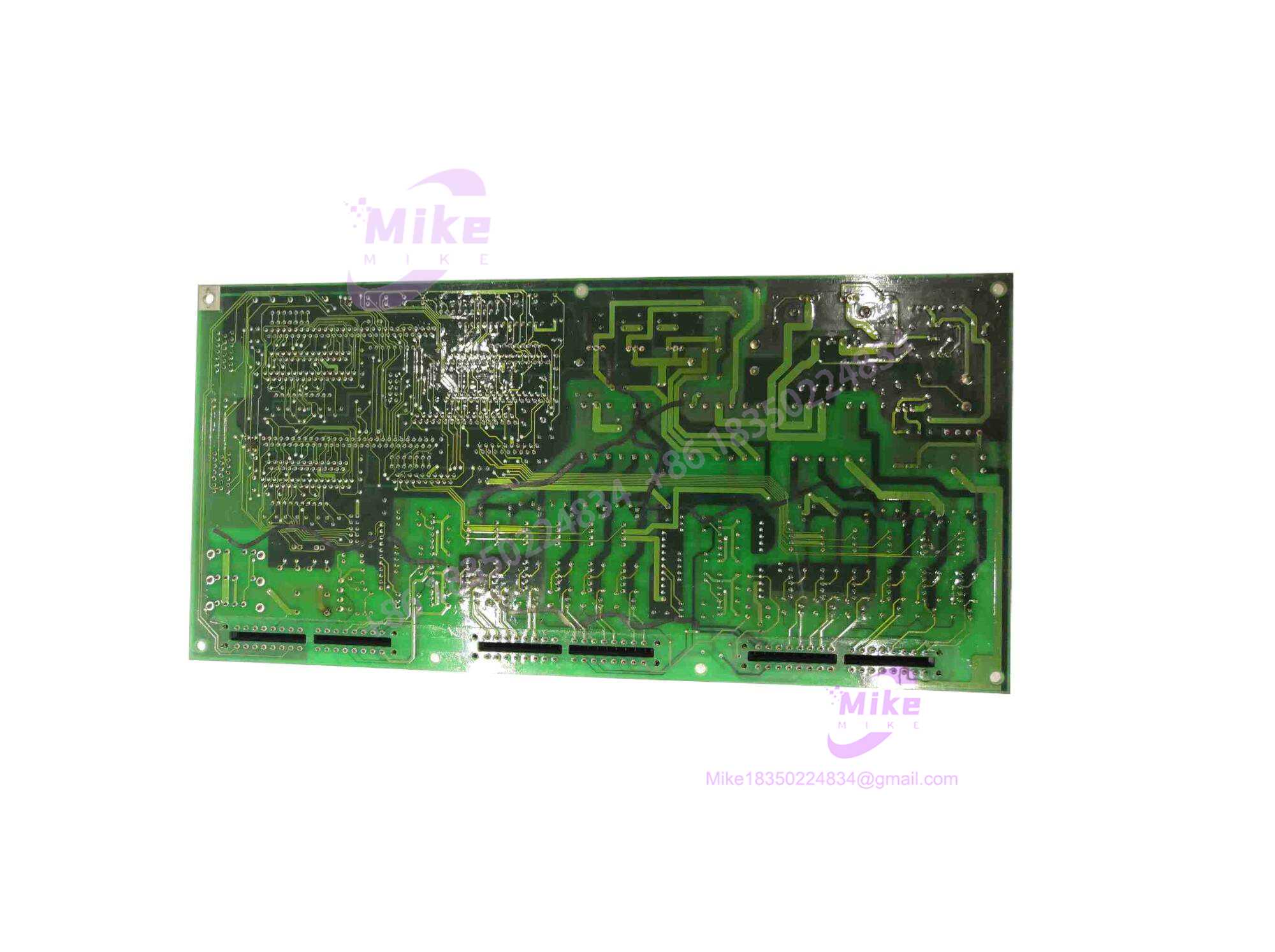
E4809-770-065-B
Key Technical Specifications
| Parameter | Specification |
| Series | Okuma E4809 CNC Board Series |
| Model / Part Number | E4809-770-065-B (SVC-II Board Type A) |
| Compatible Systems | Okuma OPUS7000 / legacy CNC machine platforms |
| Board Type | Servo Amplifier PCB / Motion Control Interface |
| Power Support | Integrated support for control and main circuit supply requirements |
| Environment | Industrial cabinet installation requiring clean, temperature-regulated airflow |
Field Engineer’s Pitfall Guide
- WARNING: Electrostatic Discharge (ESD) Vulnerability. Handling the PCB without a grounded wrist strap or proper anti-static protection can permanently destroy sensitive microchips and logic gates.
- WARNING: Improper Board Seating. Forcing or misaligning the board into the rack backplane connector can bend fine pins or damage internal data bus traces.
- WARNING: Live-Rack Swapping. Inserting or removing the servo board while cabinet power is active can cause severe electrical arcs, blown fuses, or permanent failure of the rack backplane interface.
- Field Anecdote: I remember a high-precision Okuma lathe throwing intermittent axis-lag alarms because a replacement servo board was installed into a dusty backplane slot without first cleaning the edge card fingers with contact cleaner, leading to high-resistance communication errors.
QA & Testing SOP
- Visual & Trace Inspection: Inspect all integrated circuits, capacitors, resistors, and edge-connector fingers for signs of thermal stress, leakage, or physical damage.
- Backplane Continuity & Seating: Verify that all backplane pins are straight and clean before inserting the board into a test fixture or certified Okuma CNC rack.
- Dynamic Bench Testing: Power up the CNC control rack and execute diagnostic routines to verify communication handshakes, axis loop closure, and error-free servo response.
- Anti-Static & Protective Packaging: Wrap the circuit board in conductive anti-static bubble material and place it inside a heavy-duty cardboard box with structural foam inserts to protect fragile components during transport.
Technical FAQ
What machine systems use the Okuma E4809-770-065-B board?
This board is utilized in legacy Okuma CNC machine tools operating on control platforms such as the OPUS7000 series.
Is the E4809-770-065-B still actively manufactured by Okuma?
No. Original production has ceased, but certified repair services, exchange programs, and surplus units are widely available through specialized industrial CNC suppliers.
What does “SVC-II Board Type A” designate?
It refers to Okuma’s second-generation servo control board architecture configured to manage specific axis drive and feedback loops within the machine’s amplifier housing.
What causes unexpected servo alarm faults after installing a replacement board?
Alarms are typically caused by unverified parameter settings, loose ribbon cable connections inside the amplifier rack, or oxidation on the backplane connector pins.





