

Description
NSD Absocoder MRE-256SP052FBB5 | Multi-Turn Absolute Sensor, Category ID
Architect’s Product Breakdown
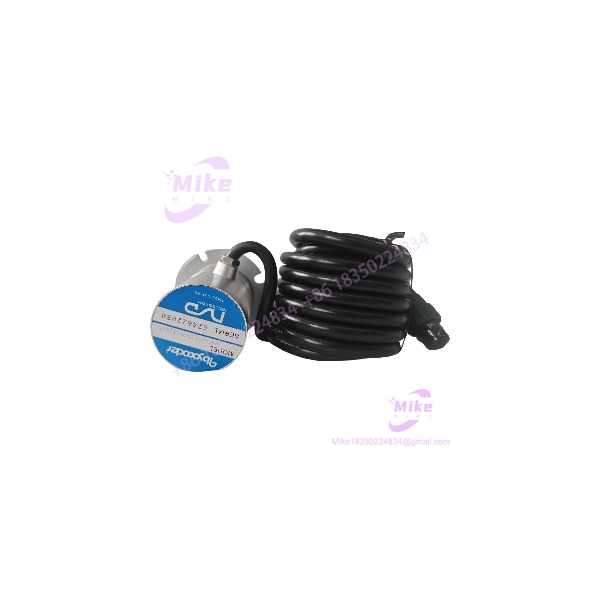
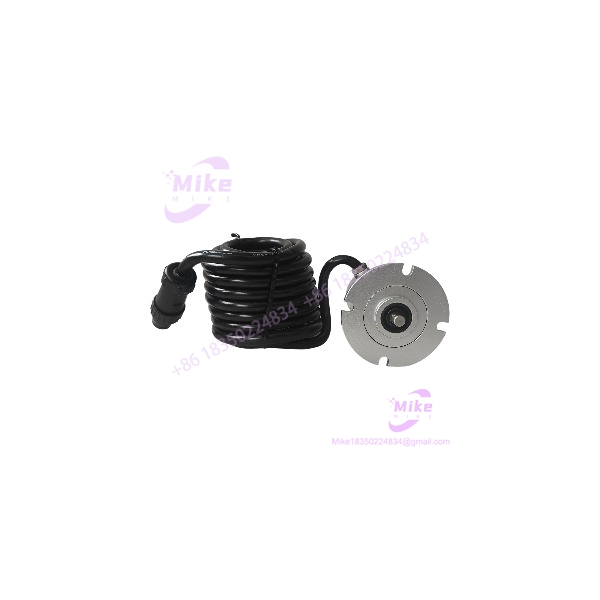
The MRE-256SP052FBB5 Absocoder sensor acts as a rugged absolute position feedback device designed to operate where optical encoders fail due to intense vibration, shock, or oil contamination. Utilizing a magnetic reluctance change principle rather than delicate glass disks or onboard electronics, the sensor maintains true absolute position tracking through power losses without relying on backup batteries. It interfaces directly with a dedicated NSD control module or converter via specialized multi-core cabling.
Integrating this unit into heavy machinery or automated press lines requires matching the flange mount configuration and verifying correct shaft key engagement. Because absolute position tracking is processed externally by a paired NSD converter, wiring integrity and shield grounding are critical to prevent signal degradation across long cable runs.
Field engineers appreciate the absence of internal electronic components inside the sensor body, which drastically increases MTBF in high-temperature and high-vibration applications like steel mills and automotive transfer lines. However, strict adherence to alignment tolerances during mechanical installation is mandatory to prevent premature bearing wear.
MRE-256SP052FBB5
Key Technical Specifications
| Parameter | Specification |
| Manufacturer | NSD Corporation |
| Product Line | Absocoder MRE Series |
| Sensor Type | Multi-Turn Absolute Rotary Position Sensor |
| Sensing Principle | Magnetic Reluctance Change |
| Mounting Configuration | Flange-mount type |
| Shaft Specification | Shaft with keyway (Type B) |
| Permissible Speed | Up to 3,600 RPM |
| Vibration Resistance | 2.0 \times 10^2 m/s^2 (20G up to 200 Hz) |
| Shock Resistance | 4.9 \times 10^3 m/s^2 (500G for 0.5 ms) |
| Protection Rating | IP52f (JEM1030) |
Field Engineer’s Pitfall Guide
- Unmatched Converter Pairing: Connecting an Absocoder sensor to an incompatible NSD converter model or failing to verify division numbers will result in severe position scaling errors and controller communication faults.
- Cable Shield Discontinuities: Leaving the extension cable shield ungrounded at either the sensor or converter end introduces electromagnetic noise, causing erratic position jitter on high-speed axes.
- Excessive Mechanical Side-Load: Forcing a rigid gear or pulley directly onto the shaft without a flexible coupling will side-load the internal bearings, leading to premature mechanical failure and core misalignment.
QA & Testing SOP
- Visual & Origin Inspection: Verify OEM identification tags, check the flange and keyed shaft for surface imperfections, and inspect connector pins for corrosion or bending.
- Live Test Environment: Connect the sensor to a calibrated NSD Absocoder test converter bench to verify excitation voltage and signal response across full mechanical rotation.
- Diagnostics & Handshake Tests: Execute a multi-turn tracking sweep to confirm that absolute position counts increment cleanly without dead zones or skipped codes.
- Preservation & Packaging: Apply anti-corrosion caps to the shaft, wrap the assembly in anti-static bubble material, and seal inside a heavy-duty cardboard carton.
Technical FAQ
Does the MRE-256SP052FBB5 require an internal battery to retain absolute position?
No. The Absocoder relies entirely on passive electro-magnetic reluctance principles, meaning it retains absolute position data mechanically without batteries or volatile memory.
Can I connect this sensor directly to a standard PLC high-speed counter input?
No. Absocoder sensors require a dedicated NSD converter or PLC interface module to translate the magnetic reluctance signals into usable digital or network data formats.
Is this sensor suitable for washdown or high-moisture environments?
It features an IP52f protection rating, meaning it withstands standard industrial factory atmospheres, but direct high-pressure water jets require an upgraded waterproof variant.
What causes an intermittent position drop alarm on the connected controller?
This is typically caused by a loose connector, damaged extension cable shielding, or mechanical slippage of the shaft keyway under heavy acceleration profiles.





