


Description
National Instruments 778782-02 | PCI-CAN/XS2 Interface Card, New In Stock
Architect’s Product Breakdown
The National Instruments 778782-02, officially designated as the PCI-CAN/XS2, is a versatile, high-performance bus interface card designed for advanced automotive, aerospace, and industrial automation networks. Equipped with an Intel 80386EX microprocessor onboard, this dual-port module handles complex message filtering, timestamping, and frame formatting locally to minimize host PC CPU overhead.
The defining architecture of the XS2 variant is its software-selectable transceiver suite—featuring the TJA1041 (high-speed), TJA1054A (low-speed/fault-tolerant), and AU5790 (single-wire) chips alongside an external mode option. This allows engineers to dynamically reconfigure physical layer connections via software without swapping physical hardware cards. Integration requires proper slot allocation on a standard PCI bus, correct termination resistor setup on the physical network loops, and installation of the NI-CAN driver software package compatible with LabVIEW, LabWindows/CVI, C, C++, or Visual Basic environments.
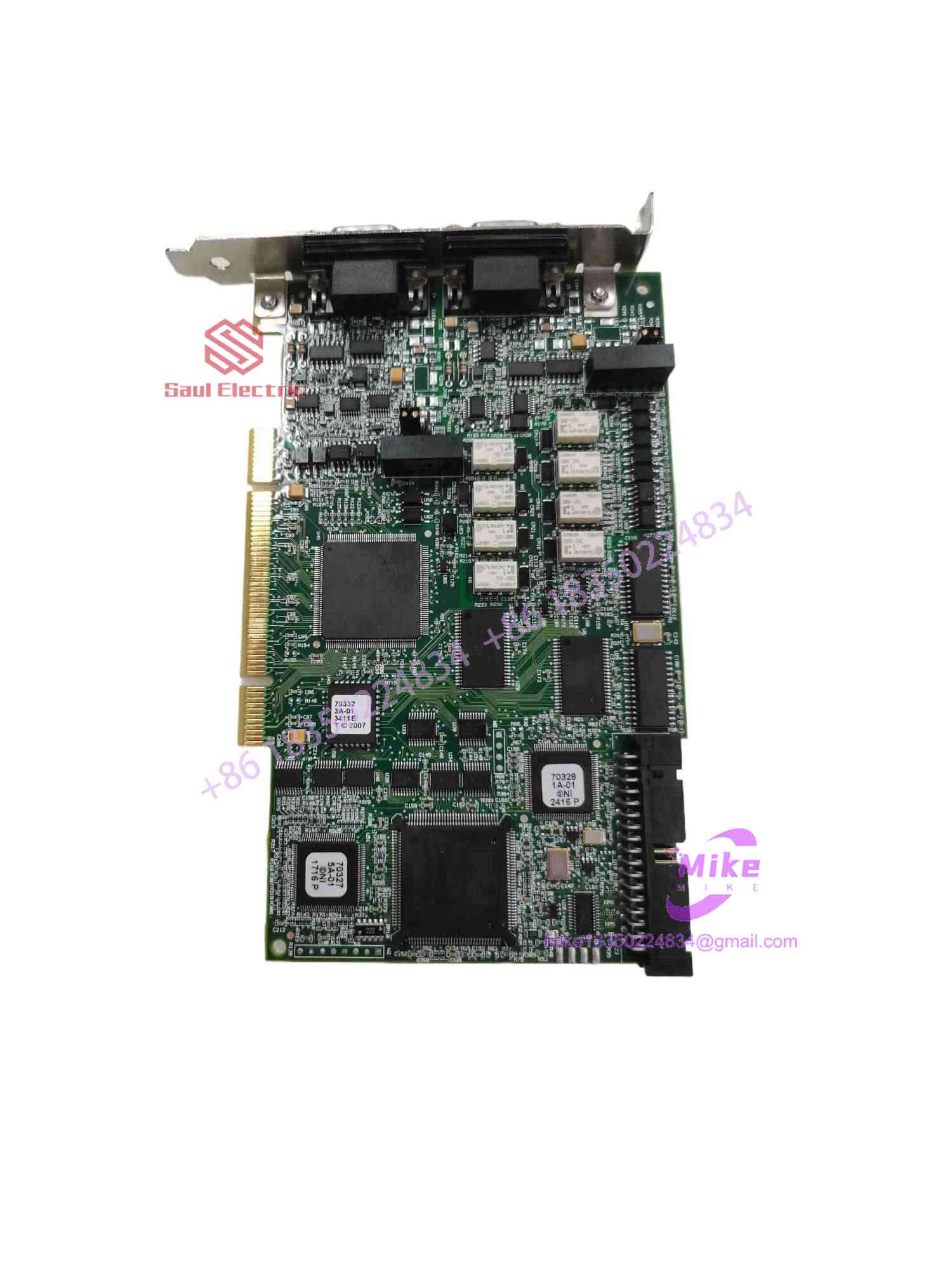
778782-02
Key Technical Specifications
| Parameter | Specification Data |
| Module Type | 2-Port Software-Selectable CAN Interface Device |
| Bus Interface | PCI Bus Standard |
| Number of Ports | 2 independent channels (9-pin male D-SUB connectors) |
| Onboard Microprocessor | Intel 80386EX |
| Supported Transceivers | TJA1041 (High-Speed), TJA1054A (Low-Speed/Fault-Tolerant), AU5790 (Single-Wire), External (EXT) |
| Maximum Baud Rate | Up to 1000 kb/s (High-Speed mode) |
| Electrical Isolation | 500 V Optical Isolation (Port-to-PC) |
| Power Requirements | +5 VDC at 900 mA typical |
| Software Drivers | NI-CAN (Supports Windows and LabVIEW RT) |
| Operating Temperature | 0^\circC to +55^\circC |
Field Engineer’s Pitfall Guide
- Bus Termination Oversight: Failing to implement proper 120-ohm terminal resistors on high-speed CAN network ends will cause corrupted frame packets and frequent error-passive states on the NI interface.
- Software Transceiver Mismatch: Attempting to drive a single-wire or low-speed network while the NI-CAN software profile is still pinned to the high-speed (TJA1041) transceiver setting will cause bus communication timeouts. Always verify software layer configurations match physical cable wiring.
- PCI Slot Power Overloads: I have seen legacy industrial PCs experience instability because auxiliary 5V rail allocations were stretched thin. Always ensure the host system’s power supply can comfortably support the card’s 900 mA current draw.
QA & Testing SOP (Transparency)
- Visual & Origin Inspection: Verification of OEM anti-tamper markings, serial number plate integrity, PCI edge connector gold-finger condition, and clean D-SUB port pins.
- Bench Test Environment: Insertion into a validated test PC running a dedicated NI-CAN loopback harness.
- Diagnostic Handshake: Verification of driver recognition, onboard microprocessor boot routine, and firmware flash integrity via NI Measurement & Automation Explorer (MAX).
- Communication Stress Test: Transmission and reception packet validation at varying baud rates (up to 1 Mbps) across both channels to ensure zero packet loss and precise optical isolation performance.
- Packaging: Antistatic metallic shielding bag enclosed in custom high-density anti-shock foam containment to prevent transit damage.
Technical FAQ
- Can I use this card to communicate with both high-speed and single-wire CAN devices? Yes, the PCI-CAN/XS2 features software-selectable transceivers that natively support high-speed, low-speed/fault-tolerant, and single-wire CAN networks.
- Does this card require an external power supply? No, the card draws its required power (+5 VDC, 900 mA) directly from the host computer’s PCI bus slot backplane.
- What software environments are compatible with the 778782-02? It operates using the NI-CAN driver and integrates smoothly with LabVIEW, LabWindows/CVI, C, C++, and Visual Basic on Windows or LabVIEW Real-Time systems.
- Is the card electrically isolated from the host PC? Yes, it provides up to 500 V of optical isolation to protect your computer hardware from ground loops and field voltage transients.





