

Description
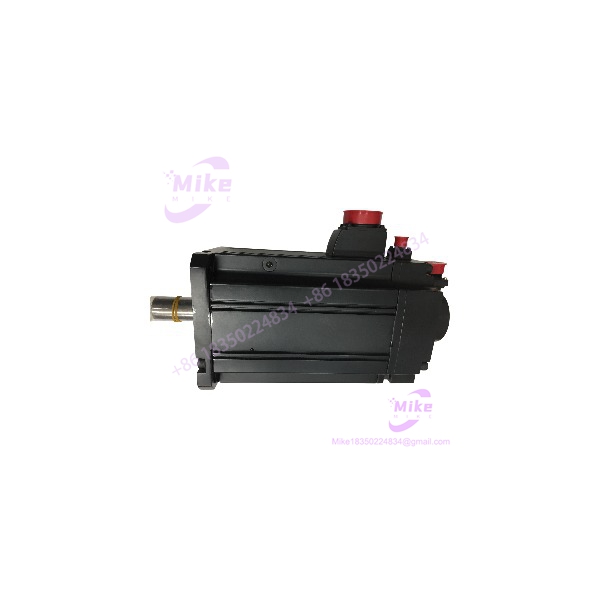
Mitsubishi HC703BS-E51 | 7.0kW AC Servo Motor
Product Introduction
The Mitsubishi HC703BS-E51 is a large-frame, 7.0 kW AC servo motor from Mitsubishi’s HC-series motion-control platform. At 3000 r/min, it is intended for substantially higher mechanical loads than the smaller HC-series motors commonly encountered in general factory automation. Mitsubishi’s documentation groups HC703BS with the 7.0 kW class HC702BS and shows the BS construction with a dedicated brake connector, power connector, and detector connector.
This is the kind of motor where the complete suffix matters. HC703BS-E51 is not simply “an HC703BS with a different label.” The E51 detector configuration is part of the machine’s feedback architecture, so the motor should be matched to the intended Mitsubishi CNC/servo amplifier and feedback interface. Secondary industrial records identify the HC703S-E51 family at 7.0 kW, 3000 r/min, 15.0 A, while Mitsubishi’s own manual confirms E51 as one of the specified HC703BS detector variants.
For replacement work, this distinction is important (especially on older CNC equipment). A motor can have the correct flange and shaft dimensions yet still fail at the control level if the detector type, feedback wiring, amplifier parameters, or brake circuit do not match.
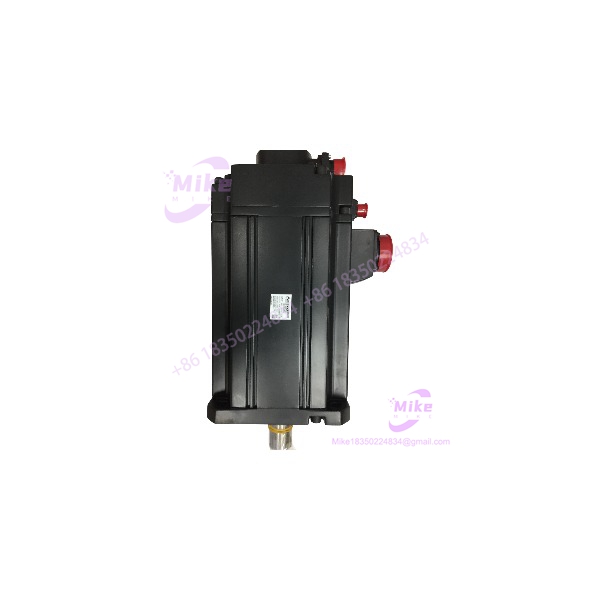
HC703BS-E51
Key Technical Specifications
- Model: HC703BS-E51
- Series: Mitsubishi HC AC Servo
- Rated output: 7.0 kW
- Rated speed: 3000 r/min
- Rated torque: Approximately 14.3 N·m
- Stall torque: Approximately 37.2 N·m
- Maximum torque: Approximately 79.8 N·m
- Rated current: Approximately 15.0 A
- Maximum current: Approximately 113 A in secondary HC703S-E51 commercial specifications
- Brake: Magnetic brake
- Shaft type: Straight
- Motor construction: AC brushless permanent-magnet servo motor
- Feedback: E51 detector configuration; exact detector specification should be verified from the nameplate/physical connector and applicable Mitsubishi manual
- Protection: family records identify IP65 for the standard configuration; verify the exact E51 motor nameplate before making a listing-specific environmental claim
- Mounting: 4 × Ø13.5 mm installation holes on the documented BS flange
- Flange/body reference dimension: Approximately 176 mm square mounting face in the Mitsubishi mechanical drawing
- Power connector: CE05-2A32-17P
- Detector connector: MS3102A22-14P
- Brake connector: MS3102A10SL-4P
- Motor weight: Approximately 40 kg in secondary HC703S-E51 specifications; verify actual shipping weight from the physical unit
- Operating temperature: 0 to +40°C under the documented HC motor installation conditions
Mitsubishi’s mechanical drawings show the family with a CE05-2A32-17P power connector, MS3102A22-14P detector connector, and MS3102A10SL-4P brake connector. The drawing also specifies four Ø13.5 mm mounting holes and a 35 mm shaft dimension in the illustrated configuration.
Mechanical and Electrical Interface
The BS designation is particularly relevant for machine-tool retrofits. Mitsubishi’s documentation shows a separate brake connector on , while the power connector uses:
- A = U
- B = V
- C = W
- D = Ground
The brake connector is documented separately, with B1/B2 terminals. Mitsubishi notes that there is no polarity concern when supplying the specified 24 VDC brake circuit.
Do not use those connector references as a substitute for the actual machine wiring diagram. Connector pin identification is only one part of the installation; the CNC amplifier, feedback detector, brake control, grounding, and motor parameters must all agree.
CNC / Servo Application
The family belongs to Mitsubishi’s larger AC servo motor range used with MELDAS/MDS-class CNC systems. Mitsubishi’s MDS documentation explicitly lists HC702BS, HC453BS, and , and provides the mechanical drawings and connector information for these motors.
The -E51 is therefore more appropriately described as a CNC-class high-power servo motor than as a generic factory-automation motor. Its 7 kW output and 3000 r/min rating make it suitable for high-load feed-axis applications where controlled acceleration, feedback precision, and mechanical rigidity are part of the machine architecture.
Global Sourcing & Live-Test SOP
1. Inbound Verification
For a used or surplus HC703BS-E51, begin with the nameplate.
- Photograph the complete motor nameplate.
- Confirm exactly.
- Record serial number and manufacturing information.
- Photograph the detector, power, and brake connectors.
- Inspect the shaft, keyway, oil seal, flange, and mounting holes.
- Check for impact damage around the rear encoder/detector housing.
- Verify the brake connector and cable condition.
- Check for oil contamination around the shaft seal.
- Measure the actual shipping weight before quoting freight.
The current eBay market contains listings cthe a Mitsubishi servo motor, but seller-provided technical fields can be incomplete or internally inconsistent. One current listing, for example, identifies the model correctly while leaving most electrical specifications as N/A.
2. Mechanical Inspection
Before connecting the motor:
- Rotate the shaft manually and check for abnormal bearing noise.
- Check axial and radial play.
- Inspect the keyway for deformation.
- Check flange flatness and mounting-hole condition.
- Verify the shaft is not bent.
- Inspect the oil seal for leakage.
- Confirm that the brake releases correctly when the specified brake voltage is applied under controlled test conditions.
Do not apply impact to the shaft or rear detector assembly. A motor can look excellent externally while having a damaged feedback device.
3. Electrical Testing
A suitable bench test should include:
- Phase-to-phase winding resistance comparison.
- Insulation resistance testing using a procedure appropriate to the motor and connected feedback hardware.
- Phase-to-ground insulation check.
- Brake coil resistance verification.
- Brake release/engagement test.
- Feedback signal verification with the compatible Mitsubishi amplifier or approved test equipment.
- Connector continuity and pin-to-pin verification.
The three motor phases should be compared against each other rather than relying on a single absolute resistance reading.
4. Servo Amplifier Test
The preferred functional test is with the intended Mitsubishi CNC/servo amplifier.
Verify:
- Motor identification and parameter selection.
- Feedback initialization.
- Servo-ready state.
- Brake release sequence.
- Low-speed rotation.
- Direction command.
- Following error.
- Acceleration/deceleration behavior.
- Alarm history.
- Current under controlled load.
For a 7 kW servo, an unloaded “shaft spins” test is not enough to certify the motor for machine service.
5. Extended Heat Run
A proper test should include repeated controlled acceleration/deceleration cycles.
Monitor:
- Motor housing temperature
- Bearing noise
- Feedback stability
- Servo current
- Following error
- Brake operation
- Amplifier alarms
- Mechanical vibration
Record the final test parameters with the motor serial number. This creates a useful baseline for a replacement buyer.





