


Description
Mitsubishi A1SJ51T64 | T-Link Interface Unit, In Stock
Architect’s Product Breakdown
The Mitsubishi A1SJ51T64 operates as an advanced network interface module engineered specifically for the MELSEC-AnS compact modular PLC series. Its primary responsibility is managing deterministic data traffic and remote station communication over the T-Link network architecture. In legacy industrial automation setups, this module acts as a critical bridge, allowing the main CPU rack to exchange word and bit data smoothly with distributed I/O drops and remote controllers without interrupting local scan times.
Integrating or replacing this communication card requires rigorous attention to network termination, cable routing, and switch configurations. Technicians must ensure that station numbers and transmission speed dials match the existing network topology exactly. Failing to properly ground the communication cable shielding or ignoring node address conflicts will cause recurring bus communication timeouts across the system loop.
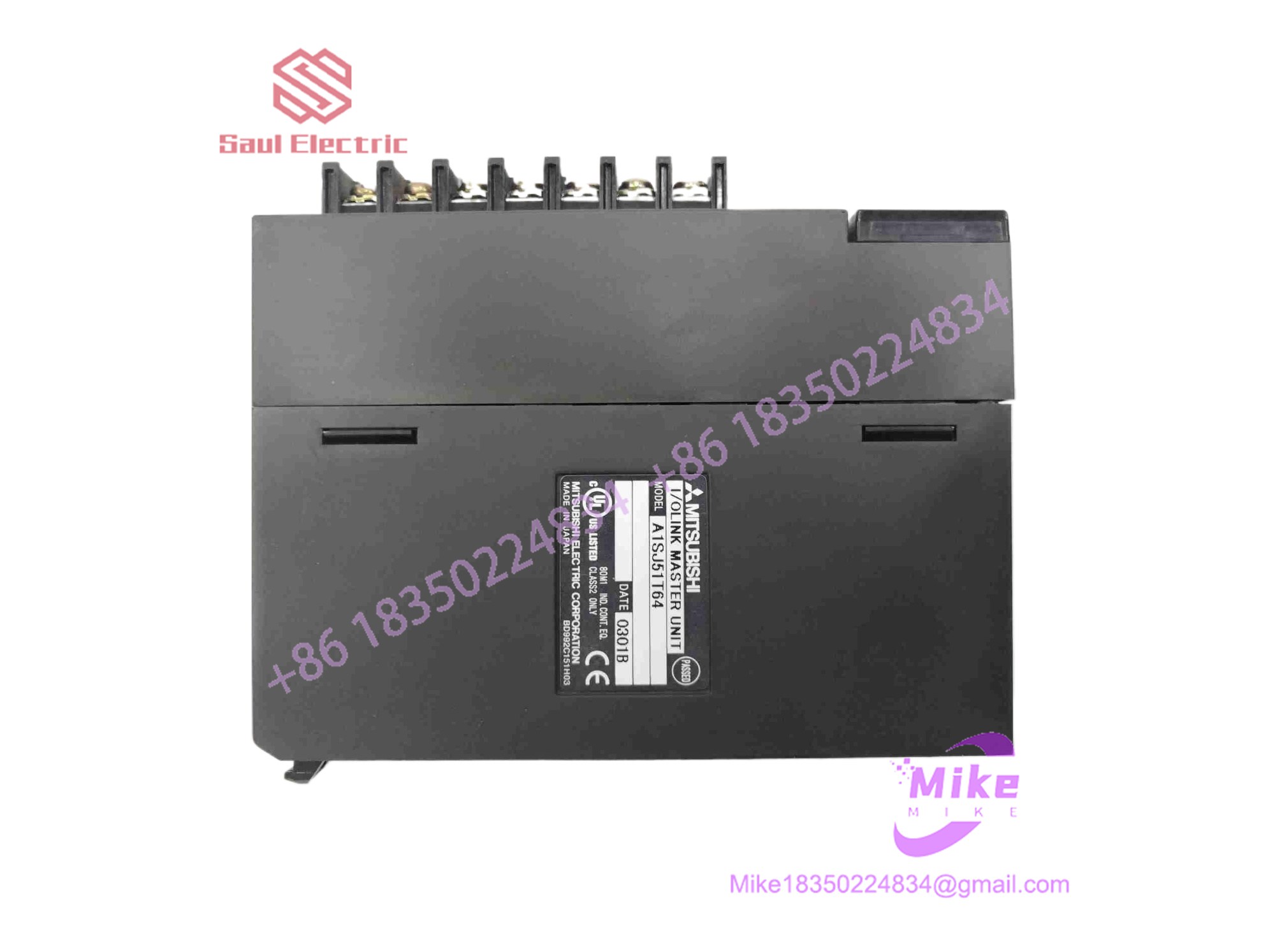
A1SJ51T64
Key Technical Specifications
| Parameter | Specification |
| Manufacturer | Mitsubishi Electric |
| Part Number / Model | A1SJ51T64 |
| Product Family | MELSEC-AnS Series Communication Modules |
| Network Protocol | T-Link (Mitsubishi Proprietary Industrial Network) |
| Mounting Type | MELSEC-AnS Base Unit Slot Integration |
| Operating Temperature | 0°C to +55°C |
| Storage Temperature | -20°C to +75°C |
| Relative Humidity | 10% to 90% non-condensing |
Field Engineer’s Pitfall Guide (Unique Value)
- Rotary Switch Misconfiguration: Forgetting to set or incorrectly dialing the station number rotary switches prior to powering up the rack will result in unhandled node communication errors.
- Shielding Ground Omissions: Running T-Link communication cables without proper drain wire grounding at the cabinet chassis lets high-frequency electrical noise corrupt data packets, causing sporadic network drops.
- Static Discharge Vulnerability: Handling the module board without a grounded wrist strap in low-humidity control rooms can instantly damage sensitive transceiver chips on the communication circuit.
QA & Testing SOP (Transparency)
- Visual & Origin Verification: Units undergo microscopic inspection for authentic Mitsubishi laser markings, uncompromised solder integrity, and clean connector pins.
- Test Bench Simulation: The module is inserted into a live MELSEC-AnS test rack, undergoing continuous communication handshake loops and data polling tests to verify bus stability.
- Signal Handshake Validation: Automated diagnostic tools check transmission error rates, switch response reliability, and front-panel diagnostic LED functionality.
- Anti-Static Packaging: Post-testing, units are sealed inside moisture-barrier static-shielding bags complete with protective foam padding to prevent transit damage.
Technical FAQ
- Can I hot-swap this communication module while the PLC rack is powered? No. Always de-energize and lock out the base unit power supply before extracting or inserting this card to prevent backplane bus corruption.
- What indicates a communication failure on this module? Flashing or solidly lit error diagnostic LEDs, combined with network timeout flags in the master PLC program registers.
- Does this module require specialized programming software? Network parameter configuration is typically handled within GX Developer or older programming environments through the main CPU configuration tables.
- What warranty is provided with a surplus unit? Units carry a standard 12-month replacement warranty backed by comprehensive bench testing and verification.





