

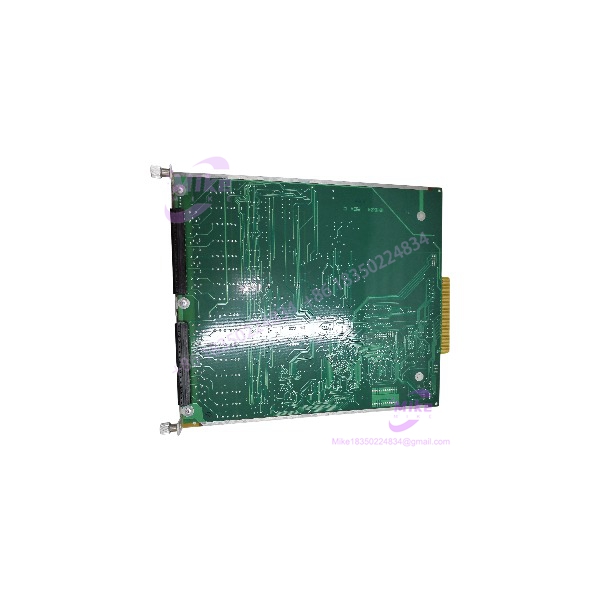
Description
Metso IOP302 | 16-Channel 4–20 mA Analog Input Module
Product Introduction
When a legacy DCS is still running the process, an analog input module is not a place to gamble on approximate part-number matches. The Metso IOP302 is a dedicated 16-channel current-input module for the maxPAC I/O subsystem. It receives 4–20 mA field signals and makes those measurements available to the system’s distributed processing unit.
The maxPAC Hardware Reference Guide documents individual 24 VDC transmitter-power fusing through the backplane, onboard self-calibration, and field-to-logic isolation. These are relevant details when evaluating a replacement for an installed IOP302. Before ordering, verify the complete model marking, board revision, and existing system configuration. Do not substitute an IOP305 or another visually similar module without checking the hardware documentation.
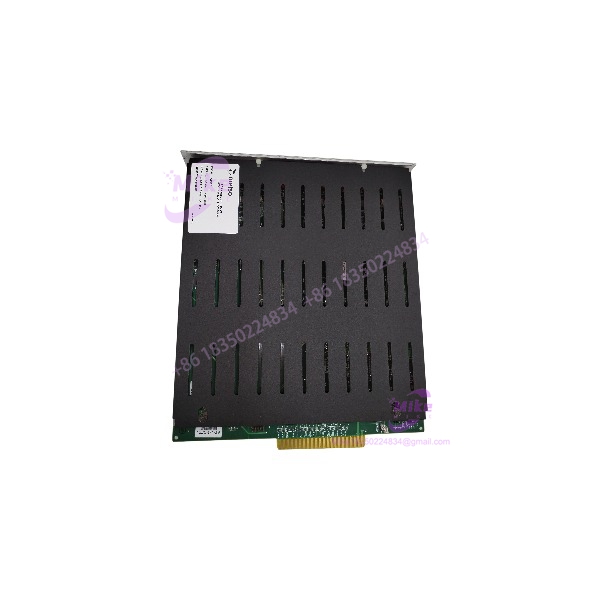
IOP302
Key Technical Specifications
- Model Number: IOP302
- Manufacturer: Metso Automation
- Hardware Family: maxPAC
- Module Classification: 4–20 mA analog input
- Number of Inputs: 16 channels
- Input Signal Range: 4–20 mA
- Transmitter Supply: 24 VDC supplied through the I/O backplane
- Transmitter Protection: Individually fused channel power
- Input Impedance: 300 Ω, as documented in the maxPAC Hardware Reference Guide
- Isolation: Field-to-logic isolation; guide specifies 1,500 VAC
- Common-Mode Voltage: 100 VDC or peak AC per group, per the guide
- Normal-Mode Rejection: 60 dB at 50/60 Hz, per the guide
- Calibration: Automatic calibration at startup, with periodic online recalibration
- Diagnostics: Startup diagnostics and open-input detection are described in product references
- DPU Communication: Module transfers measured input data to the distributed processing unit through the maxPAC I/O bus
Specification note: These details are based on maxPAC family documentation for the IOP302. Confirm board revision, bus configuration, and wiring requirements against the installed system and the specific module being purchased.
Global Sourcing & Live-Test SOP
For a legacy process I/O card, procurement verification should begin with the physical hardware—not just a supplier’s catalog title.
Incoming Inspection
- Verify the IOP302 model marking and manufacturer identification.
- Record serial number, board revision, and visible hardware differences.
- Inspect connectors, terminal interfaces, PCB condition, and signs of corrosion or rework.
- Photograph the received unit before testing.
Authenticity & Configuration Review
- Compare the module against available Metso maxPAC documentation.
- Check that the part number and revision align with the target installation.
- Review any available maintenance, repair, or configuration history.
- Flag discrepancies rather than assuming that similar-looking modules are interchangeable.
Functional Verification
- Where suitable test equipment and a compatible maxPAC setup are available, inspect module startup behavior and status indication.
- Verify input response using a calibrated 4–20 mA source across selected channels.
- Check channel readings and fault behavior against the applicable system documentation.
- Confirm that the module communicates correctly with the DPU in the intended hardware environment.
Extended Run & Documentation
- Record test setup, channels tested, measured results, and any observed faults.
- Perform an extended operating run when included in the seller’s test scope.
- Record firmware or configuration details when applicable and accessible.
- Package using appropriate ESD protection and cushioning.
Testing transparency: This SOP describes recommended verification steps. It is not a claim that the specific offered for sale has completed these tests. Request actual test records and warranty terms from the seller.
Field Engineer’s Pitfall Guide
- ❗ Do not confuse with IOP305. The is the 4–20 mA current-input module; the IOP305 is documented as a voltage-input module. They are not interchangeable based on appearance alone.
- ❗ Verify the maxPAC bus and jumper configuration. The hardware guide documents jumper-selected bus modes. A replacement configured differently from the original may not behave as expected in the target system.
- ❗ Check transmitter-loop wiring before energizing. receives transmitter power through the backplane, with individually fused 24 VDC channel supplies. Confirm field wiring, channel assignments, and the applicable installation requirements before returning the module to service.
Intent-Driven FAQ
Q1: What does the Metso do?
The acquires 4–20 mA analog signals from field devices and transfers measured values to the maxPAC distributed processing unit.
Q2: How many input channels does the provide?
The maxPAC Hardware Reference Guide specifies 16 current-input channels.
Q3: Is the a voltage-input module?
No. The is documented as a 4–20 mA current-input module. The IOP305 is the separate voltage-input model.
Q4: Does the supply transmitter power?
The maxPAC guide documents backplane-supplied 24 VDC transmitter power with individual channel fusing. Confirm the installed system’s wiring and power arrangements before commissioning.
Q5: Can the be hot-swapped?
Do not assume hot-swap capability. Follow the system-specific Metso maintenance procedure and site isolation requirements before removing or installing the module.
Q6: What should I verify before ordering a replacement?
Confirm the marking, board revision, maxPAC system compatibility, bus/jumper configuration, and the condition of the offered unit. A matching model number alone does not establish that a used module is fully functional.
Q7: Is this module obsolete, tested, or covered by a warranty?
The belongs to a legacy maxPAC hardware family. Current OEM support, the offered unit’s test status, and warranty coverage must be confirmed with the seller. No testing or warranty is implied by this technical description.





