

Description
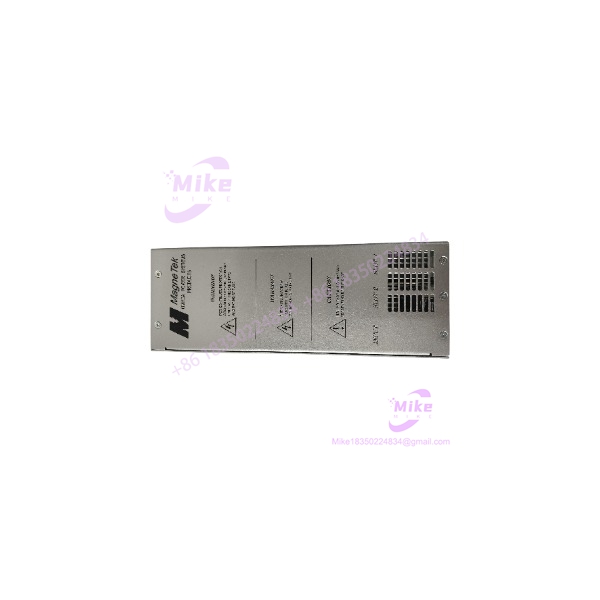
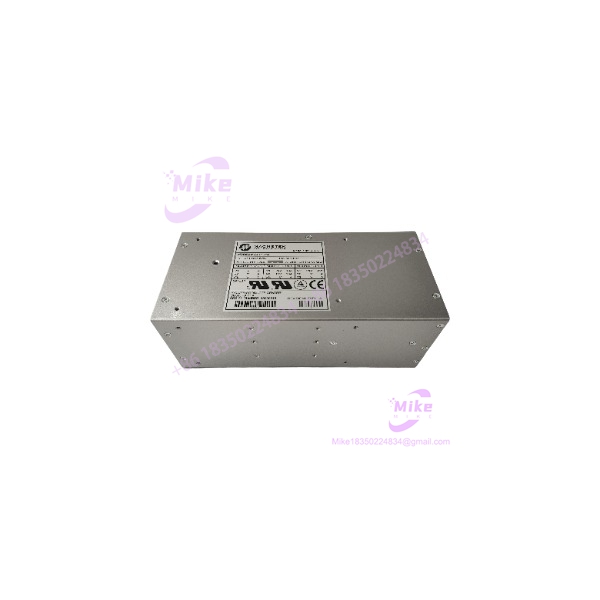
MagneTek MG2-1F-3FE | 1107W Industrial Power Supply
Product Introduction
The MagneTek MG2-1F-3FE is a high-power modular AC/DC power supply used in legacy industrial and semiconductor equipment. Current component databases identify the exact part number as an 1107 W modular power supply, while industrial repair and inventory sources classify it specifically as a MagneTek DC power supply.
The documented input specification is 100–240 VAC at 50/60 Hz, with a maximum DC output capacity of 1107 W. The exact output voltage/current configuration should be confirmed from the physical nameplate or the host-equipment documentation before replacement because publicly indexed sources do not provide a sufficiently reliable detailed output rail specification for this exact variant.
MG2-1F-3FE
Key Technical Specifications
- Model: MG2-1F-3FE
- Manufacturer: MagneTek
- Product Type: Modular industrial power supply
- Input Voltage: 100–240 VAC
- Input Frequency: 50/60 Hz
- Input Phase: Single-phase
- Input Current: 18 A
- Maximum Output Power: 1107 W
- Output Type: DC
- Power Supply Architecture: Modular switch-mode power supply
- Application Class: Industrial / semiconductor equipment
- Associated Equipment: LAM Research 2300 identified in industrial inventory records
- Part Number: MG2-1F-3FE
- Alternate Equipment Reference: 853-800087-404 is documented together with MG2-1F-3FE in a LAM 2300 inventory record; verify whether this identifier applies to the specific assembly being purchased.
- Status: Discontinued / legacy
Specification caution: Some aftermarket pages incorrectly describe the MG2-1F-3FE as an AC drive or provide unsupported 24 VDC-output details. The more consistent evidence identifies it as a MagneTek power supply, with 1107 W maximum output. I would not publish a specific output voltage/current rating without the actual nameplate or OEM documentation.
Application Scenarios & Pain Points
1. Legacy Semiconductor Equipment
The appears in industrial inventory records associated with LAM Research 2300 equipment. This makes exact power-supply identification important when maintaining older semiconductor processing systems.
For these systems, a visually similar 1 kW-class supply is not automatically an acceptable substitute. Output rails, connector pinout, mechanical mounting, and equipment-side power sequencing must match.
2. Industrial Control Cabinet Power Replacement
The can be relevant when an installed modular power supply fails while the surrounding control electronics remain serviceable.
The replacement process should start with the original supply’s electrical label and wiring documentation rather than assuming the output voltage from the model family.
3. Obsolete Equipment Maintenance
Legacy equipment often remains operational long after its original power-supply procurement channel has disappeared.
For an , the procurement target should be the exact part number and revision, followed by electrical and mechanical verification.
4. Repair and Refurbishment
Power-supply failures can involve input protection, switching devices, capacitors, control circuits, thermal components, or output-stage faults.
A repaired unit should therefore be evaluated under controlled load rather than accepted solely because it powers on without an immediate alarm.
QA & Live Testing SOP
For a used or surplus , acceptance testing should be performed with an appropriate power-supply test fixture or compatible host system.
- OEM Identity Verification
- Confirm the MagneTek manufacturer marking.
- Verify exact model .
- Record serial number, date code, and hardware revision where available.
- Photograph the complete nameplate.
- Mechanical Inspection
- Inspect chassis, mounting points, cooling openings, connectors, and terminals.
- Check for corrosion, impact damage, contamination, or evidence of previous repair.
- Inspect cooling components for obstruction or excessive dust.
- Input Inspection
- Verify the nameplate input range before energizing.
- Confirm the test source can safely provide the required input current.
- Inspect input terminals and protective components.
- Controlled Power-Up
- Use current-limited or otherwise controlled AC power during initial testing.
- Monitor input current and abnormal heating.
- Verify that no unusual acoustic, electrical, or thermal behavior occurs.
- DC Output Verification
- Measure the actual output voltage against the physical nameplate/OEM specification.
- Verify output polarity.
- Check voltage regulation under increasing controlled load.
- Do not infer the output voltage solelythe model number.
- Load Test
- Apply an appropriate resistive/electronic load.
- Monitor output voltage, current, ripple, and thermal behavior.
- Test near the intended operating load without exceeding the documented rating.
- Protection Test
- Where the test fixture permits, verify appropriate overcurrent/short-circuit and protection behavior.
- Do not deliberately create hazardous fault conditions without the manufacturer’s test procedure.
- ESD and Packaging
- Handle control electronics using ESD precautions.
- Protect connectors and terminals against impact.
- Package the power supply to prevent chassis movement during transport.
Field Engineer’s Pitfall Guide
❗ Do notify as a servo drive. Some marketplace listings describe it as an AC servo drive, but multiple independent industrial sources identify the exact part number as a MagneTek power supply.
❗ Do not assume the output is 24 VDC. One aftermarket source makes that claim, but stronger available documentation identifies the unit primarily by its 1107 W power rating without providing a sufficiently reliable exact output-rail specification. Verify the physical nameplate before connecting equipment.
❗ Check the complete electrical interface. A 100–240 VAC input rating does not establish output voltage, connector pinout, remote-enable circuitry, alarm contacts, or power-good signaling.
❗ Check the host equipment. is documented in a LAM Research 2300 inventory context, with the combination / 853-800087-404. Do not assume that the latter identifier applies universallyery unit.
❗ Do not accept a no-load power-up as a complete test. A switching supply can start normally and still fail under load because of degraded capacitors, thermal problems, regulation faults, or output-stage instability.
❗ Verify the 1107 W rating against the installed system’s load. The published 1107 W figure is a maximum output-capacity specification, not a statement that every application operates continuously at that load.
Intent-Driven FAQ
What is theTek ?
The is a modular industrial power supply with a documented maximum output capacity of 1107 W.
What input voloes use?
Available component documentation specifies 100–240 VAC, 50/60 Hz input. An 18 A input-current specification is also reported for the exact part number.
What is the output v of ?
The exact output voltage should be verified from the unit’s nameplate or the applicable OEM equipment documentation. Publicly indexed sources consistently establish the 1107 W maximum output, but do not provide sufficiently reliable detailed output-rail information for this exact variant.
Is a servo drive?
No. The stronger component and repair sources identify as a MagneTek power supply, not a servo amplifier.
Is discontinued?
Current industrial component listings identify the part as discontinued, making it a legacy replacement/maintenance item.
What equipses ?
An industrial semiconductor-equipment inventory identifies / 853-800087-404 as a MagneTek power supply for LAM Research 2300 equipment.
What should I verify before buyised ?
Verify the exact model, nameplate ratings, output voltage/current, connector configuration, hardware revision, physical condition, and compatibility with the host equipment. If the unit is intended for LAM Research equipment, compare the equipment-side part number and power-supply assembly documentation as well.
How shoused be tested?
At minimum, verify controlled AC startup, output voltage, output polarity, regulation under load, thermal behavior, and protection behavior using an appropriate test fixture. A simple “powers on” test is not sufficient for acceptance of a high-power legacy supply.





