

Description
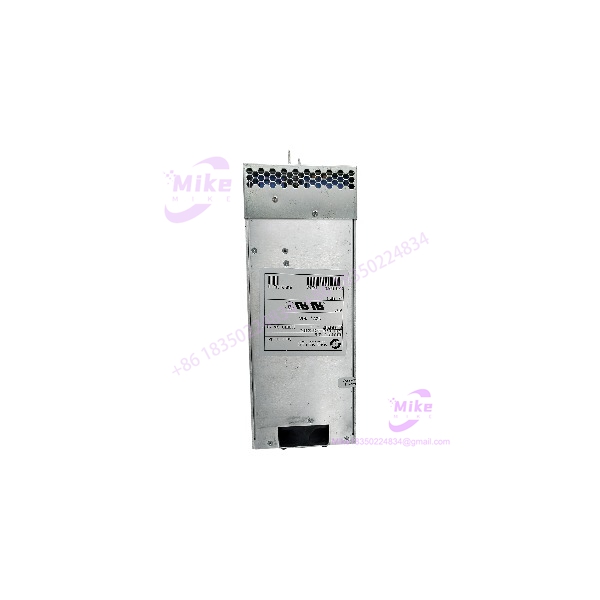
Magnetek HP4-1D-T-S1139 | 500W Industrial Power Supply
Dynamic Product Introduction
The HP4-1D-T-S1139 is the kind of component that tends to become visible only when an older control system has a power problem. It is not a controller, processor, or I/O card; its job is much more basic and, in a DeltaV installation, just as consequential: provide a high-current 12 VDC supply for the associated system hardware.
Its published rating is 500 W / 12 VDC / 40 A, with universal-range 100–240 VAC input at 50/60 Hz. That gives an engineer a straightforward electrical identity for replacement planning rather than forcing a search through visually similar industrial power supplies.
The Magnetek HP4-1D-T-S1139 is particularly relevant to legacy Emerson DeltaV installations because supplier cross-reference records identify it with KJ1502X1-BB2 and other DeltaV-related identifiers. This makes it useful when building a migration strategy, maintaining an installed-base spare pool, or replacing a failed bulk supply without redesigning the cabinet around a modern substitute.
Do not confuse this part with a DeltaV controller or I/O module. Its electrical role is power conversion. A replacement must therefore be evaluated around input range, 12 VDC output capability, current capacity, physical mounting, terminal arrangement, and system-specific compatibility.
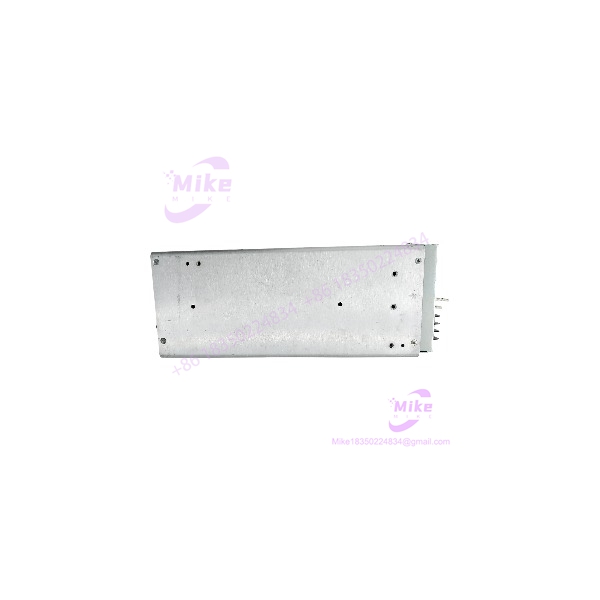
HP4-1D-T-S1139
Key Technical Specifications
- Model: Magnetek HP4-1D-T-S1139
- Function: AC-to-DC industrial bulk power supply
- Rated output power: 500 W
- DC output voltage: 12 VDC
- Maximum/rated output current: 40 A
- AC input voltage: 100–240 VAC
- Input frequency: 50/60 Hz
- Power class: Approximately 500 W
- Application association: Emerson DeltaV system power architecture
- Known cross-reference: KJ1502X1-BB2
- Manufacturer status: Discontinued
- Reported weight: Approximately 2.15 kg
- Thermal/environmental specifications: Verify against the individual nameplate or original installation documentation before engineering substitution
The 500 W rating is consistent with the 12 V × 40 A electrical identity, with the published figures commonly rounded to the nominal product rating.
What the HP4-1D-T-S1139 Is — and Is Not
It is:
- A high-current industrial DC power source.
- A 12 VDC / 40 A class supply.
- A legacy component encountered in Emerson DeltaV-related installations.
- A practical spare for maintaining existing equipment where the original electrical and mechanical interface must be preserved.
It is not:
- A PLC CPU.
- A DeltaV controller.
- A conventional digital or analog I/O module.
- A 24 VDC field instrument power supply.
- A drop-in replacement for every 12 VDC, 40 A industrial supply.
That distinction matters. A modern 24 VDC supply with greater wattage may look attractive on paper but still be unsuitable because the system’s distribution architecture, connectors, grounding arrangement, mechanical envelope, or expected output voltage is different.
Global Sourcing & Live-Test SOP
For a discontinued HP4-1D-T-S1139, procurement inspection should be treated as an electrical verification job rather than a visual inspection exercise.
1. Inbound Verification
- Photograph the complete nameplate before cleaning or re-labeling.
- Confirm is printed on the unit.
- Record serial number, revision markings, date codes, and any Emerson/DeltaV cross-reference visible on the chassis.
- Compare the physical unit against the seller’s photographs.
- Check terminal blocks, AC input connections, DC output terminals, mounting hardware, and ventilation openings for damage.
- Inspect for capacitor leakage, heat discoloration, cracked insulation, corrosion, and evidence of previous cabinet overheating.
- For international procurement, retain the commercial invoice and original manufacturer identification for customs and traceability records.
2. Electrical Pre-Test
Before applying mains power:
- Check input-to-chassis insulation with the appropriate test procedure for the equipment.
- Check the DC output terminals for an abnormal short condition.
- Inspect protective components and accessible fusing.
- Confirm that the AC input configuration matches the unit’s nameplate.
- Verify that the output polarity and terminal identification are clear.
Do not simply connect 240 VAC because the seller description says “100–240 VAC.” The actual nameplate on the physical unit controls.
3. Live Simulation
Use a controlled AC source or properly protected test bench.
- Apply AC input gradually where the test equipment permits.
- Monitor startup current.
- Verify the DC output rises normally toward the nominal 12 VDC level.
- Apply a controlled load rather than immediately connecting a DeltaV cabinet.
- Increase load in stages while monitoring output voltage, current, ripple, and temperature.
- Check for audible transformer/inductor noise, unstable regulation, thermal runaway, or intermittent shutdown.
A programmable DC load is preferable to testing the unit with an improvised resistor bank. For field troubleshooting, a calibrated digital multimeter plus oscilloscope and appropriate current measurement provides substantially better evidence than a simple “power-on” test.
4. Extended Run
For a used , perform a sustained heat run under a meaningful load.
Record:
- Input voltage
- Output voltage
- Output current
- Case temperature
- Ambient temperature
- Startup behavior
- Output stability
- Any fault or protection behavior
A 24-hour run is useful for screening aged capacitors and thermal problems, but it does not constitute an OEM certification.
5. Final Preparation
Before shipment:
- Record tested output voltage and test-load current.
- Photograph the nameplate and terminal arrangement.
- Record firmware/configuration information only where applicable; this is a power supply, so do not invent controller firmware data.
- Apply ESD-safe packaging where electronic assemblies are exposed.
- Protect terminals from mechanical impact.
- Clearly identify the unit as / 12 VDC / 40 A / 500 W.
Field Engineer’s Pitfall Guide
❗ 1. Do Not Substitute a 24 VDC Supply
This is a 12 VDC output unit. That is not a minor variation. Replacing it with a common 24 VDC industrial supply without engineering the downstream power architecture can damage connected equipment.
The 40 A rating is equally important. A 12 VDC supply rated at only 20–30 A is not an equivalent replacement simply because its physical size looks similar.
❗ 2. Verify the Complete Cross-Reference
The is associated in procurement records with KJ1502X1-BB2, and other records identify it as an Emerson DeltaV bulk power supply. However, reseller databases can contain cross-reference errors.
For a live plant, match the actual nameplate, terminal arrangement, cabinet drawings, and installed-system documentation before approving a replacement.
❗ 3. Do Not Judge a Used Unit by Power-On Status Alone
A supply can produce 12 VDC with no load and still fail when the load reaches several amps. Aging capacitors, degraded cooling, high ripple, or marginal regulation can remain hidden during a five-minute bench test.
For a critical DCS installation, test progressively under load and document the results. A basic Fluke multimeter is useful for voltage checks, but ripple and transient behavior require additional instrumentation.
Intent-Driven FAQ
Is the Magnetek a PLC or DCS I/O module?
No. The Magnetek is a power supply. Its published identity is a 500 W, 12 VDC, 40 A industrial supply. It should not be represented as a controller or I/O card.
What is the output of the ?
The documented output is 12 VDC at 40 A, corresponding to a 500 W nominal power rating.
What input voltage does this Magnetek power supply accept?
Industrial replacement records specify 100–240 VAC at 50/60 Hz. Always confirm the physical nameplate before energizing a used unit.
Is related to Emerson DeltaV?
Yes. Multiple industrial procurement records associate with Emerson DeltaV KJ1502X1-BB2 and identify it as a 12 VDC bulk power supply.





