


Description
Lam Research 810-800081-022 | VMEbus Analog I/O PCBA
Dynamic Product Introduction
Throwing a generic analog card at a gas flow deviation fault is a fast way to scrap a multi-thousand-dollar wafer batch. When chamber delivery parameters start drifting inside a legacy Lam etch tool, the physical valve is rarely the actual culprit. Honestly, tracing a 0-10V signal drift across an aging wiring harness takes extreme patience. The Lam Research 810-800081-022 interface board attacks this exact failure mode by enforcing absolute electrical stability right at the digital-to-analog conversion layer.
Operating across a dedicated VMEbus backplane, this PCBA handles the exact protocol handshakes between the master logic execution host and the sub-fab gas box. It dictates micro-volt precise setpoints for Mass Flow Controllers (MFCs) and pressure throttle valves. Delivering highly deterministic analog polling—though this strictly depends on backplane traffic capacity—this specific module actively prevents the baseline recipe drift that ruins high-aspect-ratio etches.
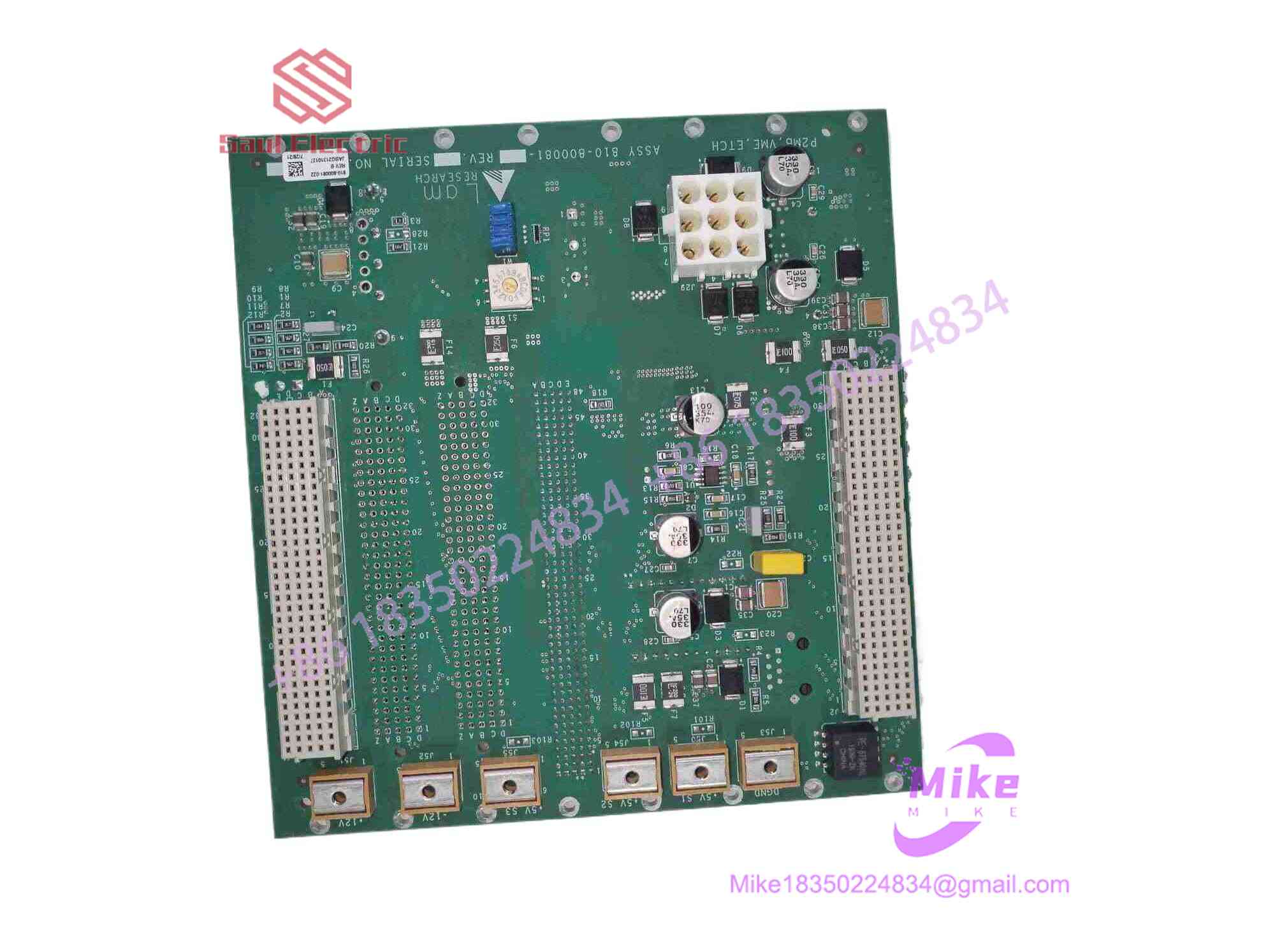
810-800081-022
Key Technical Specifications
| Parameter | Specification Detail |
| Manufacturer | Lam Research |
| Assembly Part Number | 810-800081-022 |
| Bus Architecture | VMEbus (IEEE-1014 standard) |
| I/O Density | 16x Analog Output / 16x Analog Input Channels |
| Signal Range | 0-10VDC or 4-20mA (jumper selectable per block) |
| Conversion Resolution | 16-bit A/D and D/A |
| Grounding Topology | Dual-plane isolation blocking common-mode noise |
| Hardware Addressing | Physical DIP switch / jumper hex address blocks |
| Operating Temperature | Controlled rack environment (15°C to 30°C) |
Global Sourcing & Live-Test SOP (Transparency Core)
Procuring aging VME hardware carries massive risk if internal component fatigue is ignored. Our hardware verification protocol strips out that uncertainty before a replacement node ever ships.
- Inbound Verification: Incoming units undergo intensive high-magnification visual audits. We check for dielectric breakdown near the analog regulators and authenticate the PCB substrate against OEM Lam Research blueprints.
- Live Simulation: We slide the card into an active, verified VME chassis.
- Diagnostics: Generating aggressive output step-functions, we validate analog linearity across all 16 channels using calibrated Fluke multimeters. We then execute a 24-hour thermal load cycle while monitoring signal jitter to establish a highly reliable MTBF baseline.
- Final Prep: Once analog outputs measure perfectly flat, we document the specific hardware revision. The board is treated for pin oxidation and hermetically sealed inside an ESD-safe metallic barrier bag.
The Field Engineer’s Pitfall Guide
❗ VME Base Address Blindness: Failing to copy the precise hexadecimal memory address jumpers from the dead board to the replacement is a classic rookie mistake. If the address blocks mismatch, the host CPU will fail to recognize the hardware on boot, throwing an immediate fatal bus error.
❗ Analog Zero-Offset Neglect: Swapping this interface card without executing the tool’s automated MFC zeroing routine is incredibly dangerous. I’ve seen plants lose two days of production because a tiny 5mV conversion offset was just enough to over-pressurize a sensitive deposition step. Always recalibrate after a hardware swap.
❗ Backplane Pin Bending: Forcing the card into a misaligned VME chassis slot will instantly fold the fragile backplane connector pins. Take the extra 60 seconds to align the guide rails properly with a flashlight before applying insertion force.
Intent-Driven FAQ
Can I hot-swap this VME module while the rack logic power is turned on?
Absolutely not. VMEbus architecture does not support live insertion. Attempting to seat the 810-800081-022 while the backplane is energized will trigger severe voltage spikes across the data pins, likely destroying both the replacement board and the master CPU card.
Will I lose my logic program if I swap this interface card?
No. This specific PCBA acts strictly as an I/O conversion layer. The actual process recipes, logic sequences, and migration strategy data reside on the master hard drive and the central processor module.
How do I verify if a flow deviation is caused by the 810-800081-022 or a faulty MFC?
Isolate the loop. Unplug the specific gas line cable from the back of the tool rack and meter the analog output pins directly on the VME breakout panel while commanding a flow via the software. If the board outputs a clean, stable voltage matching your requested setpoint, the issue is down the line—likely a degraded MFC or a pinched cable.
If my tool software rejects the board, can I downgrade the firmware?
Hardware revision conflicts occasionally happen if your tool runs incredibly old operating software. While this board lacks a complex field-flashable EPROM for major OS shifts, you can physically swap the socketed PROM chip from your failed board onto the replacement to force immediate handshake compatibility.
What exact warranty coverage applies to this certified spare?
Every unit ships with a definitive one-year replacement warranty. If the analog conversion drifts out of spec or the VME bus interface fails under normal cleanroom conditions, we swap the hardware out immediately.





