


Description
Lam 605-109114-003 | Semiconductor Etch Real-Time Processor PCB
Dynamic Product Introduction
Unplanned processor halts on a single etch or deposition chamber quickly snowball into massive yield losses across a semiconductor line. When the host control board drops communication mid-recipe, the tool immediately trips emergency gas and RF interlocks—often scrapping a full cassette of high-value wafers. The Lam Research 605-109114-003 Single Board Computer provides the raw processing throughput and memory stability required to prevent deterministic task overruns during high-density, multi-step process runs.
Stepping up to the -003 hardware baseline provides enhanced thermal management and updated onboard bus transceivers over earlier controller revisions. By pairing an industrial x86 processing core with hardware ECC error correction, the assembly neutralizes bit-flips caused by electromagnetic noise near high-power RF match networks. For fab maintenance engineers charged with keeping legacy 2300-series chambers running at peak availability, installing a bench-certified 605-109114-003 card restores full tool stability without requiring a costly system-wide control architecture overhaul.
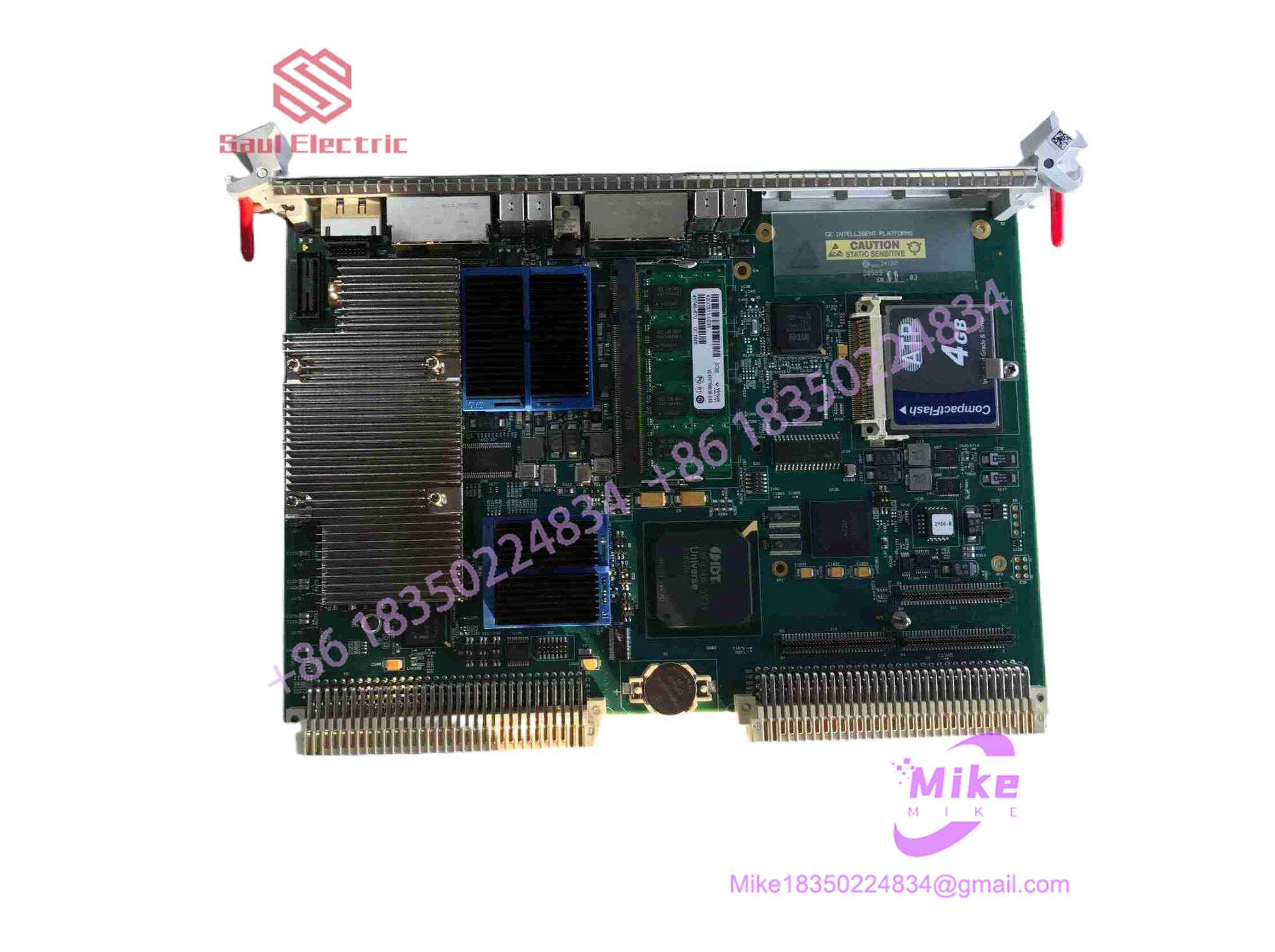
605-109114-003
Key Technical Specifications
| Parameter | Technical Specification |
| Form Factor / Bus Interface | 6U VMEbus / VME64 Extensions (VME64x) standard |
| Real-Time OS Support | VxWorks / Embedded OS (Tool Software Package Dependent) |
| Backplane Power Input | Multi-rail DC power via VME backplane (+5V, +12V, -12V) |
| System Storage | Onboard Industrial-Grade CompactFlash (CF) Type I/II slot |
| Memory Architecture | High-Speed SODIMM DDR SDRAM with ECC error detection |
| Network Interfaces | Dual RJ-45 Gigabit Ethernet ports (Cluster & Tool LAN) |
| Serial Communication | Multi-channel RS-232 / RS-422 configurable serial headers |
| Expansion Carrier | Integrated PMC / XMC mezzanine slot connectors |
| Front Diagnostic LEDs | SYSFAIL, RUN, COL, LINK/ACT, PMC ACT |
| Operating Temperature | 0°C to +55°C (32°F to 131°F) forced air cooling |
Global Sourcing & Live-Test SOP (Transparency Core)
Ensuring plug-and-play operation in sub-micron manufacturing facilities requires a strict quality assurance workflow long before any replacement board enters cleanroom inventory:
Inbound Verification & Physical Audit
- Traceability & Counterfeit Check: Verifying serial tags, PCB layer markings, and original Lam Research tracking barcodes against manufacturing databases to screen out unverified hardware.
- Microscopic Inspection: High-magnification optical audit of BGA solder joints, VME backplane gold pins, SODIMM sockets, and tantalum capacitors for thermal stress or physical wear.
Live Simulation Bench Testing
- VME Chassis Cold-Start: Inserting the module into an authentic VME crate powered by a regulated multi-rail supply to record peak startup current draw across all logic rails.
- POST & Memory Diagnostics: Executing low-level hardware diagnostics to verify CPU cache, ECC RAM correction, and CompactFlash bus timing.
Network Diagnostics & Thermal Stress
- Fieldbus & Ethernet Handshake: Transmitting cyclic real-time telemetry over dual Ethernet and serial channels to simulate full chamber communication loads without frame loss.
- 24-Hour Environmental Burn-In: Running continuous diagnostic algorithms inside a 50°C thermal enclosure to catch latent semiconductor gate breakdown.
Final Prep & Cleanroom Packaging
- Configuration Reset: Clearing temporary test logs while logging the installed bootloader build on the calibration certificate.
- ESD Safe Sealing: Double-sealing in static-shielding film with active desiccant before cradling in custom-cut foam shipping crates.
The Field Engineer’s Pitfall Guide
❗ Mismatched Bootloader & CompactFlash Software Image
Inserting a 605-109114-003 board without ensuring the onboard CompactFlash card matches the exact tool software release will trigger a boot loop or a “VME Bus Arbitration Timeout”.
(In actual fab calls, I’ve seen technicians waste an entire shift re-terminating serial cables, unaware that the replacement SBC simply failed to load the matching VxWorks OS kernel from the CF card).
❗ VME Backplane Pin Distortion During Installation
The high-density gold pins on the VME64x backplane are easily bent if uneven force is applied. Inserting the card without simultaneously engaging top and bottom injector/ejector handles will bend pins, shorting the 5V logic line or causing random bus-parity faults. Always verify the rack is fully powered down before seating the board.
❗ Overlooking Onboard Mezzanine Jumper Settings
The board uses hardware jumpers to define VME bus master/slave roles, memory address mapping, and serial mode selection (RS-232 vs. RS-422). Installing a replacement board without transferring the exact jumper configuration from the original unit will lead to silent communication dropouts with gas box or vacuum controllers.
Intent-Driven FAQ
Will swapping this SBC board erase my tool’s chamber calibration data?
If your chamber’s offset tables, gas calibration constants, or hardware configuration files are saved on the local CompactFlash card or NVRAM, you must physically swap the original CF card (or upload the parameter file via the tool interface) to the replacement board before powering up the tool.
What causes a solid red “SYSFAIL” LED upon powering up the card?
A persistent SYSFAIL light indicates that the board’s Power-On Self-Test (POST) failed, the VME backplane +5V power rail is dipping out of tolerance, or there is an address space conflict with another master card on the VME rack.
Is the -003 revision backward-compatible with older -001 or -002 boards?
In most tool configurations, the -003 revision serves as a direct drop-in replacement for earlier -001/-002 models, offering improved thermal dissipation and updated bus transceivers. However, always review your tool software release notes to confirm the target software package supports the updated hardware revision.
Why does the replacement board fail to link up with the tool network?
Check the ethernet communication settings or hardware configuration jumpers. Semiconductor tool networks often require forced 100Mbps or 1Gbps Full-Duplex communication rather than Auto-Negotiation to avoid dropped packet frames during process runs.
What warranty applies when buying this unit as certified surplus?
All fully bench-tested surplus and replacement 605-109114-003 boards come with a 12-month operational warranty covering processing performance, memory integrity, and bus port stability under standard cleanroom operating conditions.





