

Description
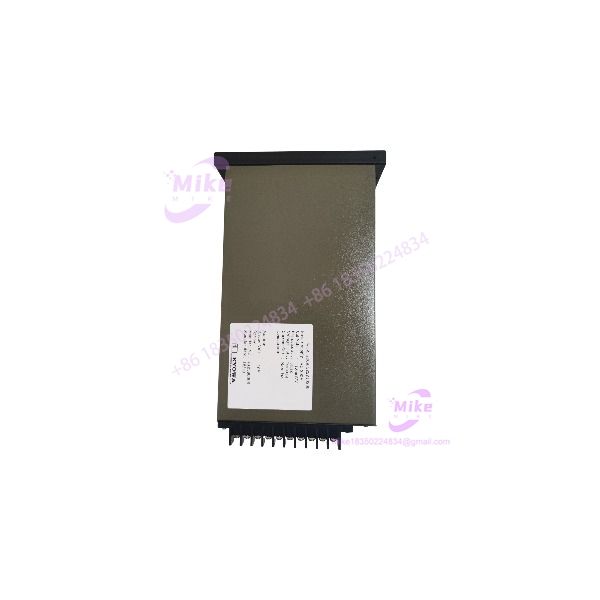
Kyowa WGA-200A | Compact Instrumentation Signal Amplifier In-Stock
Dynamic Product Introduction
A signal drift, excitation voltage drop, or A/D conversion fault on a strain gage amplifier distorts critical force, load, or pressure measurements, causing automated assembly presses and material testing rigs to produce out-of-tolerance parts or halt production entirely. The Kyowa WGA-200A is a compact, high-precision strain gage signal conditioner and indicator engineered for industrial instrumentation loops. Operating on stable bridge excitation power, it filters millivolt bridge outputs, applies digital scaling, and generates real-time analog outputs alongside local LED digital displays without signal attenuation or thermal drift.
When an operational signal amplifier suffers bridge driver failure, analog output drift, or front panel keypad lockups during continuous batch processing, securing an exact drop-in Kyowa WGA-200A replacement unit keeps your measurement loops online. Installing a fully bench-tested replacement module allows control technicians to panel-mount or DIN-rail attach the unit directly into existing cutouts without modifying field transducer cabling or re-routing PLC analog input channels. Swapping in a fresh conditioner restores immediate force loop calibration, precise threshold detection, and reliable analog data acquisition.
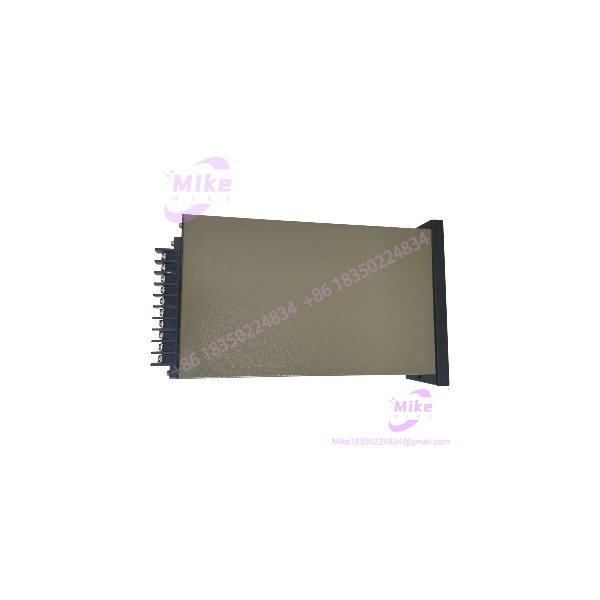
WGA-200A
Key Technical Specifications
- Model Designation: WGA-200A
- Manufacturer: Kyowa Electronic Instruments Co., Ltd.
- System Series: WGA Series Signal Conditioners
- Compatible Transducers: Strain gage transducers (load cells, pressure transducers, displacement sensors, torque meters)
- Bridge Excitation Voltage: 2 VDC / 5 VDC regulated bridge supply
- Input Measuring Range: ±3.0 mV/V (accepts full-bridge strain gage configurations, 120 Ω to 1000 Ω bridge resistance)
- Analog Output Options: 0 to 10 VDC voltage output and/or 4 to 20 mA current loop output
- Display Type: 4-digit bright LED process value display with polarity and status indicators
- Limit Outputs: Relay or transistor comparator outputs for HIGH/LOW limit evaluation
- Power Supply Options: 100–240 VAC or 24 VDC operating input (variant dependent)
- Operating Temperature Range: -10°C to +40°C (14°F to 104°F)
Global Sourcing & Live-Test SOP (Transparency Core)
Procuring secondary-market instrumentation hardware like the Kyowa WGA-200A requires strict bench diagnostic testing to verify bridge excitation stability, amplifier linearity, and comparator switching response. Every incoming signal conditioner passes through an intensive five-stage quality assurance protocol:
- Inbound Verification: Part numbers (WGA-200A), rating labels, and terminal block conditions are verified against original Kyowa manufacturing standards. Technicians conduct physical inspections under magnification to check display lenses, housing clips, and terminal screw threads for wear or thermal stress.
- Live Simulation: The WGA-200A is mounted into a specialized signal calibration test bench powered by a regulated line supply and wired to a precision strain gage bridge simulator.
- Diagnostics: Technicians inject calibrated millivolt-per-volt inputs (0.000 mV/V to ±3.000 mV/V) to evaluate A/D conversion accuracy, zero balance adjustment, span calibration, and analog output linearity across both voltage and current loop outputs. The module then completes a 24-hour thermal soak in an environmental chamber under continuous signal excitation to verify minimal thermal zero/span drift.
- Final Prep: Internal calibration parameters are reset to clean baseline defaults, terminal screws are inspected, and the unit is wrapped in static-shielding ESD packaging before dispatch.
The Field Engineer’s Pitfall Guide
- ❗ Incorrect Bridge Excitation Voltage Selection: Connecting low-excitation transducers to a 5 VDC supply when they are calibrated for 2 VDC can cause internal strain gage self-heating, resulting in continuous measurement drift and thermal offset errors.
- ❗ Reversing Sensing and Power Wiring on 6-Wire Transducers: Swapping sense lines (+SENSE / -SENSE) with excitation power lines (+EXC / -EXC) prevents auto-compensation for lead wire resistance, introducing span errors across long cable runs.
- ❗ Grounding Signal Shields at Multiple Points: Grounding the transducer cable shield at both the sensor body and the WGA-200A chassis creates ground loops that introduce 50/60 Hz AC noise onto sensitive millivolt signal lines. Always ground the cable shield at a single point (typically the instrument end).
Intent-Driven FAQ
What is the primary function of the Kyowa WGA-200A signal conditioner?
The WGA-200A amplifies and conditions low-level millivolt signals from strain gage transducers (such as load cells and pressure sensors), converting them into scaled digital display readings and standard analog outputs for PLC integration.
Does replacing a WGA-200A require recalibrating the connected load cell?
Yes. Because replacement units arrive at default baseline settings, you must perform zero balance and span calibration (either via actual load application or digital calibration values) using the front panel keypads or calibration potentiometers to match your connected sensor.
What causes an “OVER” or “ERR” indication on the WGA-200A display?
An “OVER” or “ERR” fault indicates an input signal exceeding the configured measuring range (±3.0 mV/V), a broken strain gage bridge wire, or an short-circuit on the excitation power terminals.
Can the WGA-200A drive dual analog outputs simultaneously?
Depending on the specific suffix variant of the WGA-200A model, the unit provides either an isolated 0–10 VDC output, a 4–20 mA current loop output, or dual simultaneous analog outputs configured at the factory.
What warranty coverage comes with pre-inspected replacement units?
All verified Kyowa WGA-200A signal conditioners come backed by a comprehensive 1-year replacement warranty. If the unit experiences signal conditioning drift, excitation loss, or display processing failure under standard operating conditions within 12 months, it is swapped directly from available warehouse inventory stock.





