

Description
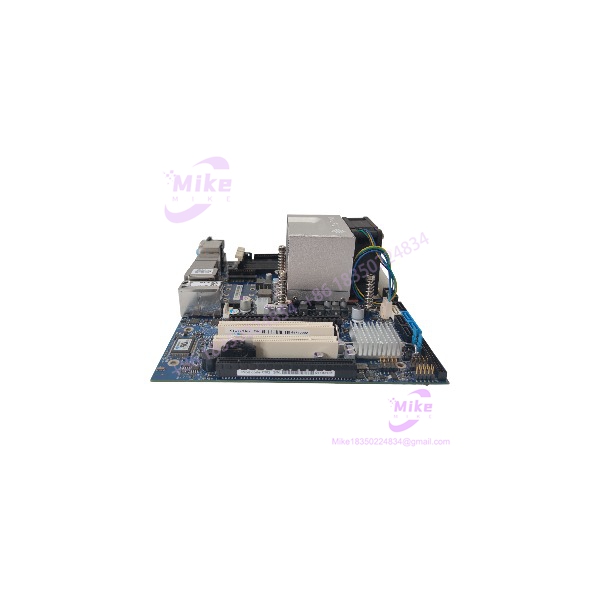
Kontron KTQ77/Flex 30101611 | Flex-ATX Motherboard
Product Introduction
When an embedded PC fails in a production machine, replacing the motherboard is not always a standard desktop-PC repair. The board may be tied to a specific CPU, memory configuration, BIOS setup, expansion card, and operating-system image. The Kontron KTQ77/Flex is a Flex-ATX embedded motherboard designed for long-life industrial and embedded computing applications.
The KTQ77/Flex uses Intel’s Q77 chipset and supports selected 2nd- and 3rd-generation Intel Core processors. Kontron documentation specifies up to 32 GB of DDR3 memory, three Gigabit Ethernet ports, multiple display outputs, SATA storage, and PCI/PCIe expansion. These features make it suitable for embedded computing and industrial systems that require a compact PC platform with extensive I/O.
For replacement procurement, verify the exact board model and the supplied identifier 30101611 against the original equipment. A matching motherboard model does not guarantee that the CPU, BIOS, memory, storage image, or installed expansion hardware will transfer without additional configuration.
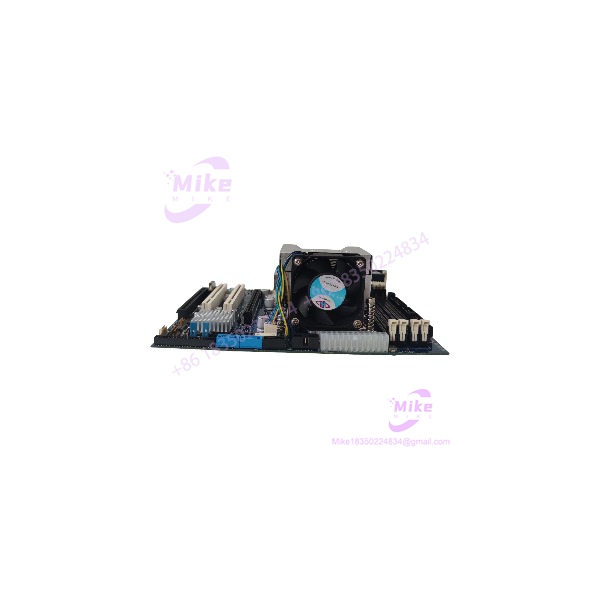
KTQ77FLEX 30101611
Key Technical Specifications
- Manufacturer: Kontron
- Model: KTQ77/Flex
- Associated Identifier: 30101611
- Associated Supplier Number: 810470-4500
- Chipset: Intel Q77 Platform Controller Hub
- CPU Socket: LGA1155 / Socket H2
- Processor Family: Selected 2nd- and 3rd-generation Intel Core i3, i5, and i7 processors; selected Pentium/Celeron support depends on Kontron’s CPU support table
- Maximum CPU Thermal Guideline: Up to 95 W, subject to supported CPU and cooling configuration
- Memory: Four 240-pin DDR3 UDIMM sockets
- Maximum Memory Capacity: 32 GB, using up to 4 × 8 GB
- Memory Speeds: 1066/1333/1600 MT/s, depending on CPU and DIMM configuration
- ECC Support: Not supported
- Graphics: CPU-integrated graphics, depending on the installed processor
- Display Outputs: Two DisplayPort, CRT/VGA, and documented LVDS support
- Ethernet: Three Gigabit Ethernet ports; one supports Intel AMT 8.0
- USB: Four USB 3.0 and ten USB 2.0 interfaces
- Storage: Six SATA interfaces, including two SATA 6 Gb/s ports; mSATA support
- RAID: SATA RAID 0/1/5/10 support, subject to controller and configuration requirements
- Expansion Slots: PCIe x16, PCIe x4 (in an x16 slot), two 32-bit PCI slots, and one Mini PCIe
- Serial I/O: Four COM interfaces documented
- Audio: VIA 1708B HD audio codec
- Additional I/O: KT embedded feature connector with GPIO and ADC/DAC functionality, depending on configuration
- Form Factor: Flex-ATX, approximately 228.6 × 190.5 mm
- Operating Temperature: 0°C to 60°C
Specifications are based on Kontron’s KTQ77/Flex datasheet and user guide. CPU support, memory frequency, and usable I/O depend on the installed components and board configuration.
Global Sourcing & Live-Test SOP
For a used or surplus KTQ77/Flex, verify the board itself and the installed configuration. A seller’s motherboard-only test may not establish compatibility with the original industrial PC or machine image.
5.1 Inbound Verification
- Photograph the complete PCB, model label, barcode, and all revision markings.
- Confirm the board is marked /Flex.
- Verify whether 30101611 and/or 810470-4500 appear on the board or supplier documentation.
- Record the PCB revision and serial number, where available.
- Inspect the LGA1155 socket for bent pins or contamination.
- Check DIMM slots, expansion connectors, SATA connectors, and I/O ports for damage.
- Inspect for corrosion, liquid exposure, heat discoloration, or unauthorized repair.
- Confirm whether the CPU, RAM, heatsink/fan, faceplate, and other accessories are included.
- Request the seller’s written test scope and condition classification.
5.2 Configuration Verification
- Identify the installed CPU and confirm it is supported by the applicable Kontron CPU support table.
- Record the installed DDR3 DIMM capacity, type, and speed.
- Verify that the cooling assembly is suitable for the installed processor.
- Confirm BIOS revision and settings where accessible.
- Check whether the original machine uses PCI/PCIe cards, mSATA, SATA storage, or the KT feature connector.
- Verify the board revision and I/O arrangement against the original system before approving substitution.
5.3 Functional Testing
- Use an ESD-safe work area and a compatible test setup.
- Confirm CPU, memory, and cooling installation before applying power.
- Check POST behavior and BIOS access.
- Verify memory detection and CPU identification.
- Test available Ethernet ports and relevant USB, SATA, serial, and display interfaces.
- Confirm that expansion slots and machine-specific I/O work where the test setup permits.
- Record BIOS version, detected hardware, and any diagnostic faults.
- Do not represent the board as fully tested if only POST or BIOS access was checked.
5.4 Extended Heat Run
Where practical, run the board under representative CPU and I/O load.
Monitor:
- POST and reboot stability
- CPU temperature and cooling performance
- Memory stability
- Ethernet link and traffic behavior
- Storage interface stability
- Unexpected shutdowns or system freezes
Record test duration, CPU/RAM configuration, BIOS version, test conditions, and results. Do not claim a 24-hour burn-in unless it was actually completed and documented.
5.5 Final Preparation and Shipment
- Preserve original labels and identification markings.
- Record the tested CPU, RAM, BIOS, and accessory configuration.
- Photograph the board before packing.
- Protect the LGA1155 socket and all exposed connectors.
- Use ESD-safe packaging and suitable cushioning.
- Secure any included heatsink or expansion card against movement.
- Clearly list included accessories and exclusions.
- Distinguish tested, refurbished, used, and untested surplus condition.
Field Engineer’s Pitfall Guide
❗ CPU compatibility is not guaranteed by the LGA1155 socket
The /Flex supports selected 2nd- and 3rd-generation Intel processors, but not every LGA1155 CPU is necessarily supported. Check the Kontron CPU support table, BIOS requirements, and thermal limits before transferring the original processor.
❗ DDR3 UDIMM compatibility matters
The board uses 240-pin DDR3 UDIMMs and does not support ECC memory. Verify module type, capacity, speed, and SPD compatibility. Do not assume registered or ECC DIMMs will work simply because they fit physically.
❗ A motherboard swap may affect the machine’s software image
The /Flex may be part of a dedicated industrial PC with a specific BIOS setup, storage image, expansion card, or machine interface. Preserve the original drive and configuration data, and confirm all required I/O and operating-system dependencies before returning the system to service.
Intent-Driven FAQ
What is the Kontron /Flex?
The /Flex is a Flex-ATX embedded motherboard based on Intel’s Q77 chipset. It supports selected Intel Core processors and provides extensive storage, networking, display, and expansion interfaces.
What does 30101611 refer to?
The identifier 30101611 is associated with a /Flex supplier listing. It should be verified against the physical board and the seller’s documentation before being treated as a confirmed Kontron material number.
What is the maximum RAM capacity?
Kontron documents support for up to 32 GB of DDR3 memory across four 240-pin UDIMM sockets. ECC memory is not supported.
Which processors can the /Flex use?
The board supports selected 2nd- and 3rd-generation Intel Core i3, i5, and i7 processors, along with selected Pentium and Celeron models. Confirm the exact CPU against Kontron’s processor support table and the installed BIOS revision.
Is the /Flex suitable for industrial applications?
Kontron positions the board for embedded applications, including industrial automation. Its documented Flex-ATX form factor, multiple Ethernet ports, expansion interfaces, and storage options support integration into embedded PC systems.
Is the /Flex obsolete?
The /Flex is a legacy platform. Kontron’s original datasheet described long-term availability, but that historical statement does not establish current production or support status. Confirm present availability and lifecycle support directly with Kontron or an authorized supplier.
What should I verify before buying a replacement /Flex?
Confirm the model and PCB revision, CPU support, memory configuration, BIOS requirements, storage and operating-system image, expansion cards, and machine-specific I/O. Also verify whether the seller includes the CPU, RAM, heatsink, and faceplate.
Bottom Line for Buyers
The Kontron /Flex, associated with identifier 30101611, is a Flex-ATX embedded motherboard built around Intel’s Q77 chipset. It supports selected 2nd- and 3rd-generation Intel Core processors, up to 32 GB of memory, and a broad set of industrial-PC interfaces.
For a machine-critical replacement, verify the exact PCB revision and installed CPU/RAM configuration. Confirm the original BIOS settings, storage image, expansion hardware, and required I/O before approving the replacement.





