

Description
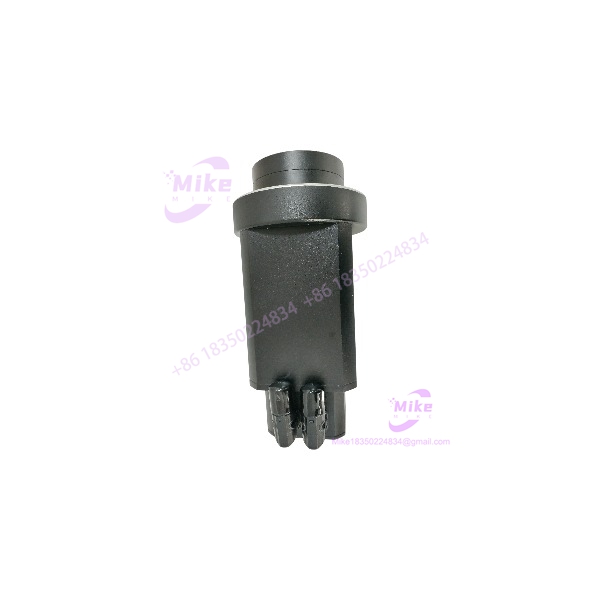
Harmonic FPA-32-33-H-E2048-B-SP | Servo Actuator
Dynamic Product Introduction
A motion axis can look mechanically healthy and still fail its production test because the feedback chain is wrong. That is particularly true with compact precision actuators: encoder resolution, signal format, gearing, and controller scaling all have to agree. The Harmonic FPA-32-33-H-E2048-B-SP is therefore not a generic servo motor that should be selected from frame size alone.
The exact unit supplied for this listing is identified as FPA-32-33-H-E2048-B-SP, with an ERN1387 2048 Heidenhain encoder. The FPA-32-33 family is associated with compact Harmonic Drive precision motion assemblies, and related documentation describes the FPA architecture as combining servo motor technology with precision strain-wave gearing in a compact package.
The “E2048” designation deserves particular attention. It distinguishes this unit from visually similar FPA variants carrying different encoder configurations. A related FPA-32-33-H-M2048-B-SP is documented separately, so substituting an M2048 unit for the E2048 version merely because both carry “2048” in the model number is poor procurement practice.
For an existing robot, semiconductor tool, inspection machine, or precision positioning axis, the practical objective is not simply getting the shaft to turn. The replacement has to reproduce the expected mechanical interface and feedback behavior closely enough that the motion controller sees the axis exactly as it was engineered.
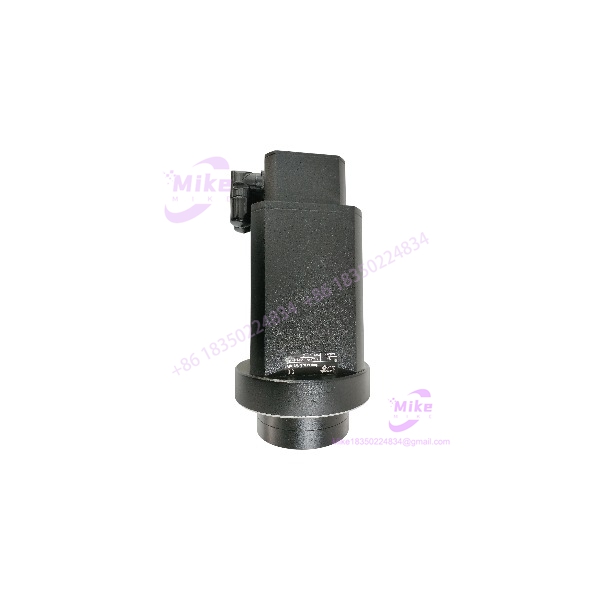
FPA-32-33-H-E2048-B-SP
Key Technical Specifications
- Manufacturer: Harmonic Drive
- Exact Model: FPA-32-33-H-E2048-B-SP
- Actuator Family: FPA
- Frame Designation: 32
- Gear Ratio Designation: 33
- Encoder: Heidenhain ERN1387
- Encoder Resolution: 2048 as identified in the supplied listing
- Feedback Type: Incremental encoder configuration associated with the ERN1387
- Application Class: Precision servo motion / robotic and industrial positioning
- Mechanical Architecture: Compact servo actuator with integrated precision gearing
- Suffix: B-SP
- Procurement Note: Exact encoder and suffix configuration should be matched before replacement
The supplied listing explicitly identifies the model and ERN1387 2048 encoder.
Related FPA-32-33 documentation describes the family as a compact precision actuator using Harmonic Drive strain-wave gearing. However, published specifications for related variants should not automatically be copied onto this exact E2048-B-SP unit. That distinction is important when documenting torque, speed, brake voltage, or motor winding data.
Global Sourcing & Live-Test SOP
Inbound Verification
Treat the FPA-32-33-H-E2048-B-SP as a precision electromechanical assembly, not ordinary surplus inventory.
Before applying power, record:
- Complete model number
- Encoder nameplate and part marking
- Heidenhain ERN1387 identification
- Serial number
- Connector configuration
- Shaft and flange condition
- Gearbox housing condition
- Brake identification, if fitted
- Cable condition
- Signs of impact or shaft loading
- Evidence of previous repair or disassembly
The first procurement checkpoint is simple: the label must match the purchase specification.
Do not accept “FPA-32-33” as sufficient identification. The E2048-B-SP suffix is part of the functional specification.
Live Simulation
The actuator should be tested using a compatible servo amplifier and the appropriate feedback interface.
A proper bench test should verify:
- Motor winding continuity and phase balance.
- Insulation condition.
- Encoder supply compatibility.
- A/B/Z feedback signals where applicable.
- Correct encoder counting.
- Direction of rotation.
- Smooth low-speed movement.
- Acceleration and deceleration behavior.
- Mechanical noise from the reducer.
- Abnormal backlash, binding, or vibration.
For the encoder, an oscilloscope or appropriate encoder diagnostic instrument is considerably more useful than simply checking whether the controller reports “feedback present.”
Diagnostics
Run the actuator through low-speed positioning before attempting high-speed operation.
Watch for:
- Encoder dropout
- Count errors
- Intermittent feedback
- Position following error
- Excessive motor current
- Mechanical resonance
- Abnormal reducer noise
- Shaft stiffness
- Brake release problems, if equipped
The 2048-count feedback configuration should also be entered correctly in the motion controller. An encoder can produce perfectly clean signals and still generate incorrect axis movement if the electronic gearing or scaling parameters are wrong.
24-Hour Reliability Run
For a used or refurbished unit, a meaningful test should include repeated positioning cycles rather than simply spinning the motor continuously.
Monitor:
- Motor current
- Housing temperature
- Encoder stability
- Position error
- Acoustic/mechanical behavior
- Brake behavior where applicable
- Drive fault history
A short successful spin test proves surprisingly little on a precision actuator.
Final Preparation
Before shipment:
- Record the complete model number.
- Photograph the encoder identification.
- Record test-drive configuration.
- Record measured feedback behavior.
- Protect the output shaft from impact.
- Use ESD-safe packaging for exposed electrical connections.
- Immobilize the actuator against shock during transport.
For precision gearing, mechanical protection during shipping is part of QC—not cosmetic packaging.
Field Engineer’s Pitfall Guide
❗ Do not confuse E2048 with M2048
This is the biggest procurement trap.
The FPA-32-33-H-E2048-B-SP and FPA-32-33-H-M2048-B-SP are closely related model designations, but the available documentation treats them as separate configurations. The exact unit in this listing is identified with an ERN1387 2048 Heidenhain encoder.
Do not approve a substitution simply because the frame size, ratio, and “2048” designation look familiar.
❗ Encoder scaling errors can make a good actuator look defective
If the controller expects a different counts-per-revolution relationship, the axis can overshoot, under-travel, or generate following errors.
One field symptom is particularly misleading: the motor turns smoothly by hand, the drive enables normally, and yet the machine cannot complete its homing sequence. That is often a feedback configuration problem rather than a mechanical failure.
Verify the encoder interface and controller scaling before blaming the actuator.
❗ Never judge the harmonic gearing by freehand rotation alone
A precision strain-wave reducer should be evaluated for abnormal resistance, roughness, noise, and positional behavior—not just whether someone can rotate the shaft.
Impact loading during transport can damage precision gearing or bearings without leaving an obvious external mark. Related service documentation for this actuator family shows that reducer, brake, and encoder faults can occur independently.
If the actuator produces abnormal noise or inconsistent positioning under controlled operation, stop the test rather than forcing the mechanism through a full-speed cycle.
Intent-Driven FAQ
thmonic ?
It is a Harmonic Drive FPA-series precision servo actuator configured with an 2048 Heidenhain encoder, intended for controlled rotary motion and precision positioning. The exact listing identifies etel as .
What does indicate?
The portion identifies the encoder configuration associated with this specific actuator. The supplied unit is explicitly identified with a 2048 Heidenhain encoder.
Do not assume every FPA unit containing “2048” in its model number uses the same feedback hardware.
eplace an with an M2048 version?
Do not treat it as a plug-and-play replacement without engineering verification. Related M2048-B-SP documentation identifies a different configuration, even though both models share the designation and 2048 feedback reference.
Check the encoder interface, mechanical dimensions, motor electrical data, connector assignment, controller scaling, and machine configuration first.





