

Description
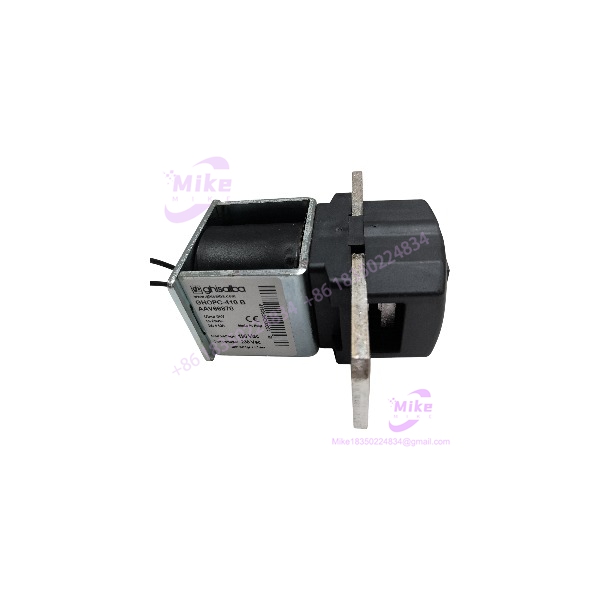
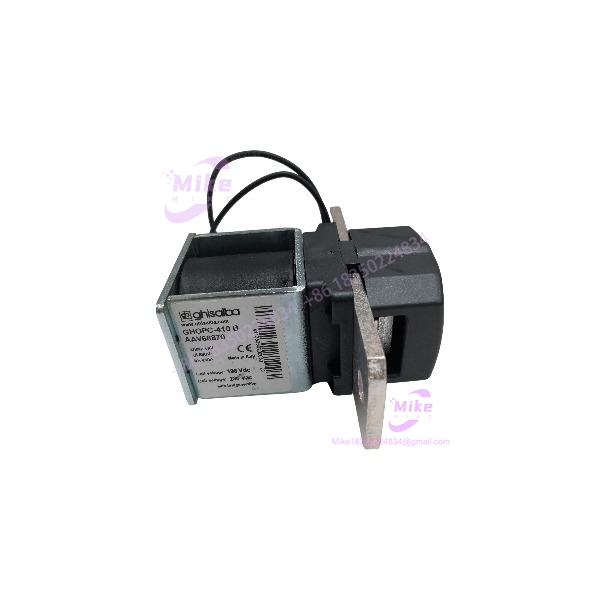
GHISALBA GHOPC-410B AAV66870 | 410 A Bypass Contactor
Product Introduction
The GHISALBA GHOPC-410B AAV66870 is a high-current bypass contactor designed specifically for soft-starter motor-control assemblies. Its job is not to perform the SCR ramp itself. Instead, after the soft starter has completed the controlled acceleration sequence, the bypass contactor closes and transfers the motor current away from the semiconductor power path. This reduces continuous conduction losses and the associated heat generated by the SCR section.
The GHOPC-410B is specified as a single-pole, normally open contactor with a 410 A continuous thermal current rating. The main circuit has a documented 690 VAC rated insulation voltage and 6 kV impulse withstand capability. The B-coil version incorporates an internal rectifier and is associated with a 230 VAC, 50 Hz control supply, producing approximately 196 VDC at the coil.
This is therefore a component that should be matched by exact part number, coil version, mechanical arrangement, and soft-starter application—not substituted solely by comparing the headline current rating.
GHOPC-410B AAV66870
Key Technical Specifications
- Model: GHOPC-410B
- Material Code: AAV66870
- Manufacturer: GHISALBA
- Component Type: Soft-starter bypass contactor
- Contact Arrangement: Single-pole, normally open
- Continuous Thermal Current: 410 A
- Rated Insulation Voltage: 690 VAC
- Rated Impulse Withstand Voltage: 6 kV
- Control Version: B
- Control Voltage: 230 VAC
- Control Frequency: 50 Hz
- Coil Design: Internal rectifier
- Approximate Coil Output: 196 VDC
- Main Termination: Copper busbar / bolted power connection
- Control Termination: Plug/terminal connection depending on assembly
- Protection Class: IP20 for cubicle installation
- Applicable Standard: IEC 60947
- Typical Application: Soft-starter bypass circuit for large motors
The 410 A rating and 690 V insulation specification are particularly important when evaluating this part as a replacement. The actual motor circuit, prospective fault current, enclosure arrangement, conductor sizing, and soft-starter manufacturer’s bypass requirements must still be checked before installation.
Global Sourcing & Live-Test SOP
For a surplus or replacement GHOPC-410B AAV66870, testing should concentrate on the power contacts, coil circuit, mechanical movement, and correct integration with the soft starter.
1. Inbound Verification
- Confirm GHOPC-410B on the physical nameplate.
- Confirm AAV66870 as the material/part code.
- Photograph the complete contactor before installation.
- Inspect the main power terminals for oxidation, overheating, cracking, or damaged threads.
- Examine the contact surfaces for welding or excessive arcing.
- Inspect the actuator mechanism for mechanical binding.
- Check the coil/control terminals for damage.
- Confirm the contactor has not been modified from its original configuration.
- Compare the physical busbar arrangement with the machine’s original bypass assembly.
2. Coil Verification
Before energizing:
- Confirm the control circuit is intended for the 230 VAC / 50 Hz B-coil configuration.
- Measure coil resistance with power removed.
- Check for insulation breakdown between the coil circuit and accessible conductive parts.
- Verify control-terminal identification against the correct wiring documentation.
Do not connect a 24 VDC control signal merely because the soft starter’s control electronics operate at 24 VDC. The documented B version uses a 230 VAC control input with an internal rectifier.
3. Mechanical and Contact Test
With the main circuit isolated:
- Energize the coil from an appropriately protected test source.
- Confirm positive mechanical actuation.
- Listen for abnormal chatter or incomplete closure.
- Verify the normally open main contact closes reliably.
- Remove coil power and confirm complete release.
- Measure contact resistance after repeated operations.
- Check for intermittent contact behavior.
For a 410 A-class bypass device, contact resistance is not a trivial inspection item. A poor connection can create significant localized heating once the motor is running.
4. Soft-Starter Integration Test
Where a complete test bench is available:
- Confirm the soft starter reaches the intended end-of-ramp condition.
- Verify the bypass command is generated at the correct point in the sequence.
- Confirm the closes only when commanded.
- Monitor the bypass contactor coil voltage during transition.
- Verify that the SCR section is not being bypassed prematurely.
- Confirm the motor current transfers as expected.
- Check for contactor chatter during the transition.
The bypass contactor should be evaluated as part of the soft-starter control sequence, not as an isolated relay.
5. Extended Thermal Inspection
During an appropriate loaded test, monitor:
- Main terminal temperature
- Busbar connection temperature
- Contactor body temperature
- Coil temperature
- Contact stability
- Abnormal acoustic noise
- Evidence of contact heating
Use thermal imaging or suitable temperature measurement where available. Compare all three phases in a complete soft-starter system rather than judging one connection independently.
6. Final Preparation
Before shipment:
- Record the exact designation.
- Photograph the power and control terminals.
- Record coil configuration.
- Document functional coil testing.
- Record contact-resistance measurements where performed.
- Protect busbar surfaces from mechanical damage.
- Package the contactor so the actuator and terminals cannot be struck during transport.
Field Engineer’s Pitfall Guide
❗ Do not confuse the bypass contactor with the soft starter itself
The is the bypass switching element. It does not replace the SCR power section, control board, ramp logic, or protection functions of the soft starter. Its command timing is part of the overall motor-control sequence.
❗ Verify the B-coil before connecting the control circuit
The documented B version uses a 230 VAC, 50 Hz control input with an internal rectifier. That is a fundamentally different control arrangement from a 24 VDC contactor coil. Verify the exact coil designation before commissioning.
❗ 410 A is not a license to ignore the installation
The 410 A continuous thermal rating does not by itself establish that the component is suitable for every 400 A-class motor circuit. Motor duty, starting method, enclosure temperature, conductor arrangement, short-circuit coordination, and soft-starter manufacturer’s bypass requirements still determine the actual application.
Intent-Driven FAQ
What is the AAV66870?
It is a GHISALBA soft-starter bypass contactor identified by model and material code AAV66870. Its purpose is to bypass the SCR power stage after the soft starter has completed the starting ramp.
What is the current rating of the ?
The documented continuous thermal current rating is 410 A.
What voltage is the rated for?
The documented main-circuit insulation voltage is 690 VAC, with a 6 kV impulse withstand rating. This should not be confused with the control-coil voltage.
What coil voltage does the use?
The B version is documented with a 230 VAC, 50 Hz control supply and an internal rectifier, with approximately 196 VDC at the coil. Verify the physical nameplate before applying control power.
Is the a three-phase contactor?
The documented device is a single-pole, normally open bypass contactor. In a three-phase soft-starter installation, the overall bypass assembly can use multiple contactors or a manufacturer-specific mechanical/electrical arrangement. Do not assume that one unit directly replaces a complete three-phase bypass assembly.
Can I substitute another 410 A contactor?
Not without checking the complete application. The replacement must match the electrical rating, coil/control arrangement, physical busbar connections, switching duty, insulation requirements, and soft-starter bypass sequence.
How should a used be tested?
At minimum, verify the correct part number, inspect the power contacts and busbar terminals, measure the coil circuit, test mechanical actuation, verify normally open contact operation, and perform an appropriate loaded bypass test if the unit will be installed in production equipment.
Procurement Notes
The supplied eBay listing identifies the item as and currently describes it as a new contactor; however, the listing itself labels the brand as “unbranded,” so the physical nameplate and documentation should be used to establish OEM identity before making a procurement decision.
For purchasing, specify the complete designation:
GHISALBA —
Do not shorten the procurement description to “410 A contactor.” The B coil version and material code are important identification details,





