

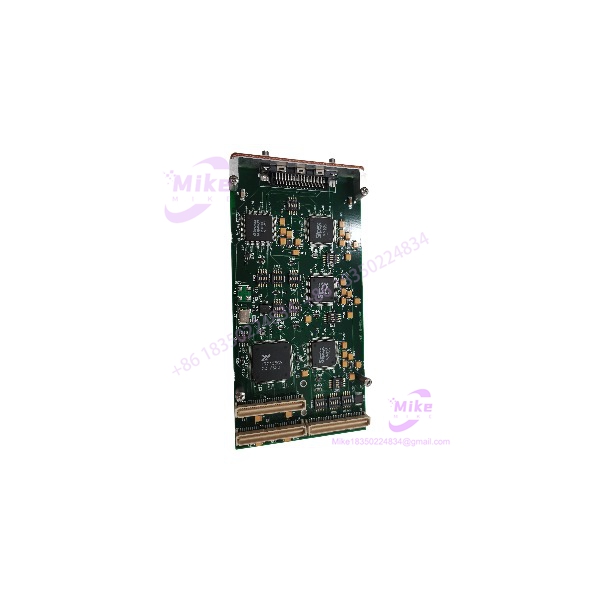
Description
FORCE PowerCore PMC422FP | High Speed RS422 RS485 Interface Card
Product Introduction
When a critical radar data aggregator or flight simulator interface drops a serial packet mid-transmission, system redundancy relies on rock-solid mezzanine hardware. The FORCE PowerCore PMC422FP is not a consumer-grade serial add-on board; it is a hardened, high-throughput PMC module engineered to deliver deterministic serial data transfer across PCI-based VME or VPX carrier cards. Attempting to run standard commercial serial cards in high-shock or thermally demanding environments usually results in solder joint fractures and communication timeouts—making this specialized module essential for ruggedized computing platforms.
Operating inside densely packed industrial and defense electronics chassis requires exceptional noise rejection and thermal tolerance. The PMC422FP manages four independent, high-speed RS-422/RS-485 serial streams simultaneously, offloading UART interrupt overhead from the primary host single-board computer (SBC). Built-in optical isolation guards sensitive PCI bus traces against high-voltage ground loops—though you must still verify front-panel connector pinouts to prevent transmit/receive pin cross-wiring.
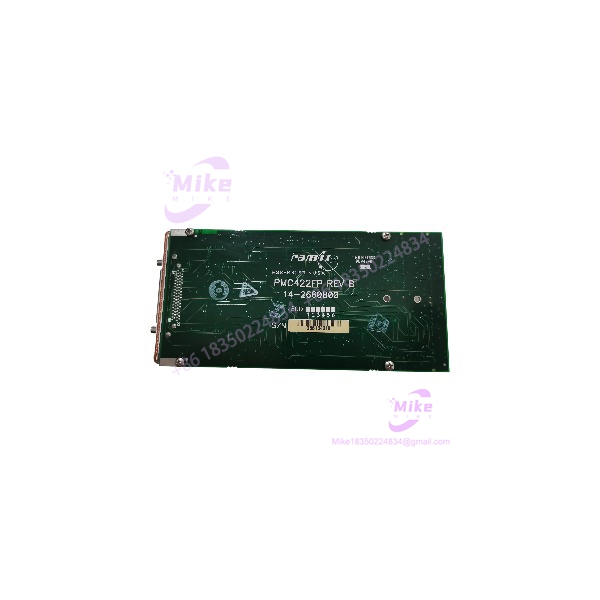
PMC422FP
Key Technical Specifications
- Form Factor: Single-width PCI Mezzanine Card (PMC) conforming to IEEE 1386.1
- Bus Interface: 32-bit / 33 MHz PCI bus specification compliant (3.3V / 5V signaling compatible)
- Serial Channels: Four (4) independent, fully isolated serial communication ports
- Serial Protocols: Software-configurable RS-422 and RS-485 (2-wire and 4-wire differential)
- Max Data Rate: Up to 10 Mbps per channel (sustained high-speed synchronous/asynchronous)
- UART Controller: High-performance 16C550/16C2550 compatible deep FIFO UARTs
- Front Panel I/O: High-density front panel connector with option for rear I/O routing via P14
- Isolation Rating: 500V channel-to-channel and channel-to-PCI bus galvanic isolation
- Operating Temperature Range: -40°C to +85°C (-40°F to +185°F) rugged conduction-cooled option
- Storage Temperature Range: -50°C to +100°C (-58°F to +212°F)
- Relative Humidity Tolerance: 5% to 95% non-condensing
Application Scenarios & Pain Points
An aerospace test facility in Florida suffered intermittent data packet loss on their flight-surface simulator whenever ground loops induced common-mode noise across long differential lines. Installing the FORCE PowerCore PMC422FP on their host SBC carrier card provided 500V galvanic isolation, eliminating common-mode noise spikes and stabilizing high-speed serial streams during critical flight testing.
With vs. Without Rugged PMC Interface Cards:
- Without the PMC422FP: Commercial serial cards fail under mechanical vibration, suffer from high CPU interrupt latency, and lack isolation, risking host processor failure during ground fault events.
- With the PMC422FP: Dedicated deep FIFO UARTs handle high-baud packet buffers natively, preserving host CPU cycles and protecting the system bus from field-side voltage surges.
Defense Avionics & Naval Radar Systems:
- Condition: Continuous multi-shift data acquisition running in high-vibration, wide-temperature-swing environments.
- Impact: Standard connector pins loosen, and thermal drift causes clock frequency jitter, leading to corrupted data frames.
- Solution: Deploying the conduction-cooled FORCE PowerCore PMC422FP guarantees rock-solid serial communication under extreme environmental stress.
QA & Live Testing SOP (Trust Signal)
Every FORCE PowerCore PMC422FP module entering our facility undergoes a strict, multi-point inspection protocol. We start with a microscopic inspection of the PMC connector pins, solder joints, and board traces to verify zero physical stress, corrosion, or conformal coating degradation. Next, the module is mounted onto a verified VME/VPX host carrier card inside a powered test chassis—we measure PCI bus current draw and supply rails using a calibrated Fluke digital multimeter.
During live functional testing, we run a full loopback data suite across all four RS-422/RS-485 channels simultaneously at maximum baud rates, checking for bit error rates (BER), frame drops, and FIFO buffer integrity. We perform a 24-hour thermal soak test to ensure clock stability across temperature limits. Once cleared, the card is cleaned, fitted with anti-static connector covers, and vacuum-sealed in ESD protective packaging with custom foam cushioning.
Field Engineer’s Pitfall Guide
❗ GOTCHA #1: PMC Standoff Height and Carrier Alignment Do not force the PMC422FP onto a host carrier card without verifying PMC standoff heights (10mm standard vs. custom heights). Forcing mismatched connectors will bend the high-density PCI bus pins on the J1/J2 connectors, causing unrecoverable bus faults on the host SBC.
❗ GOTCHA #2: RS-485 Differential Termination Resistors When operating channels in RS-485 multi-drop mode, ensure internal 120-ohm bus termination jumpers/switches are properly configured for end-of-line nodes. Leaving termination disabled on long lines causes signal reflections, while enabling it on intermediate nodes overloads the onboard transceiver drivers.
❗ GOTCHA #3: Host OS UART Driver Mapping Ensure your host operating system (VxWorks, Linux, or Windows) correctly parses the PCI vendor and device IDs of the PMC422FP. Generic 16550 drivers may assign default baud rate multipliers that miscalculate custom high-speed oscillator frequencies, resulting in garbage serial output.
Intent-Driven FAQ
What is the primary function of the FORCE PowerCore PMC422FP?
The FORCE PowerCore PMC422FP is a 4-channel, high-speed serial communication PMC mezzanine card designed to provide isolated RS-422 and RS-485 serial channels for embedded computer systems in industrial, defense, and aerospace environments.
Can I route the serial I/O through the rear carrier backplane instead of the front panel?
Yes. Depending on the exact hardware revision ordering code, the PMC422FP supports serial I/O routing either through the high-density front-panel connector or through the P14 rear I/O connector into the host carrier backplane.
Is this card compatible with standard 3.3V and 5V PCI signaling environments?
Yes. The PMC422FP features a universal PCI bus interface compatible with both 3.3V and 5V signaling levels, making it easy to integrate into a wide range of legacy and modern host carrier cards.
How do I switch a channel between RS-422 and RS-485 modes?
Protocol selection for each of the four ports is software-configurable via control registers on the module, or in some hardware builds, via onboard DIP switches/jumpers. Refer to the hardware manual for your specific revision’s register mapping.
What should I do if a serial channel passes loopback tests at low speed but drops frames at high baud rates?
High-speed frame drops are typically caused by unshielded cable runs picking up external noise, improper 120-ohm line termination, or host CPU driver FIFO buffer underruns. Verify cable shielding and increase OS driver buffer sizes.





