

Description
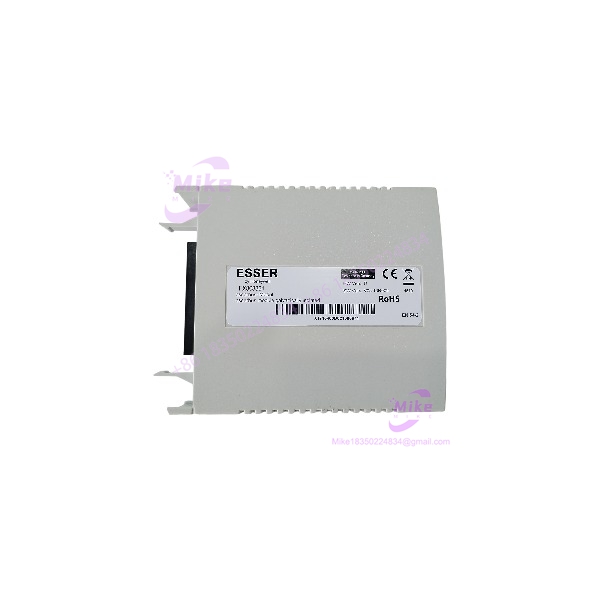
ESSER FX808331 | FlexES Control esserbus Loop Module
Dynamic Product Introduction
The ESSER FX808331 is a purpose-built loop interface for the FlexES Control fire alarm platform. Its job is straightforward but system-critical: it connects an esserbus or esserbus-PLus loop to the control panel and provides communication with addressable field devices distributed around the protected installation. ESSER specifies capacity for up to 127 devices and a maximum loop length of 3.5 km, subject to system consumption and installation conditions.
This module is particularly relevant when maintaining an existing FlexES Control installation where replacing the complete fire alarm panel would create unnecessary commissioning and configuration work. The FX808331 occupies a panel module slot and can be used for mixed esserbus and esserbus-PLus operation. ESSER also documents a quick plug-in installation approach with automatic module recognition on FlexES Control systems.
There is one important architectural limitation: FX808331 is the non-galvanically isolated loop module. ESSER identifies FX808332 as the galvanically isolated GI version and specifies that, when more than four loop modules are installed in a panel, GI modules are required from the fifth loop onward.
For procurement, that distinction matters. An FX808331 is not simply interchangeable with every FX808332 installation.
FX808331
Key Technical Specifications
- Manufacturer: ESSER
- Part Number: FX808331
- Product Type: esserbus / esserbus-PLus loop module
- System: FlexES Control
- Operating Voltage: 24 VDC
- Nominal Current Consumption: Approximately 17 mA
- Maximum Devices per Loop: 127
- Maximum Loop Length: 3.5 km, depending on consumption and system configuration
- Loop Architecture: Ring/loop bus with branch capability
- Galvanic Isolation: No
- Integrated Short-Circuit Isolation: Yes
- Status Indication: Integrated LEDs
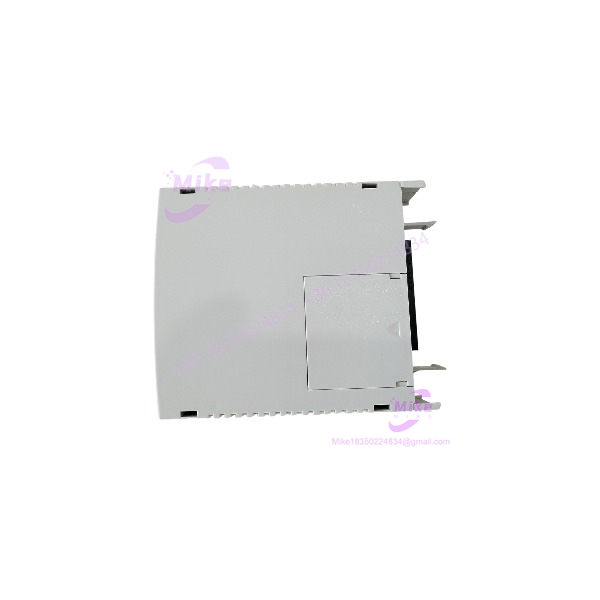
- Module Housing: Protective plastic enclosure
- Module Slots: Occupies one FlexES Control module slot
- Maximum Non-GI Modules: Four per control panel
- Dimensions: Approximately 27 × 93 × 112 mm
- Weight: Approximately 110 g
- Wireless Device Support: Compatible ESSER radio components are supported
- Approvals: VdS, FM
ESSER describes the as a module in a protective plastic housing for connecting an esserbus/esserbus-PLus loop. The manufacturer’s documentation specifies 24 VDC operation, approximately 17 mA basic consumption, 127 devices maximum, and 3.5 km maximum loop length.
The module also incorporates line short-circuit isolation and continuous monitoring of connected detectors, transponders, and loop-powered alarm signaling devices. ESSER states that the loop is monitored for short circuits, cable breaks, and other disturbances.
Global Sourcing & Live-Test SOP
Because the is part of a life-safety fire alarm architecture, incoming inspection should be more disciplined than a simple “LEDs illuminate” test. The module should be verified as part of a compatible FlexES Control environment.
1. Inbound identity verification
- Confirm the module marking shows .
- Record the OEM label and visible revision information.
- Inspect the protective housing for cracks or deformation.
- Check the module connector and locking mechanism.
- Inspect loop terminals for corrosion, contamination, or mechanical damage.
- Check the diagnostic LEDs.
- Verify that the module is the non-GI version rather than FX808332.
The last point is important when purchasing surplus inventory. ESSER’s and FX808332 perform related loop functions, but their galvanic-isolation architectures are different.
2. Controlled panel installation
Install the module into a compatible FlexES Control test panel using the appropriate module carrier and wiring arrangement.
The FlexES platform is designed to recognize compatible modules automatically during startup, and ESSER describes the modules as mechanically secured in their slots without requiring conventional screw fastening.
Verify:
- Module recognition
- Panel diagnostic status
- LED behavior
- Communication with the loop
- No module-related fault indication
3. Loop simulation
A proper test should use a controlled loop containing compatible addressable devices rather than relying solely on an open-circuit test.
Exercise representative devices such as:
- Addressable detectors
- Manual call points
- esserbus transponders
- Compatible loop-powered signaling devices
Confirm that each device is recognized correctly and that its address/status information reaches the control panel.
4. Fault-monitoring test
The is intended to supervise the loop for abnormal conditions. Controlled testing should therefore include:
- Open-circuit simulation
- Short-circuit simulation
- Device removal
- Device restoration
- Loop reactivation
- Diagnostic indication
ESSER specifically documents integrated short-circuit isolators and continuous loop supervision.
Do not perform fault tests on a live operational fire alarm installation without the appropriate authorized fire-system procedure.
5. Capacity verification
Where the application requires a high device count, verify the actual loop configuration against the 127-device limit and the expected cable length.
The published 3.5 km figure is not an unconditional wiring distance. ESSER qualifies the maximum loop length according to system consumption, so cable type, connected load, device count, and topology must be considered together.
6. Module-count verification
Check the number of loop modules already installed in the FlexES Control panel.
ESSER states that up to four non-galvanically isolated loop modules can be used. From the fifth loop module onward, a galvanically isolated GI module is required.
That means an can be electrically healthy and still be the wrong procurement choice for a particular panel architecture.
7. Final documentation
Record:
- part number
- Module revision
- Panel model
- Module slot
- Number of installed loop modules
- Device count tested
- Loop configuration
- Fault tests completed
- Diagnostic behavior
- Any observed limitations
For life-safety equipment, traceability is part of the technical acceptance process.
Field Engineer’s Pitfall Guide
1. Do not confuse with the FX808332 GI version.
The two modules have closely related functions, but FX808332 provides galvanic isolation. ESSER specifies for installations requiring GI capability and requires GI modules when more than four loop modules are installed in a FlexES Control panel.
I would check the existing module count before approving a replacement order. It is an easy detail to miss when sourcing legacy fire alarm hardware.
2. Do not interpret the 3.5 km specification as an unconditional cable-distance guarantee.
ESSER qualifies the maximum loop length according to consumption. A lightly loaded loop and a heavily populated loop do not necessarily have the same practical cable limit. Device count, signaling loads, branches, cable characteristics, and voltage drop all belong in the installation calculation.
3. Do not bench-test this module as though it were a conventional PLC I/O card.
The is an addressable fire alarm loop interface. Its useful functional test requires a compatible FlexES Control environment and appropriate esserbus/esserbus-PLus devices.
A module that merely powers up is not necessarily a serviceable loop interface. Verify recognition, device communication, loop supervision, short-circuit behavior, and recovery.
Intent-Driven FAQ
1. What is the ESSER ?
The is an esserbus/esserbus-PLus loop module for FlexES Control fire alarm panels. It provides the interface between the control panel and compatible addressable field devices on the loop.
2. How many devices can an support?
ESSER specifies a maximum of 127 devices per loop. The supported device types include compatible IQ8Quad detectors, manual call points, Series 9200 detectors, esserbus transponders, and loop-powered signaling devices.
3. What is the maximum loop length?
The published maximum is 3.5 km, with the actual achievable length dependent on system consumption and installation configuration.
4. Does provide galvanic isolation?
No. is the non-GI version. ESSER’s related provides galvanic isolation. If more than four loop modules are used in a FlexES Control panel, ESSER specifies GI modules from the fifth loop onward.
5. What power supply does use?
The published specification gives 24 VDC operating voltage with approximately 17 mA nominal/basic current consumption.
6. Can be hot-plugged into a FlexES Control panel?
ESSER describes the FlexES Control module architecture as supporting quick mechanical installation, automatic module recognition, and hot-plugging. Actual servicing should still follow the fire alarm system’s approved maintenance procedure and the applicable site safety requirements.
7. What should be checked when buying a used ?
Confirm the exact identity, physical condition, connector integrity, diagnostic LEDs, compatibility with the FlexES Control panel, module count, and whether the installation requires galvanic isolation. A functional test should verify loop communication, device recognition, open/short-circuit supervision, and recovery behavior rather than stopping at a power-up check.





