


Description
Delta Tau PMAC2A-ETH | Multi-Axis Controller, In Stock
Architect’s Product Breakdown
The Delta Tau PMAC2A-ETH, widely recognized as the Turbo Clipper, sits at the intersection of high-speed deterministic motion execution and compact machine architecture. Built around the Motorola DSP56303 core running at 80 MHz, this board handles up to 4 baseline axes of independent or coordinated servo/stepper loops—expandable to 8 via piggyback modules—without leaning heavily on a host industrial PC for trajectory generation. Its logic execution engine handles up to 16 simultaneous motion programs and 64 background asynchronous PLC programs, making it a preferred option for custom CNC machines, semiconductor handlers, and laser micromachining tools.
Integrating this card into an existing panel brings distinct legacy realities. Communication relies heavily on the onboard 100 Mbps Ethernet interface, RS-232 serial ports, or USB 2.0, utilizing PEWIN32 or compatible IDE toolsets depending on the firmware version flashed to the 1M x 8 Flash memory. Engineers replacing dead hardware must pay close attention to jumper configurations (such as IP address selection via E8 or hardware handshake settings) because misaligned firmware revisions between older programming software and the target DSP flash will immediately block handshakes and throw communication timeouts during startup sequence.
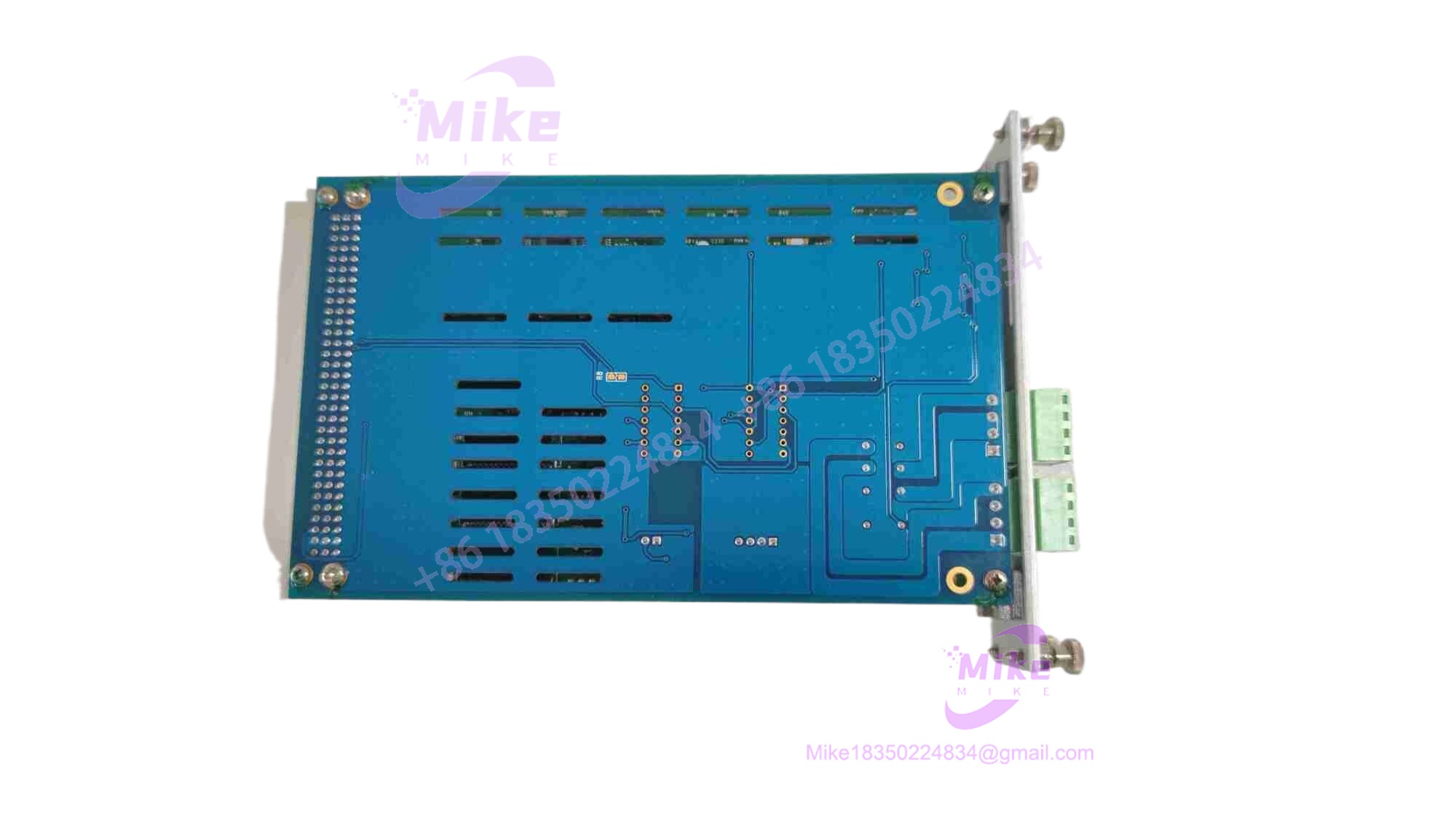
PMAC2A-ETH
Key Technical Specifications
| Parameter | Specification |
| Processor Architecture | Motorola / Freescale DSP56303 (80 MHz) |
| User SRAM Memory | 256k x 24-bit |
| Flash Memory | 1M x 8-bit |
| Standard Axes Control | 4 Axes (Servo or Stepper, expandable to 8 via piggyback) |
| Communication Ports | 100 Mbps Ethernet, USB 2.0, RS-232 Serial |
| Digital I/O Points | 32 General-Purpose Digital I/O (OPTO-22 compatible) |
| Motor Flags / Channels | 5 Inputs, 2 Outputs per axis |
| Position Range | 36-bit position register (\pm 64 billion counts) |
| Supply Voltage | +5VDC logic power supply |
| Operating Temperature | 0°C to 45°C ambient limit |
Field Engineer’s Pitfall Guide
- Warning: Firmware Mismatch and IDE Incompatibility. Swapping out a controller board without verifying the internal flash firmware version will break project compilation. I have spent entire night shifts troubleshooting communication faults because an engineer loaded a project compiled for early Turbo PMAC firmware onto a board running later firmware variants, resulting in silent register mapping mismatches.
- Warning: Jumper E8 and Network IP Defaults. The board lacks an external rotary switch for IP configuration on certain hardware revisions; failing to set the hardware jumper E8 correctly leaves the unit stranded on a default factory IP address, completely locking out Ethernet configuration packets on plant subnets.
- Warning: Backplane and Logic Power Sequencing. Applying high-voltage drive power before the +5VDC logic rail is fully stabilized can latch the discrete input buffers or fry the low-voltage internal regulators. Always sequence logic power first.
QA & Testing SOP
- Visual & Origin Verification: Inspection under magnification to verify OEM markings, anti-static seals, and lack of component oxidation on the DSP and flash chip pins.
- Live Test Bench Environment: Mounting the unit onto an active test rack powered by regulated bench supplies to verify thermal stability under load.
- Diagnostics & Handshake Testing: Executing hardware self-tests, verifying step/servo pulse outputs using an oscilloscope, and running loopback communication checks across the Ethernet and RS-232 ports.
- Firmware Logging & Packaging: Recording the exact firmware build string to a permanent asset tag, followed by sealing the hardware inside a metallized shielding bag lined with conductive foam.
Technical FAQ
- Can I hot-swap this controller board while the machine is powered on? No. The backplane bus and low-voltage edge connectors are not designed for live insertion. Doing so will cause severe electrical arcing, corrupt the SRAM, and permanently damage the DSP or peripheral chips.
- Does the controller retain user programs and tuning parameters when power is cut? Yes, compiled motion and PLC programs, along with configuration variables, are saved to non-volatile Flash memory. However, volatile registers stored only in SRAM require battery backup or a saved parameter file ($SAVE command) to persist across a hard power cycle.
- How do I recover communication if the IP address is unknown? You can establish a direct terminal connection using a standard serial cable through the RS-232 port, open a terminal emulator at 38,400 baud, and query or modify the station address and IP registers using native PMAC terminal commands.
- Are legacy software tools compatible with modern operating systems? Older 32-bit programming suites encounter driver hurdles on modern 64-bit Windows environments. Engineers typically use a virtual machine running Windows XP or transition to the updated IDE environment compatible with the specific firmware generation.





