

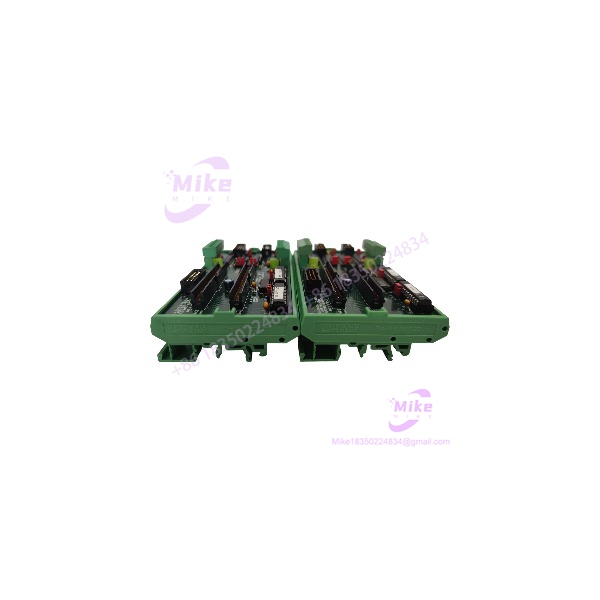
Description
Delta Tau PMAC-2 ACC8T | Motion Control Resolver Interface Module
Product Introduction
When heavy-duty industrial servo motors operate in high-temperature, oil-soaked stamping presses or steel mills, fragile optical encoders burn out or fail from vibration. Engineers switch those axes over to rugged brushless resolvers—which means the controller needs a specialized hardware interface to process them. The PMAC-2 ACC8T isn’t a standard digital encoder board; it is a multi-channel resolver-to-digital converter module engineered specifically for Delta Tau PMAC-2 motion controllers. Trying to connect raw resolver sine and cosine leads into standard digital pulse inputs results in total feedback failure—making this dedicated conversion card essential for harsh-environment motion control.
Operating inside heavy manufacturing facilities requires hardware capable of generating stable excitation carrier frequencies while rejecting severe electromagnetic interference. The PMAC-2 ACC8T drives resolver primary windings, reads the modulated sine and cosine secondary signals, and translates them into pristine digital position values for the master controller. Onboard tracking converters eliminate the need for external conversion boxes—though you must maintain proper twisted-pair shielding to prevent electrical noise from corrupting low-level feedback signals.
PMAC-2 ACC8
Key Technical Specifications
- Board Architecture: Hardware resolver-to-digital (RDC) feedback expansion card
- Input Channel Capacity: Eight (8) independent resolver input channels
- Excitation Output: Integrated crystal-controlled resolver excitation oscillator and driver circuit
- Conversion Type: High-speed tracking resolver-to-digital conversion architecture
- Interface Bus: Direct card-edge connection to PMAC-2 accessory backplane slots
- Power Requirements: Powered directly via PMAC-2 rack power distribution rails (+5V, ±15V)
- Operating Temperature Range: 0°C to +55°C (32°F to 131°F)
- Storage Temperature Envelope: -20°C to +85°C (-4°F to +185°F)
- Relative Humidity Tolerance: 5% to 95% non-condensing operating environment
- Enclosure Form Factor: Open-frame printed circuit board designed for industrial card cages
- Mounting Format: Card-edge slot installation with front-panel retention brackets
Application Scenarios & Pain Points
A heavy-duty metal forging plant in Ohio experienced constant optical encoder failures because cutting fluid mist and high ambient heat destroyed glass disks within months. Retrofitting the drive axes with heavy-duty resolvers and installing the PMAC-2 ACC8T expansion card into their controller rack solved the reliability crisis completely—delivering maintenance-free position feedback through years of brutal shock loads.
With vs. Without Dedicated Resolver Interfaces:
- Without the PMAC-2 ACC8T: Standard digital controllers cannot interface with analog resolver signals, requiring expensive standalone converter modules that add wiring complexity and introduce communication latency.
- With the PMAC-2 ACC8T: Direct rack-level conversion processes resolver signals natively, providing high-speed digital position data straight to the processor with zero middle-man lag.
Steel Mill Roller-Leveler Drives:
- Condition: Continuous multi-shift processing lines running large, high-torque motors in high-vibration, high-EMI environments.
- Impact: Electrical noise and mechanical shock waves shatter delicate encoder optics and corrupt position tracking.
- Solution: Deploying rugged resolvers paired with the PMAC-2 ACC8T guarantees indestructible position feedback under severe industrial conditions.
QA & Live Testing SOP (Trust Signal)
Every PMAC-2 ACC8T card entering our shop undergoes a rigorous, hands-on validation protocol. We start with a microscopic inspection of board traces, gold-plated edge fingers, and analog conversion components to verify zero physical damage, component stress, or trace oxidation. Next, the card is seated into a powered PMAC-2 test rack—we verify internal power conversion and bus voltage stability using a calibrated Fluke digital multimeter.
During live functional testing, we connect simulated multi-channel resolver test fixtures providing exact excitation and modulated Sin/Cos feedback signals. We monitor tracking loop lock times, position output accuracy, and excitation frequency stability across all eight channels simultaneously to guarantee zero tracking errors. Once passed, the card is cleaned, sealed inside static-dissipative ESD shielding, and packed into custom foam-lined boxes for safe shipment.
Field Engineer’s Pitfall Guide
❗ GOTCHA #1: Resolver Excitation Frequency Mismatch Do not assume every resolver matches the default excitation frequency of the PMAC-2 ACC8T. If your resolver requires a 2kHz, 5kHz, or 10kHz carrier frequency, you must configure the board’s internal jumpers or software registers to match the motor manufacturer’s exact specification to prevent core saturation and tracking errors.
❗ GOTCHA #2: Twisted-Pair Shielding & Common-Mode Noise Never run unshielded or poorly grounded cable runs between your resolvers and the PMAC-2 ACC8T. Resolver signals rely on precise phase relationships; shared shields or unshielded return leads will couple high-frequency inverter noise into the tracking converters, causing erratic position jumps.
❗ GOTCHA #3: Power Supply Rail Loading Adding an 8-channel resolver conversion card draws significant power from the PMAC-2 rack’s analog and digital rails. Always verify that your power supply module can handle the additional current draw before powering up the system to avoid voltage sag on the ±15V rails.
Intent-Driven FAQ
What is the primary function of the PMAC-2 ACC8T card?
The PMAC-2 ACC8T is an 8-channel resolver-to-digital converter expansion card that excites industrial resolvers and translates their analog sine and cosine feedback signals into high-resolution digital position data for Delta Tau PMAC-2 motion controllers.
Can I mix resolver cards with digital encoder cards in the same PMAC-2 rack?
Yes. As long as your controller configuration supports the assigned accessory slot addresses and your rack power supply can handle the electrical load, you can combine resolver cards (ACC8T), digital encoder cards (ACC8E), and analog interpolation cards (ACC8S) within the same chassis.
How do I configure the resolver transformation ratios and scaling parameters?
Configuration variables, such as velocity filters, tracking loop gains, and resolver transformation ratios, are managed directly within the PMAC software environment (like PEWIN or IDE) by modifying specific accessory slot memory registers.
What causes a resolver tracking error or loss of lock on the ACC8T?
A tracking error usually indicates a broken wire in the resolver cable (such as an open excitation or signal lead), incorrect carrier frequency configuration, or severe electrical noise overwhelming the input tracking loop.
Is the PMAC-2 ACC8T compatible with legacy PMAC-1 controller racks?
No. The PMAC-2 ACC8T is engineered specifically for the PMAC-2 accessory bus architecture and pinout structure. It is physically and electrically incompatible with older PMAC-1 backplanes.





