

Description
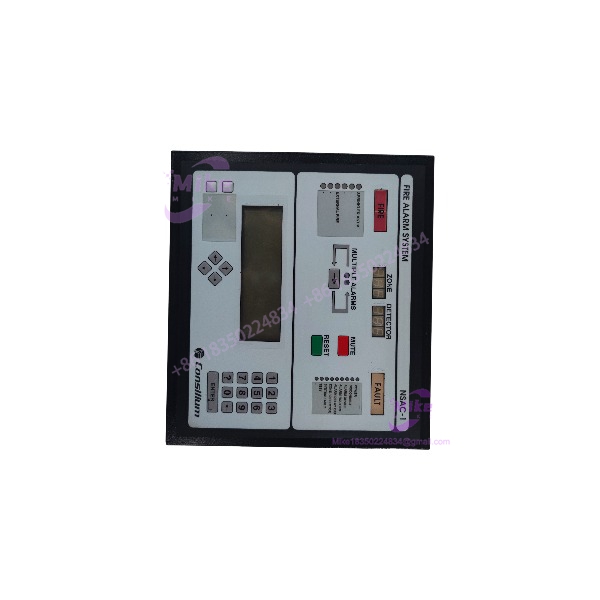
Consilium NSAC-1 | Marine Fire Alarm Control System
Product Introduction
On a vessel, a fire alarm control system is part of the safety infrastructure—not a component to substitute based on appearance alone. The Consilium NSAC-1 is a legacy marine fire alarm system associated with the Salwico product family. It supervises compatible detection circuits and system modules, processes alarm and fault conditions, and provides the control functions needed to alert personnel when a fire-related event is detected.
For maintenance teams supporting older vessels, the NSAC-1 can be relevant when preserving an existing installation or sourcing equipment for an approved repair. Consilium’s retrofit guidance identifies the NSAC-1 as a legacy platform for which the central unit is replaced during an upgrade to its Common Platform, while existing cabling and detectors may sometimes be retained. Compatibility must be evaluated at the system level; a control unit alone does not establish that the entire fire detection system is operational or compliant.
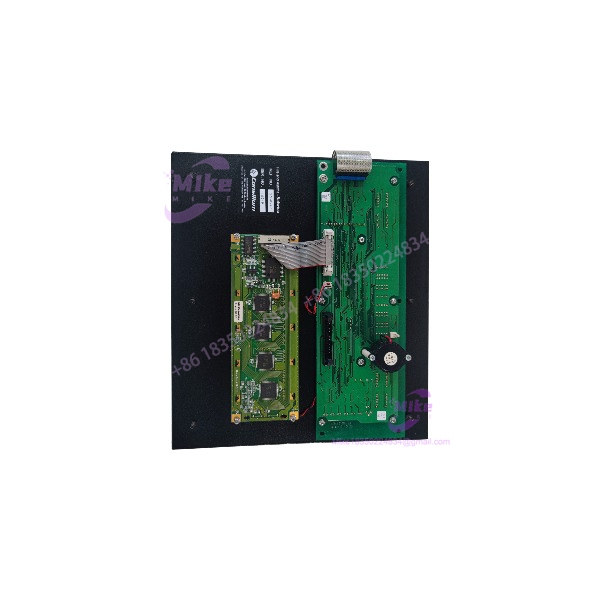
NSAC-1
Key Technical Specifications
- Manufacturer: Consilium Marine AB
- Brand family: Consilium / Salwico
- Model: NSAC-1
- Equipment category: Marine fire alarm control system
- Detection architecture: Analog addressable fire detection
- System power: 230 VAC ±10%, 50/60 Hz, according to the installation manual
- Loop voltage: 24 VDC
- Backup power: 24 VDC battery supply
- System networking: LFNet distributed system network
- Communication interface: RS-232 output and LFNet network connections
- Alarm outputs: Fire and fault outputs, bell circuits, and programmable relay outputs
- Conventional system integration: Supported through the specified ZC10 circuit board
- Loop addressing: Individual loop-unit addresses from 1 to 254, subject to system configuration
- Network extension: A signal repeater is specified when LFNet cable length exceeds 1.2 km
- Lifecycle: Legacy system; verify spare-part availability and approved replacement options
Specifications are drawn from the NSAC-1 installation manual. Exact configuration and available functions depend on the installed system modules.
Application Scenarios & Pain Points
Scenario A — Restoring a legacy marine fire detection system
A vessel’s existing control unit develops a fault, and the maintenance team needs a compatible replacement to restore the original installation. The NSAC-1 may be relevant when maintaining an existing system, provided its hardware configuration, detector loops, and associated modules are verified before installation.
Scenario B — Distributed fire alarm coverage
For larger shipboard installations, the NSAC-1 supports a distributed architecture using LFNet. The installation manual specifies a signal repeater when the network cable length exceeds 1.2 km. Network layout and cable specifications should be checked before expanding an existing installation.
Scenario C — Integrating conventional detection circuits
- Pain point: A vessel has existing conventional fire detection circuits that must interface with the NSAC-1.
- System approach: The installation manual specifies a ZC10 circuit board for connecting an existing conventional fire alarm system.
- Engineering check: Verify the circuit configuration, end-of-line resistor values, and approved wiring diagrams before energizing the system.
Scenario D — Planning an upgrade instead of repeated repairs
Consilium’s published retrofit guidance recommends replacing the NSAC-1 central unit when upgrading to the Common Platform. Existing detector cabling and devices may sometimes be retained, but compatibility depends on the existing installation and the devices involved. Obtain an engineering assessment before treating a controller replacement as a complete system upgrade.
QA & Live Testing SOP
For a marine fire alarm system, acceptance testing must establish more than basic power-up.
- Identity verification: Confirm the Consilium label, NSAC-1 model designation, and available serial or configuration records.
- Visual inspection: Examine the enclosure, display, keypad, connectors, circuit boards, and wiring terminals for damage or corrosion.
- Power verification: Have a qualified technician verify the specified AC input and 24 VDC supply arrangements against the system documentation.
- Controller startup: Confirm that the panel starts correctly and reports no unexplained system faults.
- Loop testing: Test representative compatible detectors, manual call points, and loop modules using the approved commissioning procedure.
- Alarm and fault verification: Confirm alarm annunciation, fault reporting, relay operation, and bell-circuit behavior.
- Network testing: Verify LFNet communications and any configured remote panels or repeaters.
- Documentation: Record test results, configuration details, and any unresolved faults.
- Packaging: Use suitable protective packaging for the control unit and its connectors during shipment.
These are recommended acceptance steps, not a claim that the specific used unit in the listing has passed functional testing. The linked listing identifies the item as used and without its original packaging.
Field Engineer’s Pitfall Guide
- ❗ Do not treat the NSAC-1 as a generic PLC or standalone detector. It is a dedicated marine fire alarm control system. Replacement decisions must account for its detector loops, network modules, alarm outputs, and configured logic.
- ❗ Check detector addressing before commissioning. The installation manual requires unique addresses for loop devices and describes DIP-switch address settings. Duplicate or incorrectly configured addresses can cause faults or incorrect device identification. Preserve the approved configuration records before making changes.
- ❗ Do not assume an energized panel is a fully operational fire alarm system. A working display does not prove that detectors, bells, relays, backup batteries, or remote panels function correctly. Complete the prescribed end-to-end tests and follow vessel safety procedures before returning the system to service.
Intent-Driven FAQ
Q1: What is the Consilium NSAC-1 used for?
The NSAC-1 is a marine fire alarm control system used to supervise compatible fire detection devices, process alarm and fault conditions, and coordinate connected alarm outputs. It belongs to the Salwico legacy fire detection family.
Q2: What power supply does the NSAC-1 require?
The installation manual specifies 230 VAC ±10%, 50/60 Hz, with 24 VDC loop power and a 24 VDC battery supply arrangement. Verify the actual control-unit configuration and wiring documentation before applying power.
Q3: Can the NSAC-1 connect to conventional fire detectors?
Yes, through the specified system configuration. The installation manual describes using a ZC10 circuit board to integrate an existing conventional fire alarm system. Compatibility must be confirmed for the specific detector circuits and wiring arrangement.
Q4: Is the NSAC-1 suitable for a new marine fire alarm installation?
It is primarily a legacy maintenance and replacement consideration. For a new installation, consult the system designer and relevant marine classification requirements to determine the currently approved equipment and certification requirements. Do not assume that an available used panel is approved for new service.
Q5: Is the Consilium NSAC-1 discontinued?
It is documented as a legacy platform in Consilium’s retrofit material. Independent suppliers may still offer used units or surplus equipment, but availability does not establish manufacturer support, certification status, or suitability for a particular vessel.
Q6: How do I verify that a used NSAC-1 works?
Request documented startup and functional-test results. Testing should cover controller operation, configured detector loops, alarm and fault reporting, outputs, backup power, and network communications where applicable. A visual inspection alone is insufficient.
Q7: Can the NSAC-1 be replaced with the Consilium Common Platform?
Consilium’s retrofit guidance identifies the Common Platform as an upgrade route and recommends replacing the NSAC-1 central unit. Existing cabling and some detector devices may be retained, depending on compatibility. The replacement design should be reviewed and commissioned by qualified personnel.
Final procurement recommendation: The Consilium NSAC-1 is a specialized legacy marine fire alarm system. Before purchasing, confirm the unit’s completeness, configuration, functional-test evidence, and compatibility with the vessel’s existing detection network. Because this is safety-critical equipment, use an approved engineering and commissioning process before returning it to service.





