

Description
Baumüller GDM120N-528/0750 | 190W DC Disc Motor
Dynamic Product Introduction
The wrong replacement motor can create problems that do not show up during a five-minute bench check. Speed may look correct with no load, yet current rises sharply once the machine reaches operating torque. The GDM120N-528/0750 needs to be matched by winding, voltage, current, speed, torque, mechanical dimensions, and feedback configuration—not simply by the GDM120N family name.
The GDM120N-528/0750 uses a permanent-magnet, ironless-rotor DC disc-motor design with a barrel commutator. Baumüller’s published data specifies 100 Ncm (1.0 Nm) rated torque at 1,800 rpm, producing 190 W at 24 VDC and 11.1 A. The low rotor inertia and absence of an iron rotor are important in applications where rapid speed changes and controlled low-speed operation matter.
This is a motor, not a PLC or electronic servo controller. There is no user program, firmware package, or logic-execution environment to migrate. The engineering concern is the electromechanical interface: DC drive compatibility, armature current, speed regulation, shaft loading, cooling, and any optional feedback device fitted to the particular motor.
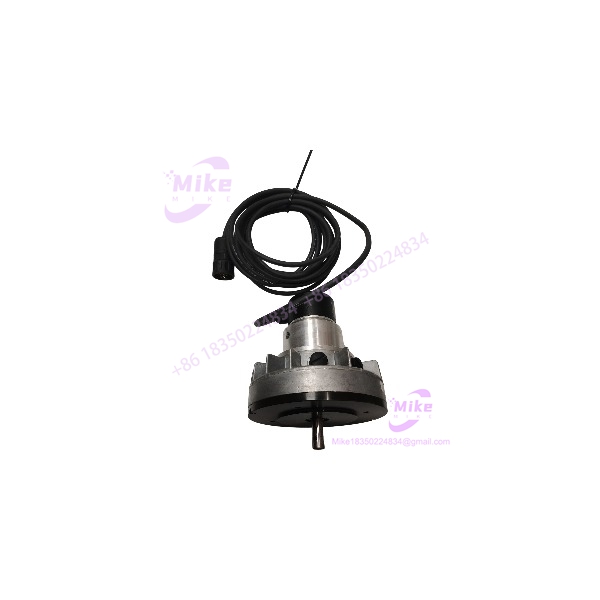
GDM120N-528/0750
Key Technical Specifications
- Manufacturer: Baumüller
- Model: GDM120N-528/0750
- Motor family: GDM120N
- Motor technology: Permanent-magnet DC disc motor
- Rotor: Ironless rotor
- Winding: 528/0750
- Rated voltage: 24 VDC
- Rated current: 11.1 A
- Rated speed: 1,800 rpm
- Rated torque: 100 Ncm / 1.0 Nm
- Rated power: 190 W
- Voltage constant: 10 V/1,000 rpm
- Rotor inertia: 3.6 kgcm²
- Weight: 3.0 kg
- Duty: S1 continuous operation
- Reference ambient: 25°C with sufficient cooling surface
- Insulation class: F
- Protection class: IP44
Baumüller’s documentation also identifies the GDM family as available with optional accessories such as a tachometer, pulse generator, holding brake, and gearbox. Those options must not be assumed on a particular GDM120N-528/0750 unless they are visible on the actual unit or confirmed by its complete ordering information.
Global Sourcing & Live-Test SOP
For a surplus GDM120N-528/0750, a simple insulation check is not enough. A DC motor can pass a static electrical test while exhibiting excessive brush wear, commutator problems, bearing noise, or abnormal current under load.
1. Inbound Verification
Record the complete motor identification before connecting anything.
Verify:
- marking
- Baumüller nameplate
- Serial/manufacturing information
- Winding designation
- Voltage/current markings
- Shaft and flange condition
- Connector or terminal arrangement
- Optional tachometer or encoder hardware
- Brake configuration, if fitted
- Evidence of previous installation
The winding designation is particularly important. Baumüller’s documentation lists several GDM120N windings with different torque, speed, voltage, and current characteristics. The 528/0750 winding is not interchangeable simply because another winding belongs to the same GDM120N family.
2. Electrical Bench Test
Use a current-limited DC supply or an appropriate DC motor drive.
Do not immediately apply unrestricted 24 VDC to an unknown used motor.
Record:
- Armature resistance
- Insulation resistance
- No-load current
- No-load speed
- Brush/commutator condition
- Direction of rotation
- Mechanical noise
- Bearing behavior
- Temperature rise
A calibrated Fluke-class multimeter can handle basic resistance and continuity checks, but insulation testing should use a properly rated insulation tester and the test voltage specified by the applicable motor/service documentation.
3. Load Simulation
The meaningful test is performed under controlled mechanical loading.
For the , establish a controlled load while monitoring:
- DC bus voltage
- Armature current
- Shaft speed
- Torque
- Motor temperature
- Current ripple
- Speed stability
The published continuous operating point is 1.0 Nm at 1,800 rpm, equivalent to approximately 190 W mechanical output. Do not treat 1.0 Nm as an unlimited low-speed torque value; thermal behavior and drive characteristics determine what the motor can safely sustain away from its rated operating point.
4. 24-Hour Heat Run
For production-critical replacement stock, a controlled endurance run is worthwhile.
Operate the motor under a representative load while periodically recording current, speed, housing temperature, and abnormal noise. A thermal trend that continues climbing after stabilization is more useful than a single temperature measurement.
Pay particular attention to brush/commutator behavior. The GDM design uses a barrel commutator, so brush condition is part of the motor’s functional life assessment.
5. Final Preparation
Before shipment, record the tested configuration and measured values.
Protect the shaft, terminals, and any feedback components against impact and contamination. If the motor is being stored for a long period, preserve it according to the applicable storage requirements rather than assuming that a dry warehouse alone is sufficient.
For procurement records, distinguish factory sealed, unused surplus, tested used, refurbished, and removed from service. Those descriptions should never be treated as interchangeable.
The Field Engineer’s Pitfall Guide
❗ Do not confuse the winding number with the motor model.
The combines the GDM120N motor family with a specific 528/0750 winding. Baumüller’s table shows different winding variants with substantially different speed, voltage, current, torque, and power values. I’ve seen replacement motors selected by frame size alone; that is how an apparently perfect mechanical replacement ends up being electrically wrong.
❗ Do not size the DC drive from the 190 W figure alone.
The documented rating is 24 V and 11.1 A at the specified operating point. The drive must also be suitable for the motor’s starting and transient current requirements, feedback arrangement if present, and the machine’s acceleration profile. A drive that merely produces 24 VDC is not automatically a suitable controller.
❗ Verify the actual feedback and mechanical configuration before removing the old motor.
Baumüller documents optional tachometers, pulse generators, brakes, and gearboxes for GDM motors. Two motors carrying the same basic family designation can therefore have materially different machine interfaces. Photograph the shaft, connector, feedback hardware, and mounting arrangement before ordering the replacement.
Intent-Driven FAQ
What is theler /0750?
The is a permanent-magnet DC disc motor from Baumüller’s series. The documented 528/0750 winding is rated at 24 VDC, 11.1 A, 1,800 rpm, 100 Ncm torque, and 190 W under continuous S1 operating conditions.
the /0750 a servo motor?
It is fundamentally a permanent-magnet DC motor, rather than a complete servo system. It can be incorporated into a closed-loop motion system when paired with suitable feedback and a compatible DC drive. The motor itself does not provide PLC logic or servo-control software.
What voltagthe /0750 use?
The documented rating for the 528/0750 winding is 24 VDC, with a rated current of 11.1 A. The drive should be selected around the complete motor and machine requirements rather than voltage alone.





