

Description
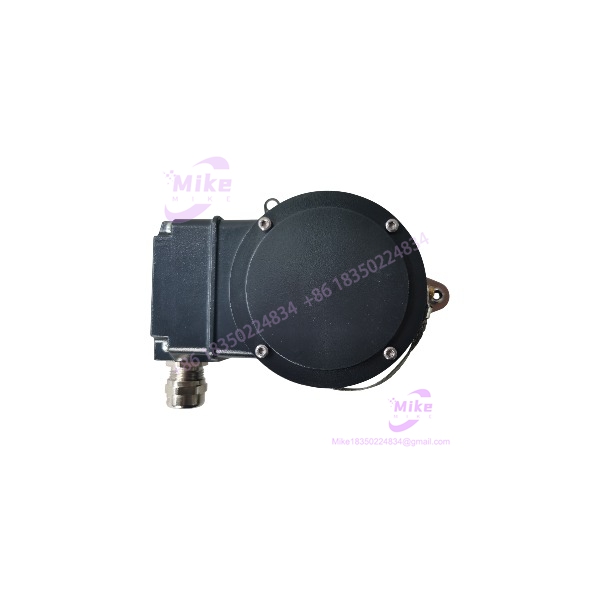
Baumer HOG 10 DN 1024I | 1024 PPR Incremental Encoder
Dynamic Product Introduction
When a drive system starts losing speed feedback intermittently, the encoder is often blamed only after the control cabinet has already been opened several times. The Baumer HOG 10 DN 1024 I is built for the harsher end of that job: it is a heavy-duty optical incremental encoder intended for continuous rotary feedback where vibration, temperature, contamination, and mechanical coupling are part of the operating environment.
The electrical specification is straightforward but important. The 1024 PPR version produces quadrature K1/K2 signals plus the K0 zero/reference pulse, with inverted outputs and an HTL power-line-driver interface. Baumer specifies 9–30 VDC supply and an output frequency up to 120 kHz. That combination makes the encoder suitable for many industrial PLC and variable-speed-drive feedback systems, provided the receiving input is designed for HTL levels.
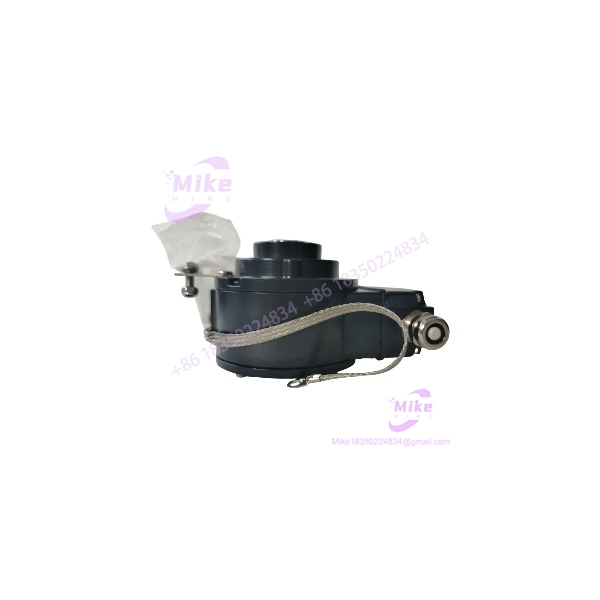
The mechanical configuration needs more attention than the basic electrical data. HOG 10 variants are available with blind hollow shafts or cone shafts, different shaft diameters, terminal arrangements, bearing arrangements, and optional monitoring systems. Baumer’s current HOG 10 documentation shows, for example, blind hollow-shaft versions around a 105 mm flange and 16 mm shaft configuration, while other HOG 10 versions use a 17 mm shaft or different connection arrangements.
HOG10DN1024I
Key Technical Specifications
- Manufacturer: Baumer
- Product Family: HOG 10
- Ordering Family: HOG10 DN 1024 I
- Encoder Type: Incremental optical rotary encoder
- Resolution: 1,024 pulses/revolution
- Output Signals: K1, K2, K0 + inverted
- Output Stage: HTL-P / HTL power-line driver
- Supply Voltage: 9–30 VDC
- No-Load Consumption: ≤100 mA
- Output Frequency: ≤120 kHz
- Phase Shift: 90° ±20°
- Duty Cycle: 40–60%
- Reference Pulse: K0, approximately 90° width
- Sensing Method: Optical
- Typical Operating Temperature: up to -40 to +100 °C for documented HOG 10 configurations
- Typical Housing: Die-cast aluminum
- Typical Shaft: Stainless steel
- Mechanical Configuration: Blind hollow shaft or cone shaft, depending on suffix
- Typical Protection: IP66 for documented HOG 10 configurations
- Typical Rotor Inertia: approximately 340–400 gcm² depending on configuration
- Typical Operating Torque: approximately 6 Ncm
- Typical Weight: approximately 1.6–2.2 kg depending on configuration
The last four mechanical values are configuration-dependent, not universal specifications for every HOG 10 DN 1024 I. Baumer’s own records show this clearly: one HOG 10 DN 1024 I combination with centrifugal monitoring lists approximately 2.2 kg and 400 gcm², while another HOG 10 configuration lists approximately 1.6 kg and 340 gcm².
Mechanical Configuration — Verify Before Purchase
The phrase HOG 10 DN 1024 I does not fully identify the mechanical installation.
Verify:
- Shaft type
- Shaft diameter
- Hollow-shaft bore
- Flange diameter
- Mounting holes
- Torque-arm arrangement
- Terminal-box orientation
- Cable/connector configuration
- Bearing configuration
- Presence or absence of redundant sensing
- Presence or absence of EMS
- Presence or absence of centrifugal speed monitoring
For example, Baumer documents a HOG10 DN 1024 I LR 16H7 + ESL93 configuration using a 16 mm blind hollow shaft and approximately 105 mm flange, while other HOG 10 variants use different shaft and connection configurations.
Global Sourcing & Live-Test SOP
1. Inbound Verification
For the eBay-sourced HOG 10 DN 1024 I, start with the physical encoder rather than the listing title.
- Photograph the nameplate.
- Confirm the complete Baumer ordering code.
- Record serial number and any article number.
- Confirm 1024 pulses/revolution.
- Confirm the I output designation.
- Inspect shaft, bearings, flange, mounting holes, and torque-arm interface.
- Photograph the terminal box or connector arrangement.
- Check for impact damage around the housing.
- Inspect the shaft for scoring, corrosion, or excessive play.
- Check for signs of oil or moisture ingress.
A seller listing that says only “HOG10 DN 1024 I” should not be treated as sufficient evidence of mechanical interchangeability.
2. Electrical Bench Test
Use a regulated 9–30 VDC supply and current-limit the test setup.
Verify:
- Supply current
- K1 output
- K2 output
- K0/index output
- Complementary/inverted signals
- Quadrature phase relationship
- Duty cycle
- Output amplitude
- Signal integrity at increasing shaft speed
Rotate the shaft slowly first. K1 and K2 should exhibit the expected quadrature relationship, while K0 should appear once per revolution.
3. Diagnostic Verification
For a used encoder, use an oscilloscope or appropriate encoder analyzer where possible.
Check:
- K1/K2 phase relationship
- K0 timing
- Output high/low levels
- Signal symmetry
- Noise during rotation
- Intermittent dropout
- Supply-current stability
A multimeter can verify supply voltage, but it is not an adequate instrument for confirming quadrature signal quality at operating speed.
4. Mechanical Test
Check the shaft by hand before energizing.
Look for:
- Bearing roughness
- Radial play
- Axial play
- Abnormal operating torque
- Housing movement
- Damaged mounting hardware
For a hollow-shaft installation, verify the shaft bore and allowable shaft load against the exact Baumer configuration. A documented HOG 10 configuration allows up to 450 N axial and 600 N radial shaft load, but these figures should not automatically be transferred to every HOG 10 variant.
5. Extended Run
Run the encoder at representative speed for an extended period.
Monitor:
- Housing temperature
- Supply current
- Quadrature stability
- K0 stability
- Mechanical noise
- Bearing behavior
- Signal amplitude
Where the encoder is intended for a high-inertia motor or gearbox, perform the test under realistic coupling conditions rather than spinning the encoder completely unloaded.
6. Final Preparation
Before shipment:
- Record the exact ordering code.
- Record article/serial number.
- Record pulse count.
- Record HTL interface type.
- Photograph the shaft and mounting arrangement.
- Photograph terminal box/connector.
- Record functional-test results.
- Package in ESD-safe and mechanically protective material.
- Prevent shaft impact during transit.
Field Engineer’s Pitfall Guide
❗ 1. Do not confuse HTL with TTL
The HOG 10 DN 1024 I uses an HTL output stage. Baumer documents the I configuration as a 9–30 VDC encoder with HTL output and inverted signals. That is not interchangeable with a TTL-only encoder input simply because both devices produce A/B quadrature.
Before connecting it to a PLC or drive, check the receiver’s allowable encoder voltage and input threshold.
A classic field error is replacing a 5 V TTL encoder with a 24 V-class HTL device and assuming the terminal names are equivalent. They are not.
❗ 2. 1024 PPR is not the same thing as 4096 counts/revolution
The encoder produces 1,024 pulses/revolution. A receiving drive may use x1, x2, or x4 quadrature evaluation, so the resulting count rate can be different.
For x4 evaluation:
1,024 PPR × 4 = 4,096 counts/revolution.
That is an electronic counting convention, not evidence that the encoder itself is a 4,096 PPR device.
❗ 3. Mechanical suffixes matter just as much as the electrical code
A 16 mm blind hollow shaft and a different shaft configuration can both belong to the HOG 10 family while being mechanically incompatible with the machine.
Baumer’s own product records show HOG 10 DN 1024 I variants with different shaft configurations, connection arrangements, monitoring options, and dimensions.
If the replacement does not physically match the motor shaft and torque arm, the 1,024-PPR electrical match is irrelevant.
Intent-Driven FAQ
What is the Baumer HOG 10 DN 1024 I?
It is a heavy-duty optical incremental rotary encoder from Baumer’s HOG 10 family, configured for 1,024 pulses/revolution and an HTL output stage with inverted signals.
What does 1024 I mean?
1024 identifies the encoder resolution of 1,024 pulses per revolution. The I designation identifies the 9–30 VDC / HTL output-stage configuration in Baumer’s HOG 10 ordering system.
What voltage does the encoder require?
The documented HOG 10 DN 1024 I configuration uses 9–30 VDC. Typical no-load consumption is specified at ≤100 mA.





