


Description
Basler DECS-200N-C1 | Microprocessor-Based Voltage Regulator & 20A SCR Bridge
Dynamic Product Introduction
Managing rapid generator load rejections and maintaining grid stability under severe transient conditions requires robust negative excitation forcing capabilities rather than standard single-direction decay. Honestly, the Basler Electric DECS-200N-C1 solves this challenge directly by incorporating a built-in 6-thyristor controlled rectifier bridge capable of both positive and negative voltage forcing. This design dramatically improves transient response speeds, prevents overvoltage spikes during sudden load drops, and makes the unit ideal for applications requiring a Power System Stabilizer (PSS). It handles true RMS sensing, multi-mode regulation (AVR, FCR, Var, PF), and sophisticated protection without drift or calibration fatigue (—though verifying your exact auxiliary supply voltages, field resistance, and sensing configurations beforehand is critical). Compared to standard non-forcing digital controllers, the DECS-200N-C1 ensures tighter control margin and superior protection across heavy industrial generation assets.
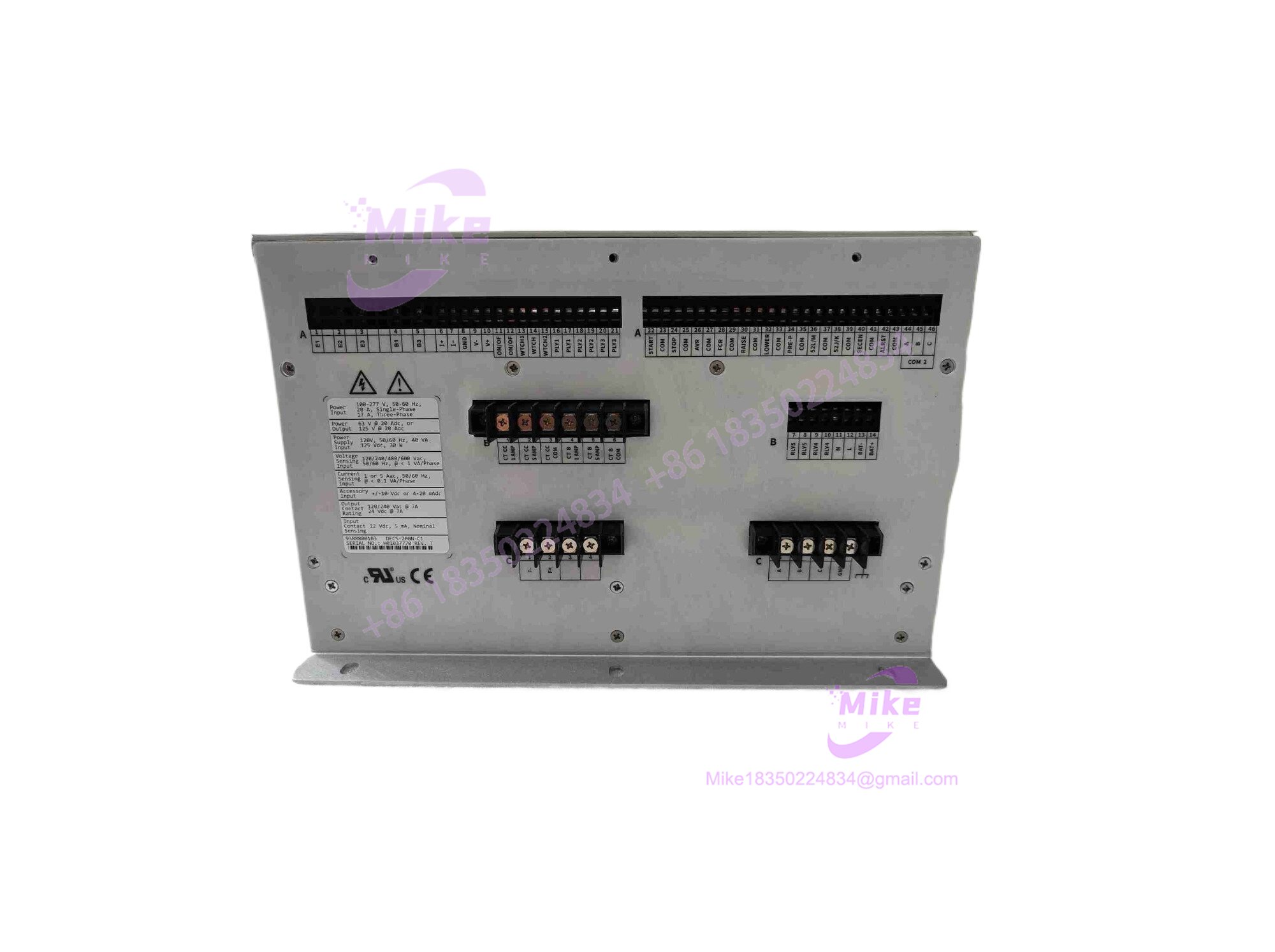
DECS-200N-C1
Key Technical Specifications
| Specification | Parameter Value |
| Product Series | Basler DECS-200N Negative Forcing Line |
| Model Designation | DECS-200N-C1 (Digital Excitation Control System / AVR) |
| Operating Power Input | Single-phase or three-phase AC input (80–277 VAC, 50–500 Hz) |
| Field Power Output | 63 VDC or 125 VDC (Continuous Current up to 20 ADC; Max Forcing up to 40 ADC) |
| Auxiliary Control Power | Multiple options (e.g., 24/48 VDC or 125 VDC / 120 VAC control rails) |
| Regulation Accuracy | ±0.25% in AVR mode (±1.0% in FCR mode) |
| Communication Ports | Front-panel RS-232 (COM0) and rear RS-485 Modbus™ interface |
| Enclosure / Mounting | Heavy-duty industrial panel-mount package (~6.35 kg) |
Global Sourcing & Live-Test SOP (Transparency Core)
Acquiring secondary-market digital excitation controllers and negative forcing AVR units requires stringent verification to ensure internal SCR power bridges, microprocessors, and flash memory remain uncompromised. For every inbound Basler DECS-200N-C1 unit, our audit team logs serial numbers against global traceability ledgers, inspects terminal blocks and power SCR modules for thermal wear, and checks internal printed circuit boards for electrostatic vulnerability.
Once cleared, the module is mounted onto a specialized generator excitation simulation test bench. Technicians apply nominal AC line input and auxiliary control power, verify true RMS voltage sensing accuracy across all phases, test positive and negative thyristor forcing under simulated field loads, and confirm correct operation of the front HMI panel and Modbus communication ports. The unit is then cleaned, fitted with anti-static protection, and securely packaged for deployment.
The Field Engineer’s Pitfall Guide
❗ Negative Forcing Transient Limits: Exceeding the minimum field resistance rating (e.g., 3.15\,\Omega for 63V configuration or 6.25\,\Omega for 125V configuration) during rapid negative forcing can overdrive the thyristor bridge and trip protective fault limits.
❗ Incorrect Field Voltage Configuration: Failing to match the software/jumper voltage settings (63 VDC vs. 125 VDC ratings) to the exciter field winding parameters can result in poor transient tracking or inadequate forcing headroom.
❗ Shielding & Grounding Errors: Inadequate shielding on RS-485 communication lines or analog control loops can introduce electromagnetic interference (EMI), causing communication dropouts with SCADA or erratic AVR tracking.
Intent-Driven FAQ
- What is the primary advantage of the DECS-200N-C1 over standard DECS-200 models?
The “-N” designation indicates a negative forcing capability using a 6-thyristor bridge, allowing the unit to actively pull down field voltage rapidly during major load rejections to prevent overvoltage conditions.
- Can the be configured using a PC?
Yes, parameters can be adjusted directly via the front-panel backlit LCD and keypad or remotely using Basler’s Windows-based configuration software via RS-232/RS-485.
- Does the unit support Power System Stabilizers (PSS)?
Yes, its high-speed 6-SCR bridge response makes it specifically suitable for complex generator setups requiring PSS integration.
- What type of warranty covers verified surplus Basler controllers?
All tested inventory includes a comprehensive 1-year operational warranty backed by our pre-shipment calibration and test bench logs.
- How do I verify if a replacement unit has been bench-tested?
Look for serialized QA certification labels, clean connector pins, and complete test documentation included with the hardware package.





