


Description
Basler DECS-200-2C | Microprocessor-Based Voltage Regulator
Dynamic Product Introduction
Managing generator field excitation and maintaining strict voltage regulation under complex grid dynamics requires sophisticated microprocessor-based control rather than conventional analog regulators. Honestly, the Basler Electric DECS-200-2C solves this challenge directly by delivering true RMS sensing, rapid transient response, and versatile field output configurations in a robust unit designed to meet high-reliability demands. This controller handles generator stability, soft-start voltage buildup, and advanced protective limiting reliably without drift or calibration fatigue (—though verifying your exact auxiliary power inputs, sensing transformer ratios, and communication configurations beforehand is vital). Compared to standard single-channel alternatives, the Basler DECS-200-2C variant enhances system resilience, prevents over-excitation faults, and ensures precise synchronization across critical power generation assets.
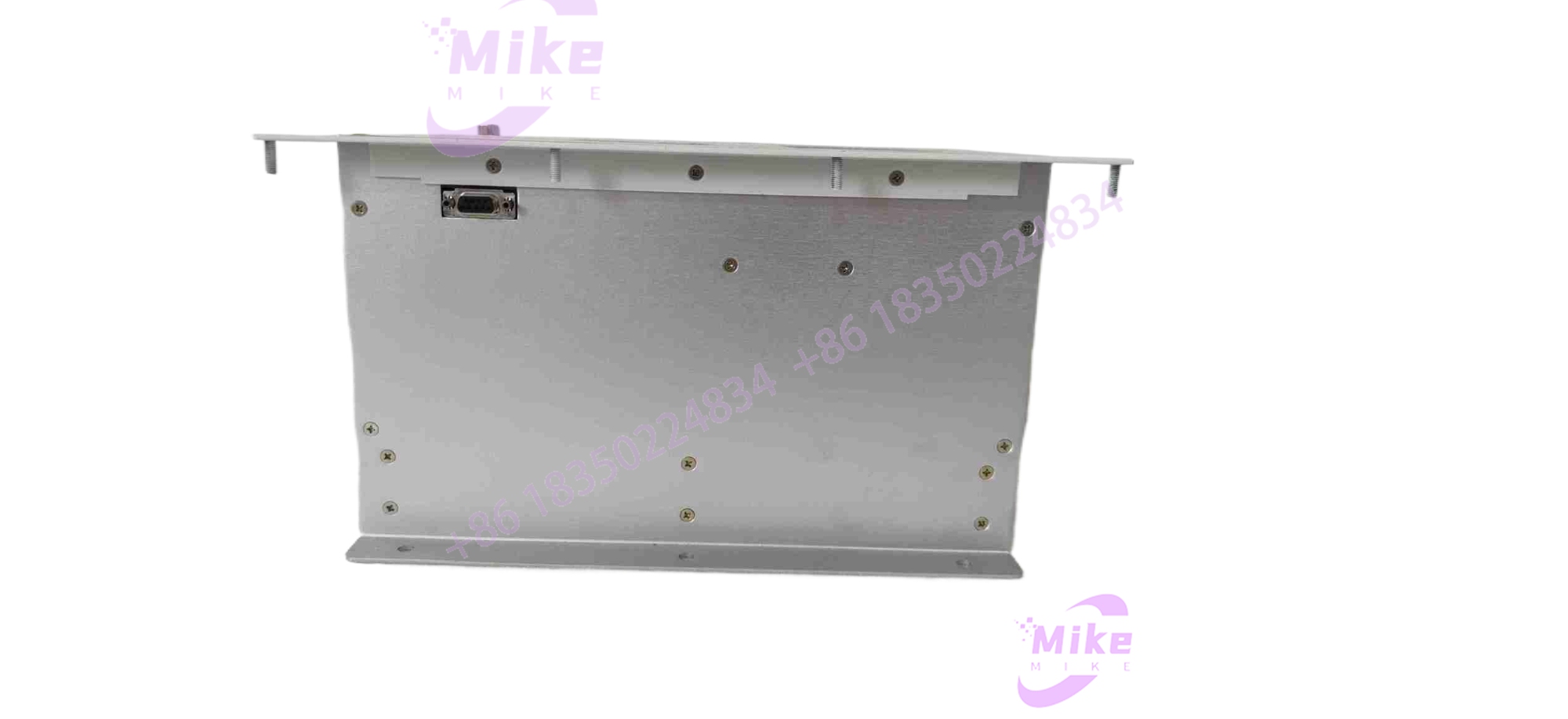
DECS-200-2C
Key Technical Specifications
| Specification | Parameter Value |
| Product Series | Basler DECS-200 Digital Excitation Line |
| Model Designation | DECS-200-2C (Digital Excitation Control System / AVR) |
| Power Input Requirements | Multi-phase AC input options for sensing and power staging, 50–400 Hz |
| Field Power Output | Configurable DC field voltage tiers (e.g., up to 15 ADC capacity) |
| Auxiliary Power Supply | Independent control power supply rails (DC auxiliary options) |
| Regulation Accuracy | ±0.25% high-precision voltage regulation |
| Communication Ports | Integrated front-panel and rear communication interfaces (RS-232 / RS-485 Modbus) |
| Enclosure / Mounting | Industrial panel-mount controller package |
Global Sourcing & Live-Test SOP (Transparency Core)
Acquiring secondary-market digital excitation controllers and AVR units requires rigorous verification to ensure internal microprocessors, flash memory, and power stage components remain uncompromised. For every inbound Basler DECS-200-2C unit, our audit team logs serial numbers against global traceability ledgers, inspects terminal blocks and connectors for oxidation, and checks internal printed circuit boards for thermal wear or electrostatic vulnerability.
Once cleared, the module is mounted onto a generator excitation simulation test bench. Technicians apply nominal AC line input and auxiliary control power, verify true RMS voltage sensing accuracy across all phases, test PWM power stage switching under simulated field loads, and confirm correct operation of the human-machine interface (HMI) and communication ports. The unit is then cleaned, fitted with anti-static protection, and securely packaged for deployment.
The Field Engineer’s Pitfall Guide
❗ Inrush Current Vulnerability: PWM-based power stages feature significant internal capacitance; failing to use an inrush current limiting module (ICRM) during initial power-up can damage input circuitry if source impedance is too low.
❗ Incorrect Field Voltage Jumper/Software Configuration: Applying the wrong output voltage tier relative to your exciter field winding specifications can lead to severe under-excitation or field flashing failures.
❗ Improper Grounding and Shielding: Inadequate control wiring shielding for RS-485 communication or analog sensing lines can introduce electrical noise, causing erratic AVR tracking or communication dropouts with SCADA systems.
Intent-Driven FAQ
- Can the DECS-200-2C be configured using a PC?
Yes, the unit can be easily configured using either the front-panel HMI display or a PC running Basler’s user-friendly BESTCOMS setup software.
- Does the support parallel generator operation?
Yes, it includes built-in paralleling compensation, as well as Var and Power Factor controller capabilities for multi-unit synchronized systems.
- What type of warranty covers verified surplus Basler controllers?
All tested inventory includes a comprehensive 1-year operational warranty backed by our pre-shipment calibration and test bench logs.
- Is component-level repair recommended for digital excitation modules?
Component-level repair is strongly discouraged due to multi-layer microchip architectures and proprietary firmware; always rely on factory-certified replacements.
- How do I verify if a replacement unit has been bench-tested?
Look for serialized QA certification labels, clean connector pins, and complete test documentation included with the hardware package.





