


Description
3096-1000 | SCR Power Controller Module Industrial Automation
Product Introduction
When a multi-zone industrial heat treat furnace or specialized drying tunnel starts fluctuating in temperature due to crude contractor switching, product scrap rates skyrocket. The 3096-1000 is not a standard electromechanical contactor; it is a heavy-duty SCR power controller engineered to modulate massive electrical loads with surgical precision. It acts as the direct dynamic link between control loop signals and high-voltage heating elements.
Built around a robust thyristor bridge assembly mounted to an extruded aluminum heat sink, this unit handles severe industrial duty cycles without thermal degradation. It processes analog control inputs to deliver smooth power curves—withstanding ambient operational panel thresholds up to 50^\circC—while minimizing harmonic distortion on the grid. If you are upgrading legacy power regulation panels or replacing a failed thyristor stack, this controller drops right into standard backplate configurations.
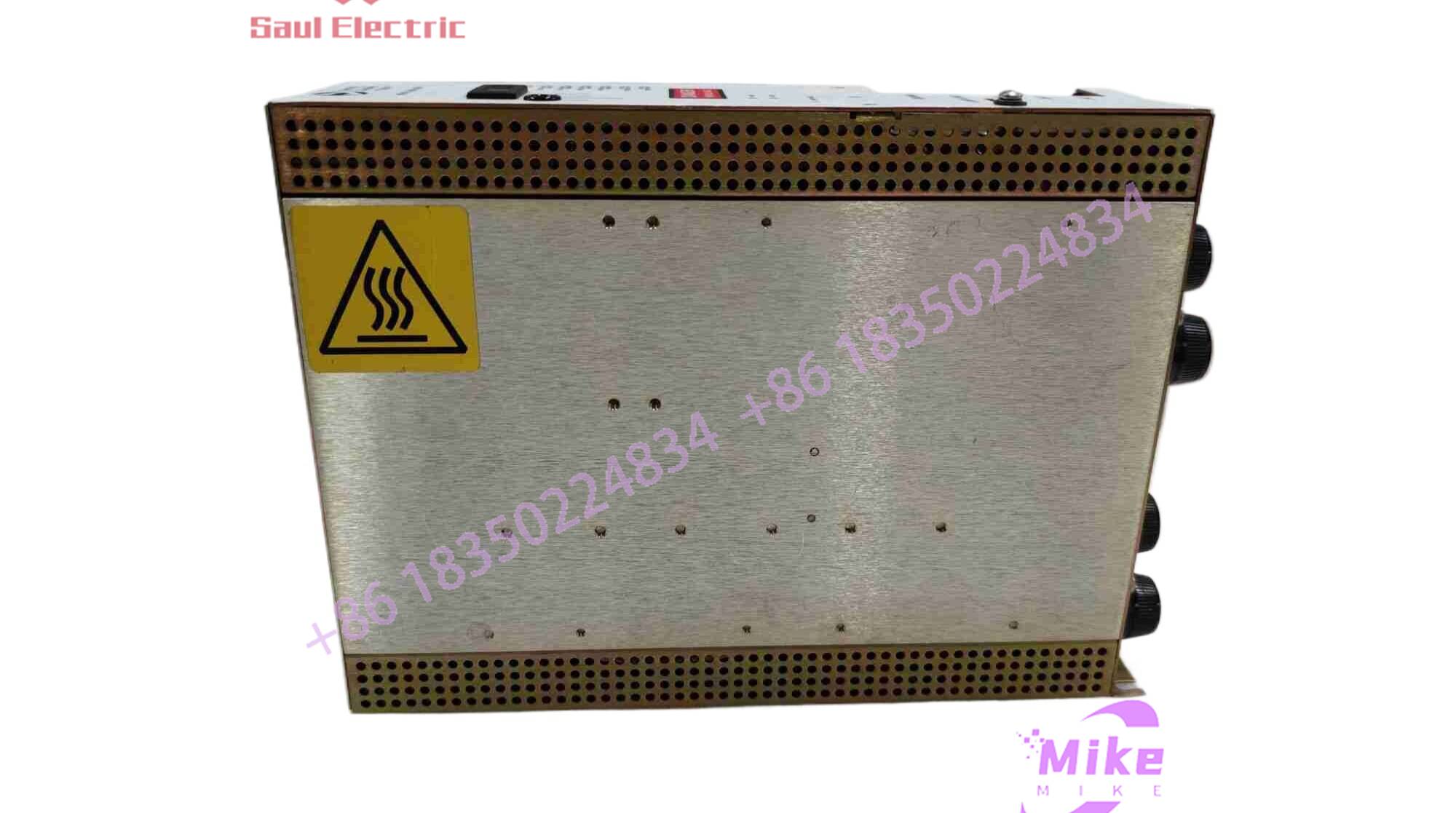
3096-1000
Key Technical Specifications
| Parameter | Specification Metric |
| Device Category | SCR Power Controller / Thyristor Unit |
| Control Method | Phase-Angle or Burst Fire (Zero-Crossing) selectable |
| Input Signal Types | 4-20 mA, 0-10 VDC, or digital command steps |
| Cooling Architecture | Forced air or convection heat sink mounting |
| Diagnostic Features | Front-panel fault LEDs (Overtemperature, Fuse, Phase Loss) |
| Enclosure Type | Open-style chassis mount for electrical enclosure integration |
| Mounting Orientation | Vertical panel mount for optimal stack convection |
| Operating Temperature | 0^\circC to +50^\circC |
Application Scenarios & Pain Points
- Industrial Glass Manufacturing Furnaces: Precision annealing arches require micro-adjustments in thermal input to prevent internal stress fracturing in glass sheets. The 3096-1000 eliminates the on/off thermal shock of mechanical contactors by supplying smooth, proportional power scaling.
- Semiconductor Quartz Tube Heaters: Vacuum and cleanroom thermal processing equipment demands precise power throttling to maintain tight temperature envelopes. This controller manages rapid load changes without introducing severe line notches or voltage sags.
- Heavy Chemical Catalyst Regeneration Heaters: High-capacity process heaters draw massive currents that quickly weld traditional relay contacts shut. The solid-state switching architecture of the 3096-1000 provides millions of trouble-free operations under heavy continuous loads.
QA & Live Testing SOP (Trust Signal)
We don’t warehouse electronic power hardware blindly; we put every unit through an aggressive electrical test bench protocol before it leaves our facility:
- Visual & Thermal Inspection: Inspected for gate trigger wire security, heat sink compound integrity, and complete absence of carbon tracking or semiconductor cracking.
- Dynamic Load Bank Testing: Mounted to a live high-current test fixture where we apply line voltage and simulate 4-20 mA control inputs across resistive load banks to verify linear power output curves.
- SCR Firing & Protection Check: Validated for zero-crossing accuracy and fast-acting current limit response to ensure the internal thyristors switch cleanly without shoot-through faults.
- Industrial Packaging: Wrapped in heavy anti-static bubble material and boxed with structural suspension foam to protect the delicate semiconductor stacks during freight handling.
Field Engineer’s Pitfall Guide
- ❗ Inadequate Heat Sink Clearance: Never mount other heat-generating components directly above or below this controller. Restricted vertical airflow will trigger thermal trip protections or prematurely degrade the internal thyristor junctions.
- ❗ Fast-Acting Fuse Coordination: Standard circuit breakers will not protect SCR gates from short-circuit events. Always verify that coordination-rated ultra-fast semiconductor fuses (Semiconductor Protection Fuses) are installed on the line side.
- ❗ Inductive Load Phase Mismatch: When driving transformer-coupled loads, using zero-crossing mode without soft-start capabilities can cause massive inrush current spikes that trip upstream breakers. Configure phase-angle firing appropriately for inductive profiles.
Intent-Driven FAQ
Can the 3096-1000 handle both resistive and inductive transformer loads?
Yes, provided it is configured correctly for the load type. Resistive heating elements typically utilize zero-crossing (burst fire) mode, whereas transformer-coupled inductive loads usually require phase-angle firing with a soft-start ramp to prevent core saturation.
What causes the unit to output full power continuously regardless of the input signal?
This typically points to a shorted internal SCR (thyristor) junction caused by an upstream overvoltage transient or a severe short circuit on the load side. Once an SCR fails shorted, it cannot modulate power.
Does this controller require an external power supply for its control electronics?
Control logic power requirements vary by specific sub-model configuration; many variants derive internal operating bias from the line voltage or require a separate low-voltage control transformer feed. Check your exact wiring diagram.
How do I troubleshoot an overtemperature fault trip?
Check for cabinet cooling fan failures, blocked air intake filters, or loose heat sink mounting bolts that are inhibiting thermal transfer away from the semiconductor baseplate.
What kind of warranty covers this power controller?
Every unit is backed by our comprehensive replacement guarantee, supported by pre-shipment dynamic load testing to verify operational readiness.
Product Introduction
When a multi-zone industrial heat treat furnace or specialized drying tunnel starts fluctuating in temperature due to crude contractor switching, product scrap rates skyrocket. The 3096-1000 is not a standard electromechanical contactor; it is a heavy-duty SCR power controller engineered to modulate massive electrical loads with surgical precision. It acts as the direct dynamic link between control loop signals and high-voltage heating elements.
Built around a robust thyristor bridge assembly mounted to an extruded aluminum heat sink, this unit handles severe industrial duty cycles without thermal degradation. It processes analog control inputs to deliver smooth power curves—withstanding ambient operational panel thresholds up to 50^\circC—while minimizing harmonic distortion on the grid. If you are upgrading legacy power regulation panels or replacing a failed thyristor stack, this controller drops right into standard backplate configurations.
Key Technical Specifications
| Parameter | Specification Metric |
| Device Category | SCR Power Controller / Thyristor Unit |
| Control Method | Phase-Angle or Burst Fire (Zero-Crossing) selectable |
| Input Signal Types | 4-20 mA, 0-10 VDC, or digital command steps |
| Cooling Architecture | Forced air or convection heat sink mounting |
| Diagnostic Features | Front-panel fault LEDs (Overtemperature, Fuse, Phase Loss) |
| Enclosure Type | Open-style chassis mount for electrical enclosure integration |
| Mounting Orientation | Vertical panel mount for optimal stack convection |
| Operating Temperature | 0^\circC to +50^\circC |
Application Scenarios & Pain Points
- Industrial Glass Manufacturing Furnaces: Precision annealing arches require micro-adjustments in thermal input to prevent internal stress fracturing in glass sheets. The 3096-1000 eliminates the on/off thermal shock of mechanical contactors by supplying smooth, proportional power scaling.
- Semiconductor Quartz Tube Heaters: Vacuum and cleanroom thermal processing equipment demands precise power throttling to maintain tight temperature envelopes. This controller manages rapid load changes without introducing severe line notches or voltage sags.
- Heavy Chemical Catalyst Regeneration Heaters: High-capacity process heaters draw massive currents that quickly weld traditional relay contacts shut. The solid-state switching architecture of the 3096-1000 provides millions of trouble-free operations under heavy continuous loads.
QA & Live Testing SOP (Trust Signal)
We don’t warehouse electronic power hardware blindly; we put every unit through an aggressive electrical test bench protocol before it leaves our facility:
- Visual & Thermal Inspection: Inspected for gate trigger wire security, heat sink compound integrity, and complete absence of carbon tracking or semiconductor cracking.
- Dynamic Load Bank Testing: Mounted to a live high-current test fixture where we apply line voltage and simulate 4-20 mA control inputs across resistive load banks to verify linear power output curves.
- SCR Firing & Protection Check: Validated for zero-crossing accuracy and fast-acting current limit response to ensure the internal thyristors switch cleanly without shoot-through faults.
- Industrial Packaging: Wrapped in heavy anti-static bubble material and boxed with structural suspension foam to protect the delicate semiconductor stacks during freight handling.
Field Engineer’s Pitfall Guide
- ❗ Inadequate Heat Sink Clearance: Never mount other heat-generating components directly above or below this controller. Restricted vertical airflow will trigger thermal trip protections or prematurely degrade the internal thyristor junctions.
- ❗ Fast-Acting Fuse Coordination: Standard circuit breakers will not protect SCR gates from short-circuit events. Always verify that coordination-rated ultra-fast semiconductor fuses (Semiconductor Protection Fuses) are installed on the line side.
- ❗ Inductive Load Phase Mismatch: When driving transformer-coupled loads, using zero-crossing mode without soft-start capabilities can cause massive inrush current spikes that trip upstream breakers. Configure phase-angle firing appropriately for inductive profiles.
Intent-Driven FAQ
Can the 3096-1000 handle both resistive and inductive transformer loads?
Yes, provided it is configured correctly for the load type. Resistive heating elements typically utilize zero-crossing (burst fire) mode, whereas transformer-coupled inductive loads usually require phase-angle firing with a soft-start ramp to prevent core saturation.
What causes the unit to output full power continuously regardless of the input signal?
This typically points to a shorted internal SCR (thyristor) junction caused by an upstream overvoltage transient or a severe short circuit on the load side. Once an SCR fails shorted, it cannot modulate power.
Does this controller require an external power supply for its control electronics?
Control logic power requirements vary by specific sub-model configuration; many variants derive internal operating bias from the line voltage or require a separate low-voltage control transformer feed. Check your exact wiring diagram.
How do I troubleshoot an overtemperature fault trip?
Check for cabinet cooling fan failures, blocked air intake filters, or loose heat sink mounting bolts that are inhibiting thermal transfer away from the semiconductor baseplate.
What kind of warranty covers this power controller?
Every unit is backed by our comprehensive replacement guarantee, supported by pre-shipment dynamic load testing to verify operational readiness.





