

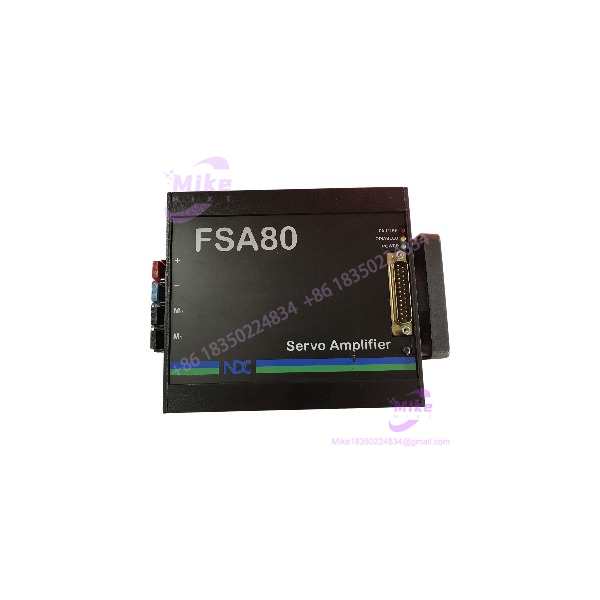
Description
DANAHER FSA80 | Servo Amplifier for Industrial Motion Control
Dynamic Product Introduction
The DANAHER FSA80 is the kind of servo amplifier you do not replace casually. When a production machine has been running around the same motion-control architecture for years, the drive is tied to the motor, feedback system, command interface, tuning parameters, and machine controller. Substituting a generic servo amplifier simply because the power rating looks close can turn a straightforward spare-parts job into a commissioning problem.
The FSA80 is identified in industrial equipment databases as a Danaher Motion NDC Mobicon servo amplifier, rather than a general-purpose variable-frequency drive. That distinction matters. A servo amplifier must work as part of a matched motion system, where feedback behavior, command scaling, motor characteristics, current limits, and fault handling all have to agree.
There is also an important identification trap. FSA80 and FSA80 II should not automatically be treated as interchangeable. The later FSA80 II is associated with Danaher Motion part number 16098-01D, while repair-industry records separately identify 16091-02D with the original designation.
That means the nameplate is more important than a marketplace title.
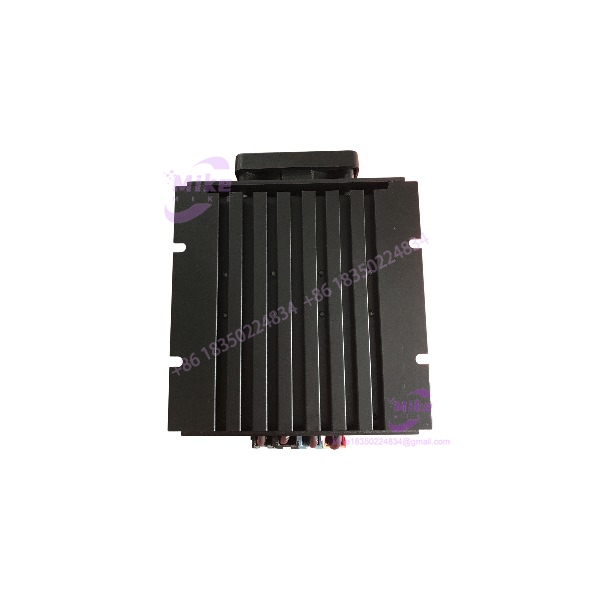
FSA80
Key Technical Specifications
- Manufacturer: Danaher Motion
- Model:
- Product Type: Servo amplifier / servo drive
- Motion-Control Application: Closed-loop industrial servo systems
- Product Family: FSA servo amplifier family
- Manufacturer Lineage: Danaher Motion / NDC Mobicon
- Part Identification: ; associated legacy hardware references should be verified against the physical nameplate
- Weight Reference: Approximately 20 lb / 9.07 kg is listed for the in industrial equipment databases.
- Status: Legacy/obsolete hardware; current replacement availability should be verified by exact machine and amplifier identification. A separate industry database explicitly lists as obsolete with no replacement.
- Feedback: Application-specific closed-loop servo feedback; exact encoder/resolver configuration must be matched to the installed system.
- Motor Compatibility: Must be verified against the original motor and amplifier configuration.
- Control Interface: Verify the installed machine’s command and feedback wiring before substitution.
- Parameterization: Existing tuning, current, feedback, and machine-specific parameters should be documented before removing the original amplifier.
Important specification note: Publicly indexed sources do not provide a sufficiently reliable original Danaher datasheet for the ‘s exact input voltage, continuous output current, peak current, motor voltage, or feedback protocol. Some reseller material publishes figures such as 220 VAC, 80 Nm, and 6,000 rpm, but those figures are not adequately corroborated by primary documentation for the amplifier itself. I would not put those numbers on a procurement specification without checking the physical nameplate or OEM documentation.
Global Sourcing & Live-Test SOP
Inbound Verification
Treat an as a controlled industrial spare, not ordinary surplus electronics.
At receiving inspection, record:
- Exact model marking
- Manufacturer label
- Serial number
- Revision or date code
- Connector configuration
- Rating label
- Physical condition
- Cooling hardware
- Evidence of previous repair or component replacement
The physical label should take precedence over a supplier database description. This is especially important because and II hardware exists under different part-number conventions. The II, for example, is documented under 16098-01D.
Live Simulation
A meaningful test should use a compatible servo test arrangement rather than simply powering the unit and checking whether LEDs illuminate.
Where the correct test equipment is available:
- Inspect the DC bus and power section before energizing.
- Verify cooling fan operation.
- Apply power using the correct protection and current-limited test procedure.
- Confirm normal initialization and fault indications.
- Connect the appropriate command and feedback interfaces.
- Test servo enable behavior.
- Verify commanded motion at low speed first.
- Check acceleration, deceleration, direction, and fault response.
- Monitor current and temperature during operation.
For an obsolete amplifier, a controlled test fixture is particularly valuable because replacement availability is limited and a “powers on” claim tells the buyer very little about actual servo performance.
Diagnostics
A proper QC report should document:
- Power-up condition
- Display/LED status
- Fault history where accessible
- Enable response
- Feedback recognition
- Motor response
- Directional operation
- Thermal behavior
- Cooling fan condition
- Connector condition
For wiring verification, use a calibrated multimeter and the applicable machine schematic. Do not assume connector pin assignments simply because another FSA-family amplifier looks similar.
Final Preparation
Before shipment, record the exact nameplate information and revision.
The unit should then be:
- ESD protected
- Mechanically secured
- Connector-protected
- Sealed against dust and moisture
- Clearly labeled with the tested model
- Accompanied by the actual test status and any known limitations
Field Engineer’s Pitfall Guide
❗ Do not confuse with II
This is the first identification check I would make.
The II is associated with 16098-01D, while industrial repair records identify 16091-02D as an servo amplifier. Similar naming does not establish electrical interchangeability.
A field technician once sees “” in a machine BOM, finds an “ II” online, and assumes the problem is solved. That is exactly how an emergency spare becomes an expensive commissioning exercise.
❗ Do not substitute a generic VFD
The belongs to the servo-amplifier category. A conventional VFD can control motor speed, but that does not make it a functional replacement for a closed-loop servo system.
Check the motor feedback, command interface, tuning requirements, current limits, and machine controller before approving an alternate drive.
❗ Verify the entire motion chain, not just the amplifier
The amplifier is only one part of the system.
Before installation, verify:
- Servo motor model
- Feedback device
- Feedback cable
- Command interface
- Power wiring
- Enable/interlock circuit
- Brake circuit where applicable
- Machine controller
- Existing tuning parameters
If any of these differ from the original configuration, the machine may power up while still failing to achieve stable servo operation.
Intent-Driven FAQ
Is the DANAHER a servo amplifier?
Yes. Industrial equipment references identify the as a Danaher Motion/NDC Mobicon servo amplifier or servo drive/control unit.
Is the same as II?
No—not based on the available part-number evidence. II is associated with 16098-01D, while the original family has separate identification references. Treat the two as different hardware until the OEM documentation confirms interchangeability.
Is the still a current-production drive?
Available industrial sourcing references characterize the as obsolete or legacy equipment. One current parts database specifically lists as obsolete with no replacement.
For an operating production machine, plan around tested spare inventory rather than assuming new OEM stock will remain available.
Can I replace an with another servo drive?
Not by model name or nominal power alone.
The replacement must be evaluated against the motor, feedback device, controller, command method, power system, machine parameters, and mechanical load. In a CNC or automated production machine, preserving the existing motion architecture is usually safer than forcing a generic modernization during an unplanned outage.
What should I verify before buying a used ?
At minimum, request:
- Clear nameplate photographs
- Exact model and revision
- Serial/date information
- Connector photographs
- Power-up test evidence
- Servo enable test
- Fault/diagnostic status
- Motor/feedback test details
- Warranty terms
A unit that merely powers on should not automatically be classified as fully tested.
Is a factory-sealed preferable?
For a critical legacy machine, yes—provided the part number and revision are correct. But age matters even when an amplifier is unused. Long-storage electrolytic capacitors, cooling fans, connectors, and other aging components still deserve inspection and controlled testing.
What is the procurement verdict on DANAHER ?
Buy by exact identity, not by family resemblance.
The DANAHER remains relevant where an installed machine depends on this legacy servo architecture. Because documentation and production availability are limited, a properly identified, electrically compatible, tested spare is generally more useful than a nominally newer amplifier that requires unplanned machine modification.
For procurement, the physical nameplate, revision, motor compatibility, feedback arrangement, and documented functional test should be treated as the acceptance criteria.





