


Description
ICS Triplex T9110 | AADvance Processor Module, New In Stock
Architect’s Product Breakdown
The ICS Triplex T9110 serves as the computational engine inside the AADvance safety architecture, built specifically to manage safety instrumented systems (SIS) in high-risk environments like oil refineries and chemical processing units. This module executes deterministic logic solvers while maintaining rigorous fault tolerance. Depending on the physical configuration, it scales from single processor setups up to SIL 3 redundant safety loops.
Deploying this module requires strict attention to hardware revisions and backplane slot compatibility. Mismatched firmware builds across multi-processor setups will immediately halt execution and trigger configuration error flags. Integrating the T9110 into existing enclosures demands clean cabinet power and proper physical seating on the underlying T9100 base unit to prevent intermittent communication drops.
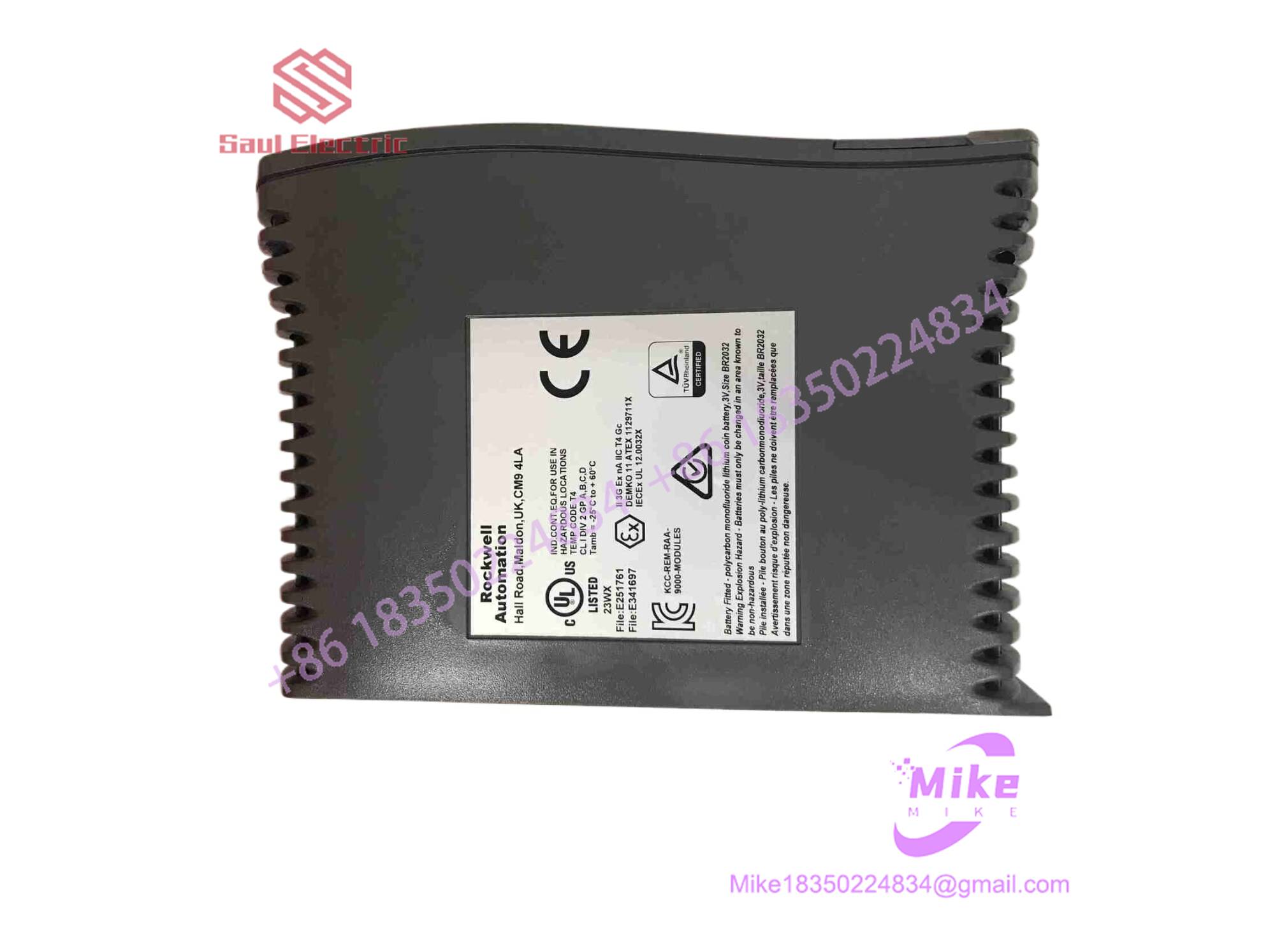
T9110
Key Technical Specifications
| Parameter | Technical Specification |
| Controller Platform | ICS Triplex AADvance System |
| Module Type | Safety Processor Module |
| Operating Voltage | Redundant 24V DC nominal (18–32V DC range) |
| Power Dissipation | 8.0W (27.3 BTU/hr) |
| Communication Protocols | Modbus TCP, EtherNet/IP, Serial (RS-232/422) |
| Safety Integrity Level | Up to SIL 3 (in multi-processor configuration) |
| Execution Memory | 64 MB Bulk Flash, 32 MB SDRAM |
| Operating Temperature | -20°C to +60°C |
| Physical Dimensions | 166 mm x 42 mm x 118 mm |
| Weight | 430 grams |
Field Engineer’s Pitfall Guide (Unique Value)
- Warning: Mismatched Firmware Builds: All processor modules operating within a redundant AADvance configuration must share identical firmware builds. I’ve seen plant commissioning delayed for days because a newly unboxed spare contained a newer factory firmware version that refused to synchronize with the existing rack mates.
- Warning: Coding Peg Misalignment: Never force the T9110 module onto a base unit if it resists. Check the mechanical coding pegs on the underlying T9100 base socket; forcing an improper module variant can bend backplane pins and ruin the slot.
- Warning: Locking Screw Torque: Ensure you use a proper flat-blade tool to vertically seat and mechanically lock the module via its retention screws. In high-vibration compressor sheds, a loosely torqued module will lose backplane communication handshakes, forcing safety loops into trip states.
QA & Testing SOP (Transparency)
- Visual & Origin Inspection: Verified for original OEM safety seals, correct labeling, and undamaged backplane connector pins.
- Powered Bench Test: Energized on an active AADvance test rig to evaluate boot-up sequences, LED status indicators, and internal health diagnostics.
- Communication & Network Handshake: Tested via onboard Ethernet and serial ports to verify packet transmission integrity and logic download stability.
- Packaging: Sealed in anti-static, moisture-barrier packaging with high-density protective foam prior to dispatch.
Technical FAQ
Can I hot-swap the T9110 processor module while the plant is running?
No. Replacing a core safety processor module breaks active logic execution and forces connected safety loops into their designated trip states. Execute a proper safety shutdown or override protocol per plant operating procedures before unseating this unit.
What do the status indicator LEDs signify during startup?
During boot-up, the Ready indicator turns red, transitions to a flashing green state during education/synchronization, and turns solid green once fully synchronized with the rack. A persistent red health LED indicates a hardware fault, configuration mismatch, or firmware conflict.
Does the module require an internal battery for memory retention?
Yes. The unit utilizes a small lithium coin battery (such as a BR2032 type) to maintain real-time clock data and volatile buffer parameters during power interruptions. Always verify battery voltage during routine maintenance intervals.
Are configuration files stored directly on the T9110 module?
User application logic and configurations are compiled and stored in non-volatile flash memory on the module, ensuring program retention even through total cabinet power losses.





