

Description
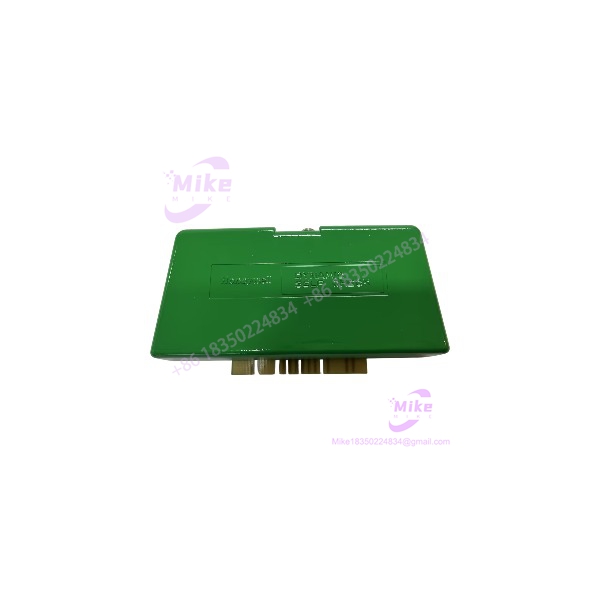
Honeywell R7247C1001 | Solid-State Dynamic Self-Check Flame Amplifier
Dynamic Product Introduction
Combustion safety architects and plant facility managers operating high-capacity steam boilers, heat-treat furnaces, or commercial incinerators know how critical flame safeguard reliability is. When an active burner management system loses flame signal stability or experiences amplifier shutter failure, replacing the flame detection card quickly without altering main relay control wiring or re-commissioning the burner sequencing program is essential for maintaining plant safety and uptime.
The Honeywell R7247C1001 solid-state flame signal amplifier is designed specifically for integration with Honeywell 7800 Series burner control relay modules (such as RM7800, EC7800, or RM7840). Engineered for continuous-burn industrial applications, this dynamic self-checking module interfaces with C7061A self-checking ultraviolet flame detectors. By cycling an internal optical shutter inside the sensor mechanism, the R7247C1001 constantly validates both sensor tube health and internal amplifier circuit integrity, ensuring immediate fuel safety shut-off in the event of a flameout or sensor failure.
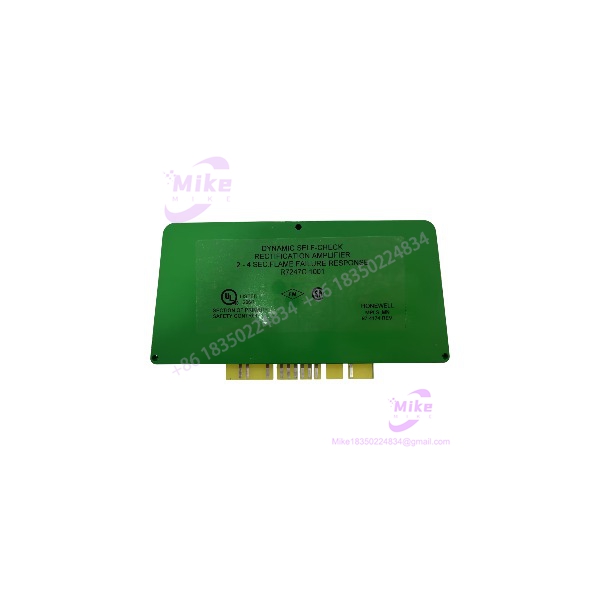
R7247C1001
Key Technical Specifications
- Flame Sensor Compatibility: Honeywell C7061A Dynamic Self-Check UV Flame Detectors
- Flame Failure Response Time (FFRT): 2.0 to 4.0 seconds (Standard model rating)
- Flame Signal Voltage Range: 0.0 to 5.0 V DC (measured across front panel test jacks)
- Minimum Acceptable Flame Signal: 1.25 V DC steady baseline
- Self-Checking Logic: Dynamic self-checking via sensor shutter mechanism (cycling once per second)
- Host Module Compatibility: All Honeywell 7800 Series Relay Modules (RM7800, RM7840, EC7800, etc.)
- Color Coding: Green front housing (identifies dynamic self-check UV function)
- Operating Temperature Range: -40 °C to +60 °C (-40 °F to +140 °F)
- Vibration & Ingress Rating: NEMA 1 indoor mounting (inside relay module enclosure)
Global Sourcing & Live-Test SOP (Transparency Core)
Sourcing legacy industrial burner components requires strict functional verification to guarantee flameout response times and self-check shutter pulse detection.
Inbound Verification & Traceability
- Paperwork Audit: Verification of serial numbers, date codes, and board revision stamps against Honeywell manufacturing archives to confirm authentic component sourcing.
- Physical Inspection: Detailed check of module edge card pins, color-coded plastic latches, front panel test jacks, and internal potting compounds for signs of thermal stress.
Live Bench Simulation & Diagnostics
- 7800 Relay Slot Insertion Test: Module is mounted into a calibrated 7800 Series relay test chassis to verify mechanical keying alignment and power bus connection.
- Dynamic Shutter Pulse Verification: Interfaced with an active C7061A UV sensor and light source to verify the 1 Hz shutter drive pulse and signal modulation.
- Flame Voltage & Threshold Test: Measuring DC voltage outputs across front-panel test jacks using a high-impedance digital multimeter (Fluke 87V) under simulated light and dark conditions to verify minimum 1.25 V DC thresholds and rapid drop-out upon flame extinction.
- 24-Hour Stress Run: Module undergoes a continuous thermal chamber burn-in under active flame simulation to guarantee ZERO signal drift or false flameout triggers.
Final Prep
- Edge Pin Cleaning: Contacts are cleaned using non-residue electronic contact cleaner.
- ESD Safe Packaging: Sealed in anti-static shielding bags with desiccant packs before double-boxed shipping.
The Field Engineer’s Pitfall Guide
- ❗ Sensor Type Mismatches (R7247C vs. R7247A): The R7247C1001 is designed strictly for dynamic self-checking UV sensors (C7061A). Pairing an R7247C amplifier with a standard, non-self-checking UV sensor (like a C7027A or C7035A) will cause continuous flame signal faults or lockout states because the module expects shutter modulation pulses.
- ❗ Measuring Flame Signal with Low-Impedance Meters: Always measure flame signal voltage across the front test jacks using a multimeter with at least 1 MΩ/V input impedance. Using a low-impedance meter will load down the high-resistance signal circuit, giving false low-voltage readings.
- ❗ Hot-Swapping Under Power: Never insert or remove the R7247C1001 amplifier from the 7800 Series relay module while the system is energized. Doing so can cause electrical transients that destroy internal amplifier op-amps or corrupt the relay module microprocessor.
Intent-Driven FAQ
Will replacing a damaged R7247C1001 require re-programming my 7800 Series controller?
No. The amplifier module is a passive signal processing card. It plugs directly into the host 7800 Series relay module and requires no software parameter setup or re-programming.
What is normal flame signal voltage on the R7247C1001?
A healthy flame signal typically measures between 1.5 V DC and 5.0 V DC across the front-panel test jacks using a digital multimeter. A steady reading below 1.25 V DC indicates low optical signal strength, dirty sensor lenses, or aligning/sighting issues.
What does the green color of the module housing indicate?
Honeywell uses color coding on 7800 Series amplifiers to prevent installation errors. Green designates a Dynamic Self-Check UV amplifier card (R7247C).
Can I replace an R7247C1001 with a standard R7847A amplifier?
No. Standard rectifying amplifiers (R7847 Series) lack the self-checking shutter control logic required by systems wired with C7061A dynamic self-check UV sensors. Replacing it with a standard card voids continuous-burn safety approvals.
What warranty coverage is provided on replacement hardware?
All verified Honeywell R7247C1001 amplifier modules include a standard 12-month full-replacement warranty covering internal logic circuits, signal processing accuracy, and self-check control outputs.
If you need help diagnosing low flame signal voltages, checking C7061A shutter wiring, or verifying relay module compatibility for your R7247C1001 setup, let me know your system details and I can assist with the configuration.