


Description
Honeywell ML7425A8018-E | Linear Valve Actuator
Product Introduction
The Honeywell ML7425A8018-E is a spring-return electric linear valve actuator designed for modulating control of Honeywell standard HVAC valves. It converts the output of an analog HVAC controller into linear valve-stem movement and provides a proportional 2–10 VDC position-feedback signal for closed-loop monitoring. Honeywell specifies 24 VAC operation, 0/2–10 VDC control input, and a 20 mm actuator stroke.
For building automation and process HVAC applications, the actuator provides at least 600 N of close-off force with a documented 12-second spring-return time. At power failure, the factory configuration drives the actuator stem outward, providing a defined valve safety position. The actuator also includes force-limiting end stops, manual operation, selectable direct/reverse action, and self-adaptation functionality.
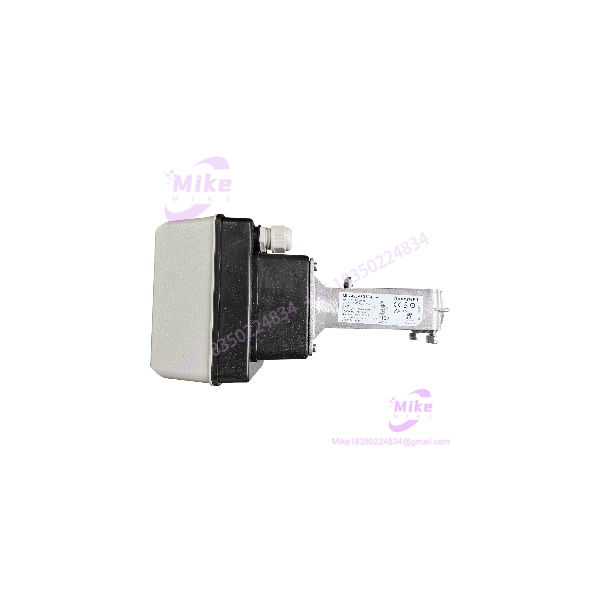
ML7425A8018-E
Key Technical Specifications
- Manufacturer: Honeywell
- Model: ML7425A8018-E
- Product Family: ML7425A
- Product Type: Electric linear valve actuator
- Control Mode: Modulating
- Supply Voltage: 24 VAC ±15%
- Supply Frequency: 50/60 Hz
- Power Consumption: 12 VA
- Control Input: 0–10 VDC or 2–10 VDC
- Input Impedance: 100 kΩ
- Position Feedback: 2–10 VDC
- Maximum Feedback Load: 1 mA
- Rated Stroke: 20 mm
- Close-Off Force: ≥600 N
- Spring Return Time: 12 seconds
- Factory Spring Direction: Stem extends at power failure
- Action: Direct/reverse selectable
- Self-Adaptation: Yes
- Manual Operation: Yes
- Protection Rating: IP54
- Electrical Protection: Class III according to EN60730-1
- Flame Rating: V-0 according to UL94
- Ambient Operating Temperature: -10°C to +50°C
- Ambient Storage Temperature: -40°C to +70°C
- Maximum Medium Temperature: 150°C
- Maximum Medium Temperature With High-Temperature Kit: 220°C
- Terminal Wiring: 1.5 mm²
- Cable Entry: M20
- Housing Cover: ABS-FR
- Base: Glass-fiber-reinforced plastic
- Yoke: Die-cast aluminum
- Weight: Approximately 2.4 kg
Application Scenarios & Pain Points
HVAC Heating and Cooling Valve Control
The ML7425A8018-E is designed for proportional control of Honeywell HVAC valves in heating, ventilation, and air-conditioning systems.
Engineering pain point: The actuator requires the correct 24 VAC supply and analog command signal. Applying an incorrect supply voltage can prevent normal operation or damage the actuator.
Steam and Hot-Water Valve Modulation
The 20 mm linear stroke and 600 N close-off force make the actuator applicable to compatible Honeywell valve assemblies requiring modulating stem control.
Engineering pain point: Valve-body compatibility must be checked separately. The actuator specification does not mean every Honeywell valve with a similar physical appearance is mechanically compatible.
Building Automation System Integration
The 0–10 VDC / 2–10 VDC command and 2–10 VDC feedback allow integration with analog HVAC controllers, DDC systems, and building automation panels.
Engineering pain point: Controller scaling must correspond to the actuator’s configured action. A 2–10 VDC signal normally represents the actuator’s operating range, so incorrect scaling can create persistent valve-position errors.
Fail-Safe HVAC Control
The spring-return mechanism moves the actuator to its configured safety position when actuator power is removed. The factory configuration is stem extension on power failure.
Engineering pain point: The required fail-safe valve position must be determined from the process sequence before installation. A fail-open and fail-closed requirement cannot be corrected simply by changing the BAS output scaling.
QA & Live Testing SOP
- OEM Identity Verification
- Confirm the nameplate identifies Honeywell ML7425A8018-E.
- Record serial number and manufacturing information where available.
- Verify the actuator family before matching it to a valve body.
- Mechanical Inspection
- Inspect the aluminum yoke and valve-stem connection.
- Check the actuator stem for bending, corrosion, contamination, or mechanical damage.
- Inspect the manual-operation mechanism.
- Confirm the mounting interface is appropriate for the intended Honeywell valve.
- Electrical Inspection
- Verify the supply is 24 VAC ±15%, 50/60 Hz.
- Inspect terminals and M20 cable entry.
- Check wiring insulation and terminal tightness.
- Do not substitute 24 VDC unless the exact actuator documentation explicitly permits it.
- Analog Signal Test
- Apply a controlled 0–10 VDC or 2–10 VDC command.
- Verify proportional actuator movement.
- Confirm the actuator reaches the expected end positions.
- Measure the 2–10 VDC feedback signal independently.
- Check that command and feedback scaling agree with the BAS controller configuration.
- Self-Adaptation Test
- Mount the actuator correctly to the compatible valve.
- Energize the actuator using the specified supply.
- Initiate the documented self-adaptation procedure.
- Allow the actuator to complete its full stroke.
- Verify the actuator returns to the expected operating position.
- Spring-Return Test
- Command the actuator to a controlled position.
- Remove actuator power under safe test conditions.
- Verify spring return occurs.
- Confirm the stem moves in the documented factory direction.
- Record the return time; the specified value is approximately 12 seconds.
- Final QA
- Check for abnormal motor or gear noise.
- Verify smooth linear travel without binding.
- Confirm position feedback remains stable.
- Inspect the enclosure and cable entry before shipment.
- Protect the actuator against shock, moisture, and stem damage during packaging.
Field Engineer’s Pitfall Guide
❗ Use 24 VAC, not an assumed 24 VDC supply.
The ML7425A8018-E is specified for 24 VAC ±15%, 50/60 Hz. Do not infer DC compatibility from the nominal 24 V value.
❗ Do not confuse the 20 mm stroke with the valve’s required stroke.
The actuator’s rated stroke is 20 mm. Confirm that the selected valve body and mechanical connection are designed for the actuator’s stroke and force.
❗ Verify the fail-safe direction before commissioning.
The factory configuration causes the actuator stem to extend when power is removed. The actual required valve safety position depends on the valve arrangement and process.
❗ Do not test the actuator disconnected from a compatible valve and assume the complete installation is validated.
Self-adaptation and end-position behavior are tied to the mechanical valve interface. The final commissioning test should be performed with the correct valve assembly installed.
❗ Check the analog input range.
The actuator accepts 0–10 VDC or 2–10 VDC. The BAS controller must use the same configured signal range and action direction.
❗ Respect the medium-temperature limit.
The standard documented medium-temperature limit is 150°C. Operation up to 220°C requires the specified high-temperature kit.
Intent-Driven FAQ
Q: What is the Honeywell ?
A: It is a spring-return electric linear valve actuator for modulating Honeywell HVAC valves.
Q: What power supply does the require?
A: The specified supply is 24 VAC ±15% at 50/60 Hz, with approximately 12 VA power consumption.
Q: What control signal does the use?
A: It accepts a 0–10 VDC or 2–10 VDC analog control signal. The actuator provides 2–10 VDC position feedback.
Q: What is the stroke of the ?
A: The documented rated stroke is 20 mm.
Q: What is the actuator close-off force?
A: The documented close-off force is at least 600 N.
Q: Does the have spring return?
A: Yes. It is a spring-return actuator, with a documented 12-second spring-return time. The factory setting drives the stem outward when power fails.
Q: What is the protection rating?
A: The actuator is rated IP54 under EN60529.
Q: Can it be used with high-temperature media?
A: The standard specification lists 150°C maximum medium temperature. A documented high-temperature kit can extend the application to 220°C.
Q: Is suitable as a replacement actuator for any Honeywell valve?
A: No. Verify the valve’s mechanical interface, required stroke, close-off force, control signal, fail-safe direction, and application temperature before substitution.
Q: What should be checked on a legacy before installation?
A: Verify the complete model number, 24 VAC supply, analog input range, feedback output, stem movement, spring-return action, self-adaptation, mechanical valve compatibility, enclosure condition, and terminal wiring.





